Best for quality of service
D-Link Aquila Pro AI R95
5.0 attribute score
Highest scored product for this attribute based on supporting review evidence.

Highest scored product for this attribute based on supporting review evidence.
Balances the attribute score, supporting reviews, and overall product strength.
Has the broadest review evidence for this attribute.
Strongest overall product among items with scored evidence for this attribute.

Overall: 4.8/5
Automatic QoS behavior intelligently prioritizes bandwidth for the traffic that needs it most.
Pros: Wi-Fi 7 support, Wi-Fi speed

Overall: 4.4/5
Configurable QoS can keep gaming latency from spiking under load.
Pros: setup ease, configuration flexibility
Cons: Wi-Fi 7 support, USB storage sharing
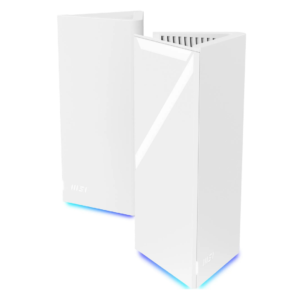
Overall: 4.3/5
Detailed QoS settings let users prioritize specific devices and manage traffic with more control than many consumer mesh kits.
Pros: value for money, design and appearance
Cons: node pairing ease, outdoor coverage

Overall: 4.1/5
QoS controls are useful and easy to adjust, with granular settings for individual clients.
Pros: value for money, Wi-Fi speed
Cons: 6 GHz performance, subscription requirements

Overall: 4.2/5
Built-in QoS offers useful device prioritization without requiring a subscription for basic operation.
Pros: value for money, Wi-Fi speed
Cons: subscription requirements, long-range speed

Overall: 4.0/5
QoS is useful for prioritizing devices, but app-only configuration frustrates some users and accounts differ on paid access.
Pros: value for money, parental controls
Cons: subscription requirements, multi-gig Ethernet support

Overall: 4.3/5
Adaptive QoS is useful for prioritizing traffic, but it can trade peak throughput for responsiveness under heavy load.
Pros: Wi-Fi speed, Ethernet port count
Cons: 10 GbE support, WAN port speed

Overall: 4.3/5
QoS is useful in everyday settings, but an owner reported that enabling it with a VLAN configuration broke internet access.
Pros: value for money, Wi-Fi speed
Cons: subscription requirements, WAN port speed

Overall: 3.7/5
Configurable quality-of-service options are missing, making it difficult to explicitly prioritize traffic for demanding devices.
Pros: setup ease, value for money
Cons: Ethernet port count, Wi-Fi speed