Best for Wi-Fi speed
GL.iNet GL-BE3600 Slate 7
5.0 attribute score
Highest scored product for this attribute based on supporting review evidence.

Highest scored product for this attribute based on supporting review evidence.
Balances the attribute score, supporting reviews, and overall product strength.
Has the broadest review evidence for this attribute.
Strongest overall product among items with scored evidence for this attribute.

Overall: 4.5/5
Peak Wi‑Fi speed is a clear strength at close range, with gigabit-class results and top-tier performance in several tests. The absence of 6GHz and long-range drop-off keep it below full-size...
Pros: VPN client support, value for money
Cons: 6 GHz performance, USB storage sharing

Overall: 4.8/5
Its 9.5Gbps-class capacity is repeatedly described as exceptionally fast, easily covering gaming, streaming, and demanding household traffic.
Pros: Wi-Fi 7 support, Wi-Fi speed
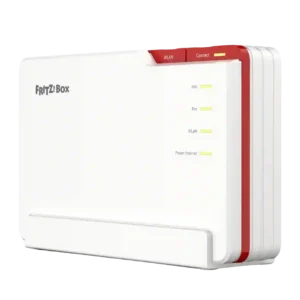
Overall: 4.0/5
Reviewers repeatedly describe very fast real-world Wi-Fi, including dramatic gains over older routers and a noticeable step up when using Wi-Fi 7-capable clients.
Pros: telephony features, value for money
Cons: LAN port speed, wall-mounting support

Overall: 4.4/5
Fast Wi-Fi is a standout at this price, with strong throughput even away from the router, though individual tests vary.
Pros: setup ease, configuration flexibility
Cons: Wi-Fi 7 support, USB storage sharing

Overall: 4.1/5
Peak and local Wi-Fi speeds are consistently impressive, including multi-gigabit transfers with suitable hardware.
Pros: wireless performance, Wi-Fi speed
Cons: value for money, size and footprint

Overall: 4.3/5
High real-world Wi-Fi speeds are a consistent strength, often exceeding 2Gbps with capable clients and conditions.
Pros: Wi-Fi speed, Ethernet port count
Cons: 10 GbE support, WAN port speed

Overall: 4.3/5
Wi-Fi 7 clients can reach very high real-world speeds near the router, often approaching the 2.5 Gbps wired limit.
Pros: value for money, Wi-Fi speed
Cons: subscription requirements, WAN port speed

Overall: 4.2/5
Close and medium-range Wi-Fi speeds are a major strength, with compatible clients sometimes approaching the 2.5 Gbps wired ceiling. Speed drops with distance and obstacles.
Pros: value for money, Wi-Fi speed
Cons: subscription requirements, long-range speed

Overall: 4.0/5
Fast local transfers and strong nearby Wi-Fi are recurring strengths, especially considering the router’s low price.
Pros: value for money, parental controls
Cons: subscription requirements, multi-gig Ethernet support

Overall: 4.1/5
Gigabit-class wireless speeds are achievable in favorable conditions, and upgrades from older routers can be substantial. Throughput falls off with distance and lacks the highest-end Wi-Fi 7 speeds.
Pros: value for money, Wi-Fi speed
Cons: 6 GHz performance, subscription requirements
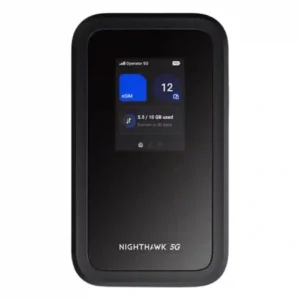
Overall: 4.1/5
Wireless speeds are strong enough for streaming, calls, and general work in good coverage, but results fall sharply when the cellular connection is weak.
Pros: eSIM flexibility, cellular connectivity
Cons: interface responsiveness, Ethernet port count
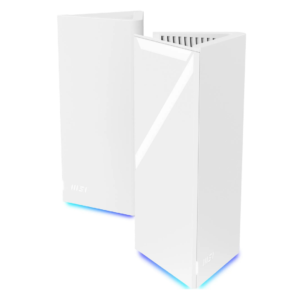
Overall: 4.3/5
Nearby Wi-Fi 7 speed can be exceptional, but other testing found mediocre throughput and weak scaling at distance, making overall speed highly environment-dependent.
Pros: value for money, design and appearance
Cons: node pairing ease, outdoor coverage

Overall: 3.7/5
Wi-Fi speeds are ample for many modest broadband plans, but results vary substantially with placement, steering behavior and wireless mesh hops. Faster systems are a better match for demanding connections.
Pros: setup ease, value for money
Cons: Ethernet port count, Wi-Fi speed