Best for expandability
GL.iNet Flint 2 (GL-MT6000)
5.0 attribute score
Highest scored product for this attribute based on supporting review evidence.

Highest scored product for this attribute based on supporting review evidence.
Balances the attribute score, supporting reviews, and overall product strength.
Has the broadest review evidence for this attribute.
Strongest overall product among items with scored evidence for this attribute.

Overall: 4.4/5
Generous onboard storage and optional software packages leave room to expand network services.
Pros: setup ease, configuration flexibility
Cons: Wi-Fi 7 support, USB storage sharing

Overall: 4.8/5
The system can grow by linking additional AQUILA PRO AI routers into a broader mesh network.
Pros: Wi-Fi 7 support, Wi-Fi speed
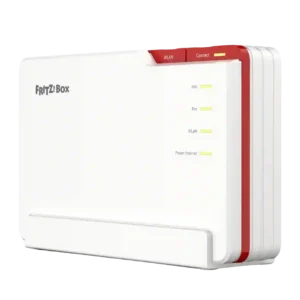
Overall: 4.0/5
The router is repeatedly framed as the center of a broader ecosystem, with mesh, smart-home, telephony and storage functions that can grow beyond basic routing.
Pros: telephony features, value for money
Cons: LAN port speed, wall-mounting support
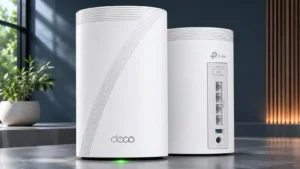
Overall: 4.2/5
Cross-model Deco compatibility makes gradual upgrades and reuse of existing mesh equipment particularly appealing.
Pros: value for money, Wi-Fi speed
Cons: subscription requirements, long-range speed
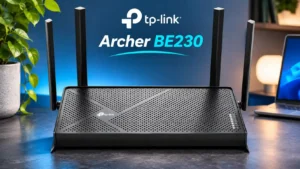
Overall: 4.1/5
EasyMesh compatibility allows coverage to grow as needs change rather than requiring a complete replacement.
Pros: value for money, Wi-Fi speed
Cons: 6 GHz performance, subscription requirements
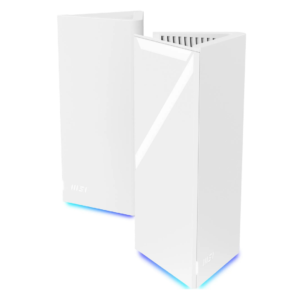
Overall: 4.3/5
The platform is designed to grow, but standalone node availability may limit practical expansion in some markets.
Pros: value for money, design and appearance
Cons: node pairing ease, outdoor coverage
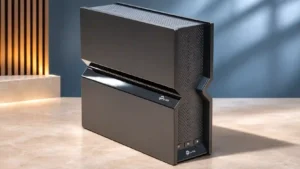
Overall: 4.3/5
EasyMesh compatibility lets owners extend coverage with compatible routers or extenders, though model and firmware support vary.
Pros: value for money, Wi-Fi speed
Cons: subscription requirements, WAN port speed
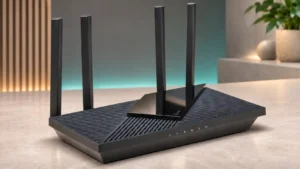
Overall: 4.0/5
Adding compatible access points allows the network to grow without replacing the main router.
Pros: value for money, parental controls
Cons: subscription requirements, multi-gig Ethernet support

Overall: 4.5/5
OpenWRT-based customization, LuCI access and plugins give the Slate 7 unusually deep expandability for a travel router. Plugin quality is uneven in some firmware versions, so the breadth is stronger...
Pros: VPN client support, value for money
Cons: 6 GHz performance, USB storage sharing
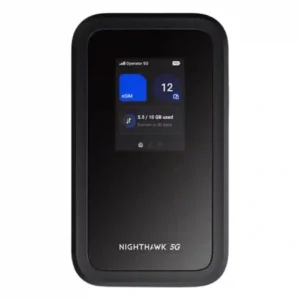
Overall: 4.1/5
Adapters and the optional cradle can add Ethernet, charging, and failover features, but the lack of built-in ports and external antenna connectors limits out-of-box flexibility.
Pros: eSIM flexibility, cellular connectivity
Cons: interface responsiveness, Ethernet port count