Best for wall penetration
D-Link Aquila Pro AI R95
5.0 attribute score
Highest scored product for this attribute based on supporting review evidence.

Highest scored product for this attribute based on supporting review evidence.
Balances the attribute score, supporting reviews, and overall product strength.
Has the broadest review evidence for this attribute.
Strongest overall product among items with scored evidence for this attribute.

Overall: 4.8/5
A test signal passed through two thick brick walls and still reached the garden, outperforming the reviewer’s standard ISP hub.
Pros: Wi-Fi 7 support, Wi-Fi speed

Overall: 4.4/5
The 5GHz signal remains useful through two walls at a distance.
Pros: setup ease, configuration flexibility
Cons: Wi-Fi 7 support, USB storage sharing
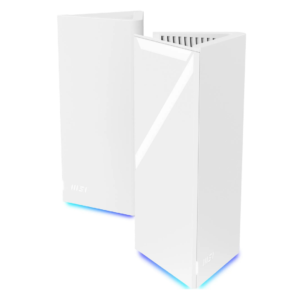
Overall: 4.3/5
One home test maintained excellent speed through a closed door, suggesting strong indoor penetration in favorable layouts.
Pros: value for money, design and appearance
Cons: node pairing ease, outdoor coverage
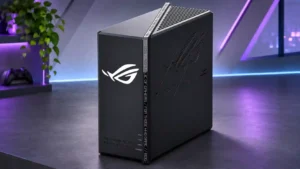
Overall: 4.3/5
AFC helps 6GHz signals remain useful through several walls, though a particularly obstructed room can still see very low speeds.
Pros: Wi-Fi speed, Ethernet port count
Cons: 10 GbE support, WAN port speed
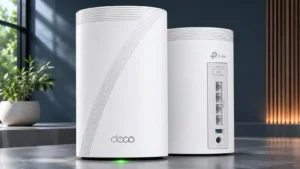
Overall: 4.2/5
Throughput can remain strong through a wall, although the 6 GHz signal weakens noticeably through obstacles.
Pros: value for money, Wi-Fi speed
Cons: subscription requirements, long-range speed
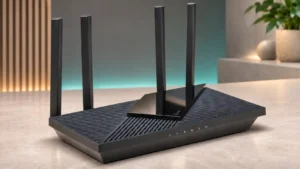
Overall: 4.0/5
Through-wall performance is often quite good, but thick walls and longer paths can significantly reduce throughput.
Pros: value for money, parental controls
Cons: subscription requirements, multi-gig Ethernet support
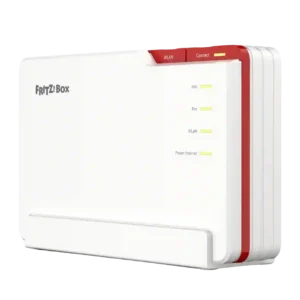
Overall: 4.0/5
The lower bands carry well through walls, but 6GHz still struggles with thick concrete; overall wall penetration is strong rather than physics-defying.
Pros: telephony features, value for money
Cons: LAN port speed, wall-mounting support
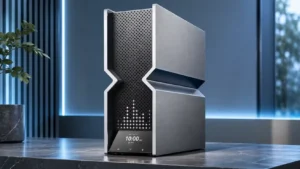
Overall: 4.1/5
Performance through walls can be impressive, but 6GHz and basement coverage vary considerably with construction and layout.
Pros: wireless performance, Wi-Fi speed
Cons: value for money, size and footprint
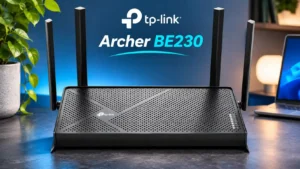
Overall: 4.1/5
Thick walls are an unpredictable obstacle: some tests found excellent penetration, while others showed substantial signal loss.
Pros: value for money, Wi-Fi speed
Cons: 6 GHz performance, subscription requirements
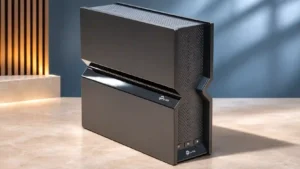
Overall: 4.3/5
The 6 GHz signal weakens more through walls than 5 GHz; some users nonetheless achieved impressive speeds through a wall.
Pros: value for money, Wi-Fi speed
Cons: subscription requirements, WAN port speed
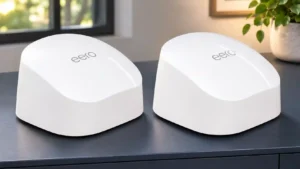
Overall: 3.7/5
The signal can remain usable through multiple walls, but thick or obstructed layouts can weaken it quickly.
Pros: setup ease, value for money
Cons: Ethernet port count, Wi-Fi speed
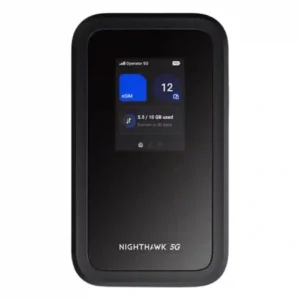
Overall: 4.1/5
Typical interior walls are manageable, but a difficult external wall defeated the signal in testing.
Pros: eSIM flexibility, cellular connectivity
Cons: interface responsiveness, Ethernet port count

Overall: 4.5/5
Walls are a clear limit for the compact antenna system: speeds drop noticeably through floors and heavier construction. Keep the router relatively close for the best results.
Pros: VPN client support, value for money
Cons: 6 GHz performance, USB storage sharing