
If you want better encrypted DNS support
Choose GL.iNet GL-BE3600 Slate 7. It scores 5.0 vs 1.5 for encrypted DNS support, with a 4.5 overall score.

Five 2.5GbE ports and excellent close-range Wi-Fi 7 speeds make this a strong value for multi-gigabit homes. Coverage varies with layout, advanced controls cost extra, and buyers should check the exact hardware revision.
Small to medium homes with Wi-Fi 7 devices, gigabit or 2.5Gbps internet, and multiple fast wired clients or network storage. Busy households can benefit from the extra wireless capacity and convenient device controls.
Homes that need dependable large or multi-floor coverage from a single unit, users who need 5Gbps or 10Gbps internet throughput, and advanced administrators who require extensive third-party firmware control. A well-functioning Wi-Fi 6-only household may also see little benefit from upgrading.
The Archer BE550 is an attractive midrange Wi-Fi 7 router for households that can use its five 2.5GbE ports and fast 6GHz band. Tests frequently found excellent close-range throughput, straightforward Tether setup and useful local network storage capabilities. Its 2.5Gbps WAN port is a good match for gigabit or 2-gigabit service but limits faster internet plans. Coverage is less predictable: some homes achieve strong speeds across floors, while others experience weak signals or unstable connections. EasyMesh makes expansion possible, although dedicated mesh systems offer more sophisticated roaming. MLO results depend on the client and firmware, and some advanced parental and security controls require subscriptions. The BE550 remains compelling when appropriately discounted, particularly for newer wireless devices and multiple wired clients. Check the hardware revision, available firmware and return policy, especially for older V1 stock.
Compared with other Routers, this product is above average in interface responsiveness, smart home compatibility, content filtering, near average in range, long-range speed, below average in hardware reliability, whole-home coverage, Multi-Link Operation.
| Attribute | This product | Category average | Difference |
|---|---|---|---|
| hardware reliability | 2.0 | 4.3 | -2.3 |
| interface responsiveness | 5.0 | 3.1 | +1.9 |
| whole-home coverage | 2.5 | 4.3 | -1.8 |
| Multi-Link Operation | 3.1 | 4.6 | -1.5 |
| smart home compatibility | 5.0 | 3.7 | +1.3 |
| content filtering | 4.4 | 3.2 | +1.2 |
| 320 MHz support | 4.4 | 3.2 | +1.2 |
| tri-band support | 4.9 | 3.8 | +1.1 |
Choose GL.iNet GL-BE3600 Slate 7. It scores 5.0 vs 1.5 for encrypted DNS support, with a 4.5 overall score.
Choose MSI Roamii BE Pro. It scores 5.0 vs 2.0 for wall-mounting support, with a 4.3 overall score.
Choose D-Link Aquila Pro AI R95. It scores 5.0 vs 2.4 for 10 GbE support, with a 4.8 overall score.
Choose Fritz!Box 5690 Pro. It scores 5.0 vs 2.0 for hardware reliability, with a 4.0 overall score.
Compared with TP-Link Archer BE550
Compatible Wi-Fi 7 clients achieved excellent nearby speeds, with some tests approaching 2.5Gbps. The BE9300 number is aggregate theoretical bandwidth, not a single-device speed.
Results differ by layout. Some multi-floor homes see strong coverage, while others need EasyMesh nodes or a dedicated mesh system.
No. The standard BE550 has five 2.5GbE ports, one for WAN and four for LAN, so internet plans above 2.5Gbps cannot be fully utilized.
Basic filtering and bedtime controls are included. More detailed parental controls and advanced security features may require HomeShield subscriptions.
It is most useful for Wi-Fi 7 or 6E clients and multi-gigabit wired equipment. Older devices may connect normally but gain little speed.
Yes. Tests found good basic USB file-sharing performance, although dedicated NAS equipment is preferable for advanced storage needs.
BE9300 is also a wireless class designation, and some retail variants advertise fewer 2.5GbE LAN ports. Verify the exact model and revision before purchasing, especially older clearance stock.
These are a few of the reviews included in our analysis.



Read our hands-on review of the TP-Link Archer BE550 Wi-Fi 7 Router for an insider perspective on performance, setup and the need-to-knows.
We’ve tested the latest Wi-Fi routers and found the best options—from budget models to top-of-the-line—to make your wireless network faster...
The TP-Link Archer BE550 is a fast Wi-Fi 7 router with five 2.5GbE ports. See its real limits, range, firmware variants, HomeShield costs...
Is the TP-Link Archer BE550 Tri-Band Wi-Fi 7 router (BE9300) still surprisingly affordable? Its 6GHz band and five 2.5Gbps ports are strong...
The TP-Link Archer BE550 is a tri-band Wi-Fi 7 router that brings genuinely next-generation networking to a mainstream price.

Choose the R95 for a busy home that needs fast Wi-Fi 7, strong range, multi-gig ports, and low-lag gaming. Skip it for a small, lightly connected space or if advanced...
Pros: Wi-Fi 7 support, Wi-Fi speed

Best for frequent travel, fast VPNs, dual 2.5GbE and resilient multi-WAN. Skip it if you need full 6GHz/320MHz Wi‑Fi 7, mesh, or desktop-class USB storage and long-range indoor coverage.
Pros: VPN client support, value for money
Cons: 6 GHz performance, USB storage sharing
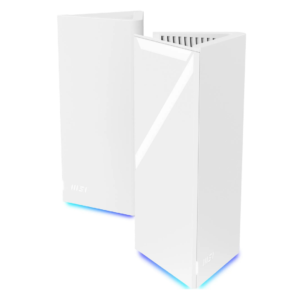
Best for affordable tri-band Wi-Fi 7, abundant 2.5GbE ports, and deep free controls. Skip it if you need consistently strong garden coverage, foolproof app setup, or proven top-tier speeds across...
Pros: value for money, design and appearance
Cons: node pairing ease, outdoor coverage
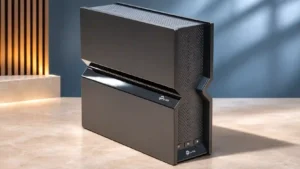
Five 2.5GbE ports and excellent close-range Wi-Fi 7 speeds make this a strong value for multi-gigabit homes. Coverage varies with layout, advanced controls cost extra, and buyers should check the...
Pros: value for money, Wi-Fi speed
Cons: subscription requirements, WAN port speed