Best for 5 GHz performance
D-Link Aquila Pro AI R95
5.0 attribute score
Highest scored product for this attribute based on supporting review evidence.

Highest scored product for this attribute based on supporting review evidence.
Balances the attribute score, supporting reviews, and overall product strength.
Has the broadest review evidence for this attribute.
Strongest overall product among items with scored evidence for this attribute.

Overall: 4.8/5
The legacy-device network, which includes 5GHz, delivered the full broadband rate both nearby and in the rear office.
Pros: Wi-Fi 7 support, Wi-Fi speed
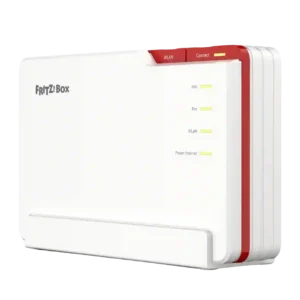
Overall: 4.0/5
5GHz performance is consistently strong, with reviewers finding excellent throughput and useful signal across larger homes and through brick walls.
Pros: telephony features, value for money
Cons: LAN port speed, wall-mounting support

Overall: 4.4/5
Strong 5GHz throughput holds up well across distance and walls.
Pros: setup ease, configuration flexibility
Cons: Wi-Fi 7 support, USB storage sharing

Overall: 4.5/5
The 5GHz band is the Slate 7’s wireless sweet spot, with strong real-world throughput and good stability at practical travel distances. Several tests reached gigabit-class speeds or better nearby.
Pros: VPN client support, value for money
Cons: 6 GHz performance, USB storage sharing

Overall: 4.2/5
5 GHz performance is fast and generally remains competitive under traffic.
Pros: value for money, Wi-Fi speed
Cons: subscription requirements, long-range speed
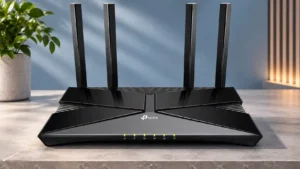
Overall: 3.7/5
The 5 GHz band is a standout, achieving strong near-router speeds and often competing with pricier models.
Pros: Overall satisfaction, value for money
Cons: USB port support, 160 MHz support
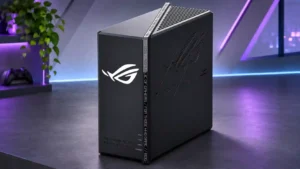
Overall: 4.3/5
5GHz performance is generally strong, outperforming some pricier ASUS hardware in testing.
Pros: Wi-Fi speed, Ethernet port count
Cons: 10 GbE support, WAN port speed
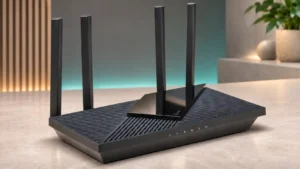
Overall: 4.0/5
The 5 GHz band generally delivers fast, dependable throughput, particularly when clients connect directly to it.
Pros: value for money, parental controls
Cons: subscription requirements, multi-gig Ethernet support
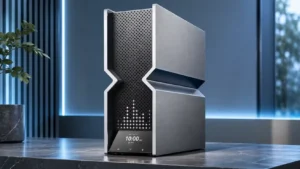
Overall: 4.1/5
5GHz throughput is often exceptional, although dividing the spectrum can restrict channel options and distance reduces speeds.
Pros: wireless performance, Wi-Fi speed
Cons: value for money, size and footprint
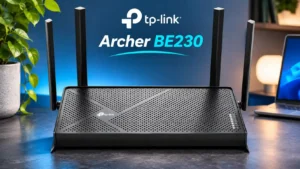
Overall: 4.1/5
The 5 GHz band can deliver gigabit-class speeds close by, but speed losses over distance vary considerably.
Pros: value for money, Wi-Fi speed
Cons: 6 GHz performance, subscription requirements

Overall: 4.3/5
5 GHz can reach gigabit speeds, but some older high-end routers perform better at longer distances.
Pros: value for money, Wi-Fi speed
Cons: subscription requirements, WAN port speed
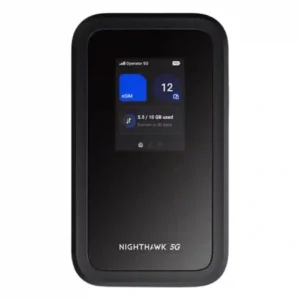
Overall: 4.1/5
5GHz can be fast enough for normal work, but its 80MHz ceiling keeps peak local throughput below what many buyers will expect from Wi-Fi 7.
Pros: eSIM flexibility, cellular connectivity
Cons: interface responsiveness, Ethernet port count