Best for multi-device performance
D-Link Aquila Pro AI R95
5.0 attribute score
Highest scored product for this attribute based on supporting review evidence.

Highest scored product for this attribute based on supporting review evidence.
Balances the attribute score, supporting reviews, and overall product strength.
Has the broadest review evidence for this attribute.
Strongest overall product among items with scored evidence for this attribute.

Overall: 4.8/5
Dozens of clients and mixed household workloads stayed stable, with reviewers reporting smooth service across screens, consoles, calls, and smart-home gear.
Pros: Wi-Fi 7 support, Wi-Fi speed

Overall: 3.7/5
Several devices can share the network smoothly, including households streaming and browsing at the same time.
Pros: setup ease, value for money
Cons: Ethernet port count, Wi-Fi speed

Overall: 4.4/5
Multiple high-bandwidth activities can run at once without exhausting its available wireless capacity.
Pros: setup ease, configuration flexibility
Cons: Wi-Fi 7 support, USB storage sharing

Overall: 4.2/5
Multiple active devices can share the network smoothly, with strong aggregate throughput during demanding tests.
Pros: value for money, Wi-Fi speed
Cons: subscription requirements, long-range speed

Overall: 4.5/5
The router handles many simultaneous clients well in typical travel use, including family trips and multi-device work setups. Extremely high client loads can expose limits.
Pros: VPN client support, value for money
Cons: 6 GHz performance, USB storage sharing
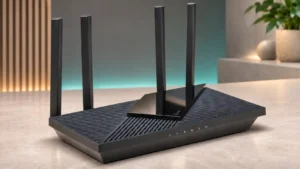
Overall: 4.0/5
The router handles numerous connected devices and simultaneous streaming or work tasks well for its class.
Pros: value for money, parental controls
Cons: subscription requirements, multi-gig Ethernet support
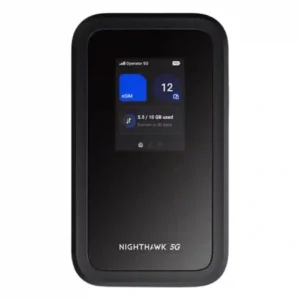
Overall: 4.1/5
The M7 handles several active devices comfortably, and one stress test ran 27 devices at once without falling apart.
Pros: eSIM flexibility, cellular connectivity
Cons: interface responsiveness, Ethernet port count

Overall: 4.1/5
Substantial wireless capacity makes simultaneous household activity a promising strength.
Pros: wireless performance, Wi-Fi speed
Cons: value for money, size and footprint
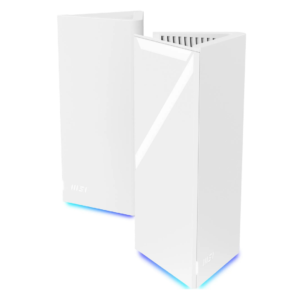
Overall: 4.3/5
The system is built for busy homes and newer Wi-Fi 7 clients, although weaker legacy-band throughput may constrain several simultaneous high-quality streams.
Pros: value for money, design and appearance
Cons: node pairing ease, outdoor coverage

Overall: 4.3/5
Many wired and wireless clients can operate concurrently, although occasional device-per-band limits have been reported.
Pros: value for money, Wi-Fi speed
Cons: subscription requirements, WAN port speed

Overall: 4.1/5
Several simultaneous streams and everyday devices generally run smoothly. Heavier loads with numerous clients can expose the limited radio capacity.
Pros: value for money, Wi-Fi speed
Cons: 6 GHz performance, subscription requirements