Best for congestion handling
D-Link Aquila Pro AI R95
5.0 attribute score
Highest scored product for this attribute based on supporting review evidence.

Highest scored product for this attribute based on supporting review evidence.
Balances the attribute score, supporting reviews, and overall product strength.
Has the broadest review evidence for this attribute.
Strongest overall product among items with scored evidence for this attribute.

Overall: 4.8/5
Automatic interference detection and channel changes helped the R95 avoid neighboring-network congestion without requiring user intervention.
Pros: Wi-Fi 7 support, Wi-Fi speed
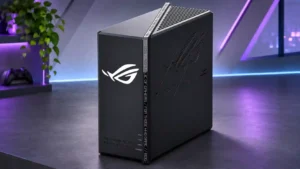
Overall: 4.3/5
Congested traffic produced minimal throughput degradation in testing.
Pros: Wi-Fi speed, Ethernet port count
Cons: 10 GbE support, WAN port speed
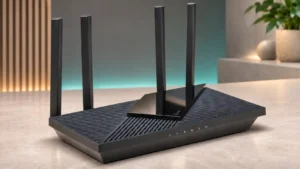
Overall: 4.0/5
Loaded-network testing showed a major advantage over older Wi-Fi 5 equipment.
Pros: value for money, parental controls
Cons: subscription requirements, multi-gig Ethernet support

Overall: 4.2/5
The 6 GHz and 5 GHz bands hold up particularly well when several devices generate traffic.
Pros: value for money, Wi-Fi speed
Cons: subscription requirements, long-range speed
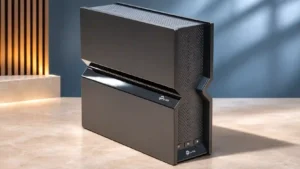
Overall: 4.3/5
The additional 6 GHz spectrum and optimization tools help distribute traffic and avoid congested channels.
Pros: value for money, Wi-Fi speed
Cons: subscription requirements, WAN port speed
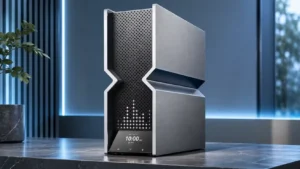
Overall: 4.1/5
The second 5GHz band is useful for distributing traffic and reducing congestion, although this benefit depends on the network.
Pros: wireless performance, Wi-Fi speed
Cons: value for money, size and footprint

Overall: 4.5/5
In crowded Wi‑Fi environments, MLO and newer scheduling features help the Slate 7 hold throughput better than expected. Without 6GHz, it still cannot escape congestion as effectively as a full...
Pros: VPN client support, value for money
Cons: 6 GHz performance, USB storage sharing
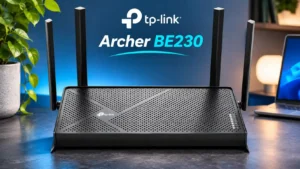
Overall: 4.1/5
Strong close-range throughput under congestion is encouraging, and DFS offers additional channel options. Crowded networks and longer distances can still challenge a dual-band design.
Pros: value for money, Wi-Fi speed
Cons: 6 GHz performance, subscription requirements
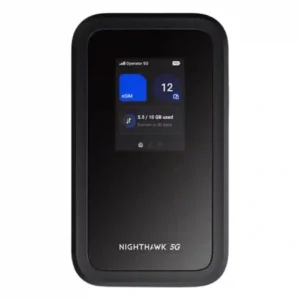
Overall: 4.1/5
Even in a crowded network environment, everyday performance remained usable, though cleaner spectrum could produce better speeds.
Pros: eSIM flexibility, cellular connectivity
Cons: interface responsiveness, Ethernet port count
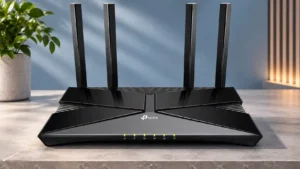
Overall: 3.7/5
Wi-Fi 6 scheduling can reduce contention, but limited channels and no DFS make congested wireless environments challenging.
Pros: Overall satisfaction, value for money
Cons: USB port support, 160 MHz support