Best for latency consistency
ASUS ROG Strix GS-BE18000
5.0 attribute score
Highest scored product for this attribute based on supporting review evidence.

Highest scored product for this attribute based on supporting review evidence.
Balances the attribute score, supporting reviews, and overall product strength.
Has the broadest review evidence for this attribute.
Strongest overall product among items with scored evidence for this attribute.
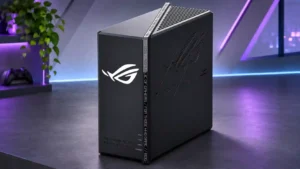
Overall: 4.3/5
Low jitter and consistent ping are strengths in several gaming tests, even when average latency is not exceptional.
Pros: Wi-Fi speed, Ethernet port count
Cons: 10 GbE support, WAN port speed

Overall: 4.8/5
The move to the R95 produced better ping behavior and almost completely eliminated the random dropouts previously affecting the household.
Pros: Wi-Fi 7 support, Wi-Fi speed

Overall: 4.4/5
Configured QoS helps prevent ping spikes when competing traffic is heavy.
Pros: setup ease, configuration flexibility
Cons: Wi-Fi 7 support, USB storage sharing
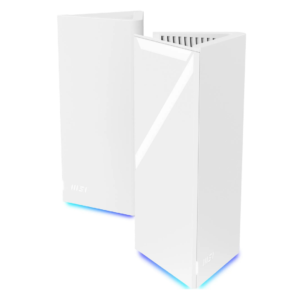
Overall: 4.3/5
Measured ping stayed low and steady across rooms, including a difficult back-office location.
Pros: value for money, design and appearance
Cons: node pairing ease, outdoor coverage

Overall: 4.1/5
Several tests found little lag under load, although latency and jitter are otherwise typical of dual-band routers.
Pros: value for money, Wi-Fi speed
Cons: 6 GHz performance, subscription requirements
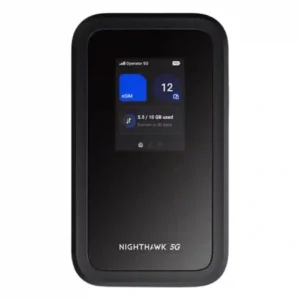
Overall: 4.1/5
Wired gaming remained steady enough to avoid stutters or lag during the test.
Pros: eSIM flexibility, cellular connectivity
Cons: interface responsiveness, Ethernet port count
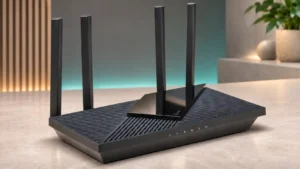
Overall: 4.0/5
Jitter is adequate for ordinary use and exceptionally low in one open-space range test.
Pros: value for money, parental controls
Cons: subscription requirements, multi-gig Ethernet support
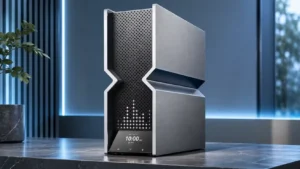
Overall: 4.1/5
Jitter is decent for ordinary wireless gaming and communication; Ethernet is preferable for greater stability.
Pros: wireless performance, Wi-Fi speed
Cons: value for money, size and footprint

Overall: 4.3/5
Some owners experience steady latency or improvement over older routers; others report sudden spikes.
Pros: value for money, Wi-Fi speed
Cons: subscription requirements, WAN port speed

Overall: 3.7/5
Jitter and occasional high latency are acceptable for general use rather than demanding competitive play.
Pros: setup ease, value for money
Cons: Ethernet port count, Wi-Fi speed

Overall: 4.5/5
Latency is usually good, but it rises when connection counts become extremely high. Typical travel loads are far less demanding than that stress condition.
Pros: VPN client support, value for money
Cons: 6 GHz performance, USB storage sharing

Overall: 4.2/5
Jitter can rise substantially when connected through a satellite, making latency-sensitive activity less predictable.
Pros: value for money, Wi-Fi speed
Cons: subscription requirements, long-range speed