Best for local dimming performance
ASUS ROG Swift OLED PG32UCDM Gen3
5.0 attribute score
Highest scored product for this attribute based on supporting review evidence.

Highest scored product for this attribute based on supporting review evidence.
Balances the attribute score, supporting reviews, and overall product strength.
Has the broadest review evidence for this attribute.
Strongest overall product among items with scored evidence for this attribute.
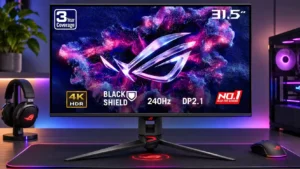
Overall: 4.2/5
Per-pixel OLED illumination creates powerful dark-scene contrast and bright objects without distracting halos. It is a major advantage over many backlit LCD displays.
Pros: overall satisfaction, black levels
Cons: value for money, stand adjustability
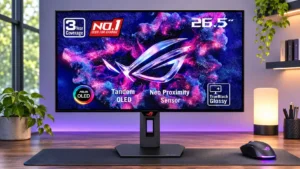
Overall: 4.4/5
Self-emissive pixels turn fully off beside bright details, providing contrast precision that zone-based LCD backlights cannot match.
Pros: overall satisfaction, response time
Cons: reflection handling, VRR flicker
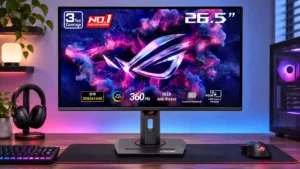
Overall: 4.4/5
Individual OLED pixels eliminate the zone-transition and halo artifacts associated with conventional local-dimming backlights.
Pros: color gamut, overall satisfaction
Cons: reflection handling, VRR flicker

Overall: 4.2/5
OLED’s per-pixel lighting preserves dark areas naturally rather than depending on coarse backlight zones.
Pros: overall satisfaction, black levels
Cons: reflection handling, Color brightness
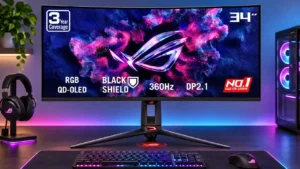
Overall: 4.5/5
Unlike zoned LCD backlights, individual OLED pixels can turn fully off next to bright pixels, avoiding halos.
Pros: color gamut, contrast
Cons: value for money, Resolution
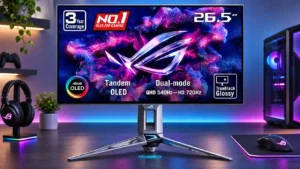
Overall: 4.3/5
Local dimming performance works especially well in supported gaming or desktop scenarios, helping the monitor feel polished and capable.
Pros: black levels, motion clarity
Cons: value for money, Dual-mode versatility
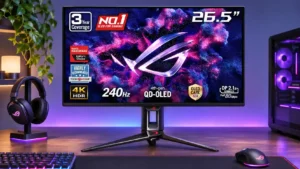
Overall: 4.4/5
Per-pixel dimming allows fine control of bright objects against black backgrounds, avoiding the zone-by-zone compromises of typical LCDs.
Pros: sharpness, overall satisfaction
Cons: value for money, VRR flicker
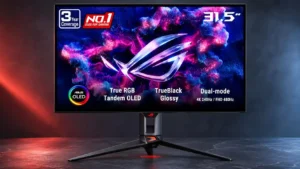
Overall: 4.3/5
Individual OLED pixels give exceptionally precise light control, keeping black areas dark even beside bright details.
Pros: black levels, sharpness
Cons: value for money, brightness
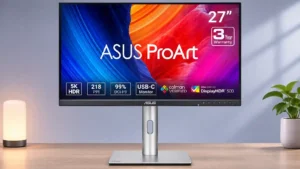
Overall: 4.1/5
Its simple edge-based dimming is widely criticized for weak black control and visible unevenness. One test saw measurable contrast gains, but the overall HDR presentation remains limited.
Pros: value for money, Resolution
Cons: HDR performance, refresh rate

Overall: 4.1/5
Dynamic dimming is a weak spot; large zones can brighten unrelated portions of the image. Several testers prefer leaving it disabled.
Pros: color accuracy, overall picture quality
Cons: HDR performance, refresh rate
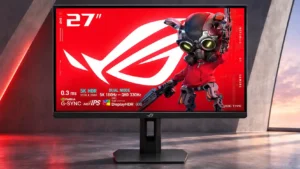
Overall: 4.1/5
Ten edge-lit zones are inadequate for convincing HDR contrast and can create halos or distracting brightness patches.
Pros: Pixel density, Resolution
Cons: GPU demands, HDR performance
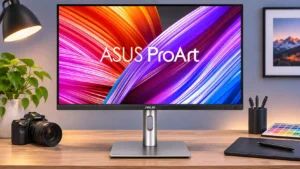
Overall: 4.3/5
Limited or ineffective dimming is a core reason the HDR image lacks depth. Testers disagree on how to describe the dimming implementation, but not its lack of useful impact.
Pros: USB-C power delivery, port selection
Cons: HDR performance, refresh rate
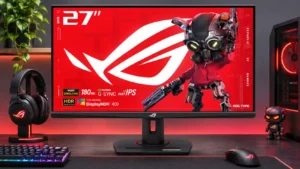
Overall: 3.8/5
There is no local dimming hardware, so HDR cannot isolate bright highlights from dark backgrounds.
Pros: value for money, Resolution
Cons: HDR performance, port selection

Overall: 3.9/5
There is no useful local dimming for HDR contrast; the segmented Pulsar backlight is designed for motion, not independent dark-scene illumination.
Pros: motion clarity, Backlight strobing
Cons: contrast, HDR performance