Best for contrast
ASUS ROG Strix OLED XG27ACDNG
5.0 attribute score
Highest scored product for this attribute based on supporting review evidence.

Highest scored product for this attribute based on supporting review evidence.
Balances the attribute score, supporting reviews, and overall product strength.
Has the broadest review evidence for this attribute.
Strongest overall product among items with scored evidence for this attribute.
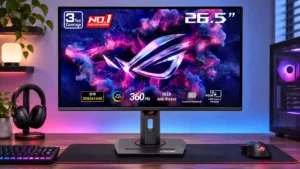
Pixel-level light control delivers exceptionally strong dark-scene contrast and convincing image depth without LCD-style backlight halos.
Pros: color gamut, overall satisfaction
Cons: reflection handling, VRR flicker
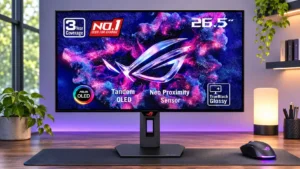
Near-infinite OLED contrast gives nighttime scenes and bright objects an unusually dramatic separation.
Pros: overall satisfaction, response time
Cons: reflection handling, VRR flicker
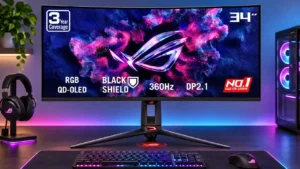
Perfect-pixel OLED blacks alongside bright highlights create exceptional depth, especially in dark scenes.
Pros: color gamut, contrast
Cons: value for money, Resolution
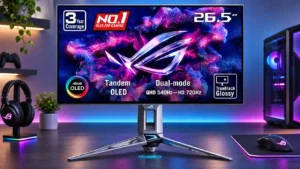
Per-pixel lighting makes bright and dark objects coexist without halos, lending games a dramatic sense of depth.
Pros: black levels, motion clarity
Cons: value for money, Dual-mode versatility
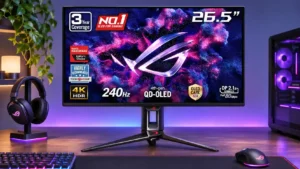
Pixel-level light control produces outstanding scene depth and contrast, especially in darker rooms. Strong ambient light can diminish that striking effect.
Pros: sharpness, overall satisfaction
Cons: value for money, VRR flicker
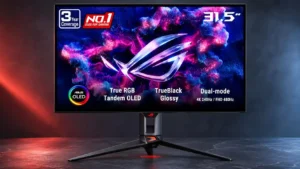
Per-pixel OLED lighting creates exceptional contrast and crisp separation between dark backgrounds and bright details, even in moderately lit rooms.
Pros: black levels, sharpness
Cons: value for money, brightness
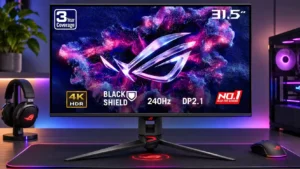
Per-pixel OLED dimming gives bright highlights striking separation from deep dark scenes with essentially no blooming. Contrast is most impressive when ambient light is controlled.
Pros: overall satisfaction, black levels
Cons: value for money, stand adjustability
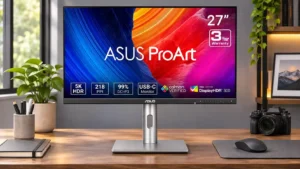
Contrast is better than on conventional IPS displays, adding welcome depth to SDR images. It remains well behind OLED in dark scenes.
Pros: color accuracy, overall picture quality
Cons: HDR performance, refresh rate
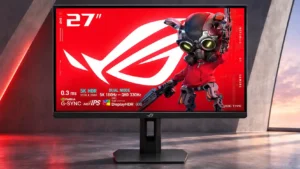
IPS contrast is the chief image-quality compromise: some find it respectable for LCD, but dark scenes cannot match OLED or high-zone mini-LED.
Pros: Pixel density, Resolution
Cons: GPU demands, HDR performance
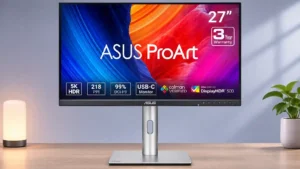
Opinions vary on its IPS contrast: several find it respectable for LCD technology, but others find the blacks and overall depth disappointing beside OLED or Mini LED.
Pros: value for money, Resolution
Cons: HDR performance, refresh rate
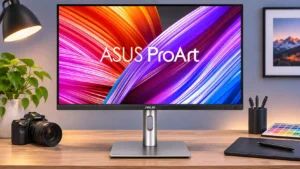
Conventional IPS contrast is a repeating weakness, with blacks that can look gray or washed out. This matters more in a dark room or during HDR viewing than routine SDR...
Pros: USB-C power delivery, port selection
Cons: HDR performance, refresh rate
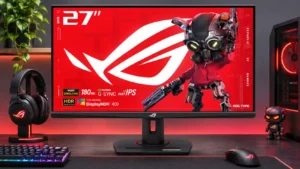
IPS contrast leaves shadowy scenes looking gray and washed out. Brighter colorful games flatter this panel much more than dark cinematic material.
Pros: value for money, Resolution
Cons: HDR performance, port selection
Roughly standard IPS contrast leaves dark scenes without true depth. Good SDR color does not make up for the missing OLED-like blacks or local dimming.
Pros: motion clarity, Backlight strobing
Cons: contrast, HDR performance
Contrast is an evident limitation: measured performance is around the usual IPS range, leaving dark material less convincing than on stronger-contrast alternatives.
Pros: color accuracy, value for money
Cons: color gamut, black levels