Best for refresh rate
ASUS ROG Swift OLED PG27AQWP-W
5.0 attribute score
Highest scored product for this attribute based on supporting review evidence.

Highest scored product for this attribute based on supporting review evidence.
Balances the attribute score, supporting reviews, and overall product strength.
Has the broadest review evidence for this attribute.
Strongest overall product among items with scored evidence for this attribute.
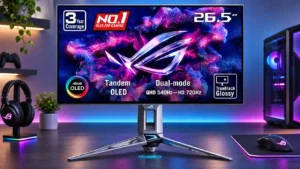
Native 1440p at 540Hz is exceptionally smooth for high-frame-rate games. The optional 720Hz mode adds smaller improvements and cuts resolution to 720p.
Pros: black levels, motion clarity
Cons: value for money, Dual-mode versatility

The 360Hz refresh rate is a substantial jump over older 175Hz and 240Hz ultrawides, with the biggest payoff in games that can actually reach high fps.
Pros: color gamut, contrast
Cons: value for money, Resolution

A 240Hz 4K baseline provides excellent responsiveness, while the optional 480Hz full-HD mode makes speed the priority for esports.
Pros: black levels, sharpness
Cons: value for money, brightness

The native 360Hz panel delivers wonderfully fluid motion, especially over 240fps; that advantage shrinks in slower games or on consoles.
Pros: color gamut, overall satisfaction
Cons: reflection handling, VRR flicker

At 240Hz, gameplay is exceptionally smooth without sacrificing 4K sharpness. Reaching that ceiling in demanding games takes a powerful PC.
Pros: sharpness, overall satisfaction
Cons: value for money, VRR flicker
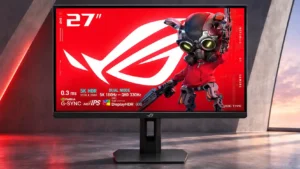
High refresh at native 5K plus up to 330Hz at 1440p delivers unusually flexible smoothness. Maximum 5K rates require a compatible GPU.
Pros: Pixel density, Resolution
Cons: GPU demands, HDR performance
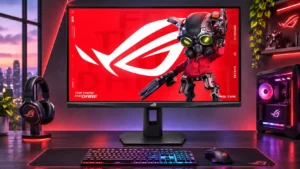
The 360Hz refresh rate is excellent for a QHD IPS monitor and especially effective with high-frame-rate games. Full speed requires DisplayPort.
Pros: motion clarity, Backlight strobing
Cons: contrast, HDR performance
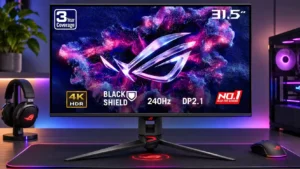
The 240Hz ceiling is an excellent balance for 4K gaming and remains much smoother than 60–120Hz displays. Some high-level esports players want 360Hz or faster instead.
Pros: overall satisfaction, black levels
Cons: value for money, stand adjustability
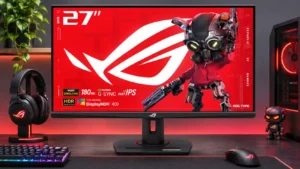
The 180Hz maximum makes gameplay fluid and responsive for the price, though enthusiasts seeking 240Hz or more may want another model.
Pros: value for money, Resolution
Cons: HDR performance, port selection
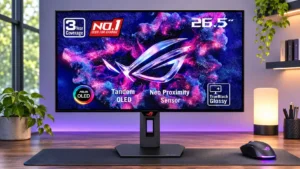
At 280Hz, motion is already very smooth for most games, though esports buyers seeking maximum speed can find 360–500Hz alternatives.
Pros: overall satisfaction, response time
Cons: reflection handling, VRR flicker
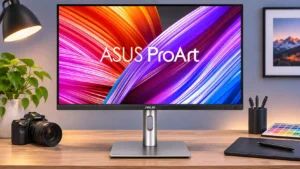
The standard 60Hz ceiling is generally sufficient for office, photography, and traditional video editing. It is a clear limitation for high-refresh gaming and unusually fluid scrolling.
Pros: USB-C power delivery, port selection
Cons: HDR performance, refresh rate
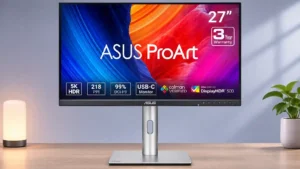
A 60Hz cap is acceptable for traditional creative timelines and normal office work but disappointing for fast games or people accustomed to 120Hz-plus displays.
Pros: value for money, Resolution
Cons: HDR performance, refresh rate
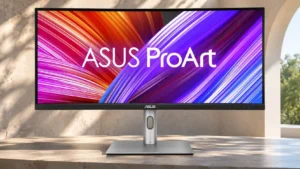
The 60Hz refresh is fine for productivity but draws criticism for visibly less fluid motion than 120Hz alternatives.
Pros: color accuracy, value for money
Cons: color gamut, black levels
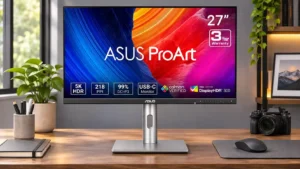
The 60Hz ceiling is repeatedly cited as dated, especially beside modern high-refresh laptop screens and for fast video or gaming.
Pros: color accuracy, overall picture quality
Cons: HDR performance, refresh rate