Best for Resolution
ASUS ROG Strix 5K XG27JCG
5.0 attribute score
Highest scored product for this attribute based on supporting review evidence.

Highest scored product for this attribute based on supporting review evidence.
Balances the attribute score, supporting reviews, and overall product strength.
Has the broadest review evidence for this attribute.
Strongest overall product among items with scored evidence for this attribute.
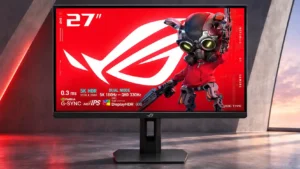
Native 5120-by-2880 resolution is the standout draw, providing remarkably detailed games and text. That extra fidelity is most noticeable in slower scenes and desktop work.
Pros: Pixel density, Resolution
Cons: GPU demands, HDR performance

Packing 4K into a 27-inch OLED gives games, interface elements, and small text exceptional definition. The extra pixels are especially noticeable next to 1440p OLEDs.
Pros: sharpness, overall satisfaction
Cons: value for money, VRR flicker
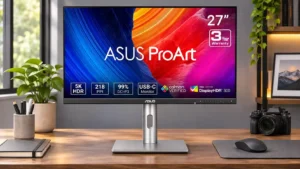
The dense 27-inch 5K panel makes tiny details and interface elements noticeably cleaner than on many lower-resolution screens. The upgrade over a good 4K monitor may be modest to some...
Pros: color accuracy, overall picture quality
Cons: HDR performance, refresh rate
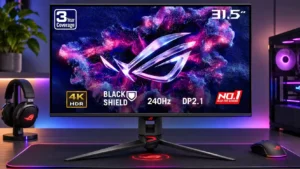
4K detail looks crisp across the generous 32-inch display, benefiting gaming, movies, and office windows. Some users need OS scaling to keep text comfortably sized.
Pros: overall satisfaction, black levels
Cons: value for money, stand adjustability
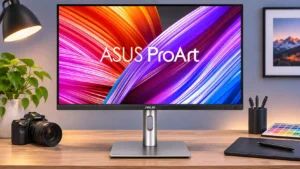
The 27-inch 4K panel delivers fine detail for photography, native-resolution video editing, and desktop text. Its high density is one of the clearest reasons to buy.
Pros: USB-C power delivery, port selection
Cons: HDR performance, refresh rate

4K resolution on the 32-inch panel provides rich detail and a large working area, though many users will want operating-system text scaling.
Pros: black levels, sharpness
Cons: value for money, brightness
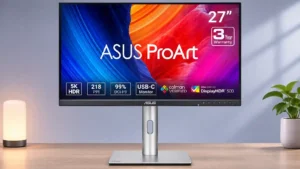
The 32-inch 6K canvas is the headline advantage, bringing far more usable pixels than 4K and providing beautiful detail for creative applications.
Pros: value for money, Resolution
Cons: HDR performance, refresh rate
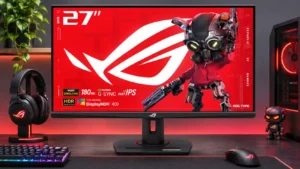
The 2560×1440 resolution strikes a well-liked balance between crisp visuals and manageable GPU demands at 27 inches.
Pros: value for money, Resolution
Cons: HDR performance, port selection
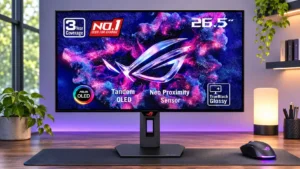
QHD at 27 inches provides a practical compromise between image detail and achievable high PC frame rates, with less fine detail than 4K.
Pros: overall satisfaction, response time
Cons: reflection handling, VRR flicker

QHD strikes a useful balance between visual detail and the frame rates needed for high-refresh gaming, but it cannot match native 4K sharpness.
Pros: color gamut, overall satisfaction
Cons: reflection handling, VRR flicker
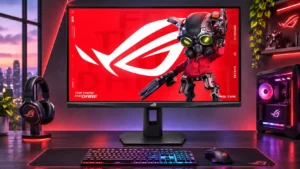
The 2560×1440 picture strikes a useful balance between desktop detail and attainable gaming frame rates, although it cannot match 4K or 5K text sharpness.
Pros: motion clarity, Backlight strobing
Cons: contrast, HDR performance
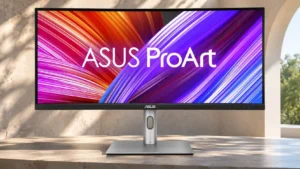
The 3440×1440 resolution balances usable ultrawide space with moderate hardware demands. It is less crisp and vertically detailed than 4K or 5K2K alternatives.
Pros: color accuracy, value for money
Cons: color gamut, black levels

The 3440×1440 ultrawide format provides useful working space and sharp images, especially with RGB stripe. It is not as finely detailed as true 4K or higher-density rivals.
Pros: color gamut, contrast
Cons: value for money, Resolution
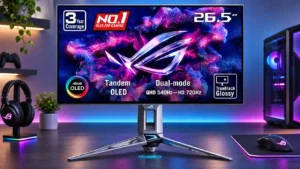
Native 1440p looks good for 27-inch gaming and makes extreme frame rates more achievable than 4K. The 720p boost mode is much blurrier, and 4K remains sharper for fine text.
Pros: black levels, motion clarity
Cons: value for money, Dual-mode versatility