Best for port selection
ASUS ROG Swift OLED PG32UCWM
5.0 attribute score
Highest scored product for this attribute based on supporting review evidence.

Highest scored product for this attribute based on supporting review evidence.
Balances the attribute score, supporting reviews, and overall product strength.
Has the broadest review evidence for this attribute.
Strongest overall product among items with scored evidence for this attribute.
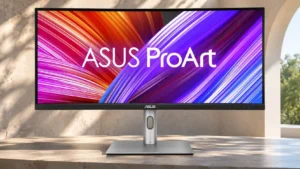
A broad range of video, USB-C, network and peripheral connectors makes the monitor unusually well equipped for its price class.
Pros: color accuracy, value for money
Cons: color gamut, black levels

DisplayPort 2.1, HDMI 2.1, USB-C and USB data ports provide an extensive connection suite for premium gaming and work setups.
Pros: black levels, sharpness
Cons: value for money, brightness
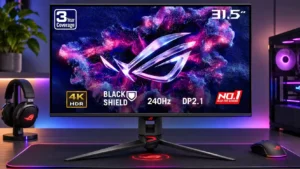
DisplayPort 2.1, HDMI 2.1, USB-C, USB-A, and audio output create a versatile connection set. The omission of older optical audio output disappoints users of some external DACs.
Pros: overall satisfaction, black levels
Cons: value for money, stand adjustability

DisplayPort 2.1, dual HDMI 2.1, USB-C, several USB-A ports and a headphone output form a particularly well-rounded connection set.
Pros: color gamut, contrast
Cons: value for money, Resolution

DisplayPort 2.1, two HDMI 2.1 inputs, USB-C, and a USB hub give this compact display unusually broad connectivity. Its KVM adds everyday utility.
Pros: sharpness, overall satisfaction
Cons: value for money, VRR flicker

Two HDMI 2.1 ports, DisplayPort, USB-C and multiple USB connections form a flexible setup for PCs, consoles and peripherals.
Pros: color gamut, overall satisfaction
Cons: reflection handling, VRR flicker
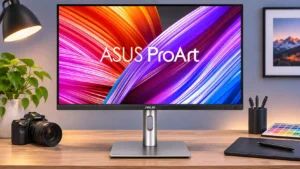
USB-C, HDMI, DisplayPort in/out, and USB accessory ports make the connection suite unusually useful for the price. Lack of Ethernet and KVM keeps it short of full docking-station capability.
Pros: USB-C power delivery, port selection
Cons: HDR performance, refresh rate
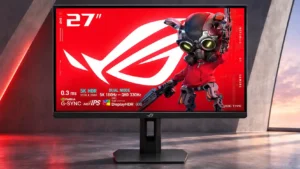
Multiple HDMI, DisplayPort, USB-C and USB-A connections are a practical advantage, though the limited USB-C charging output holds back laptop use.
Pros: Pixel density, Resolution
Cons: GPU demands, HDR performance
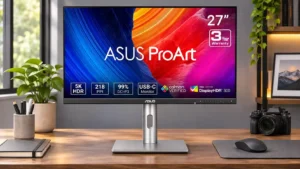
USB-C, HDMI and DisplayPort cover mainstream setups, and the hub is handy. Buyers wanting Thunderbolt, Ethernet or more high-speed ports may find it limited.
Pros: color accuracy, overall picture quality
Cons: HDR performance, refresh rate
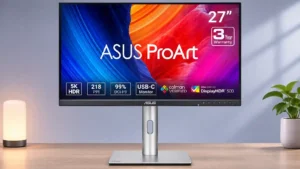
Thunderbolt 4, DisplayPort, HDMI and USB provide above-average versatility. Users with numerous peripherals or multiple HDMI devices may still want more ports.
Pros: value for money, Resolution
Cons: HDR performance, refresh rate
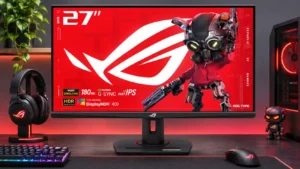
DisplayPort, HDMI, and USB-C video provide useful flexibility, but a single HDMI on some configurations and missing USB-A hub limit elaborate setups.
Pros: value for money, Resolution
Cons: HDR performance, port selection
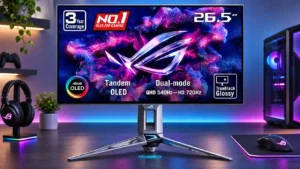
Full-bandwidth DisplayPort and two HDMI 2.1 inputs are strong gaming choices, but the missing USB-C and KVM reduce its appeal for laptop and dual-computer users.
Pros: black levels, motion clarity
Cons: value for money, Dual-mode versatility
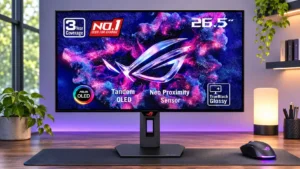
Two HDMI 2.1 inputs, DisplayPort and USB-A cover basic gaming. No USB-C or KVM limits modern docking and shared-device flexibility.
Pros: overall satisfaction, response time
Cons: reflection handling, VRR flicker
Two HDMI 2.1 ports, DisplayPort, and USB-A cover basic gaming needs, but the lack of USB-C and KVM disappoints in this price class.
Pros: motion clarity, Backlight strobing
Cons: contrast, HDR performance