Best for adaptive sync performance
ASUS ROG Strix 5K XG27JCG
5.0 attribute score
Highest scored product for this attribute based on supporting review evidence.

Highest scored product for this attribute based on supporting review evidence.
Balances the attribute score, supporting reviews, and overall product strength.
Has the broadest review evidence for this attribute.
Strongest overall product among items with scored evidence for this attribute.
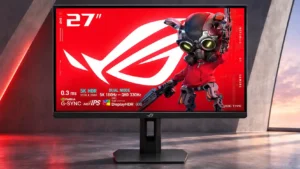
G-SYNC and FreeSync support provide responsive, tear-free gaming, including compatibility with a motion-blur reduction mode.
Pros: Pixel density, Resolution
Cons: GPU demands, HDR performance
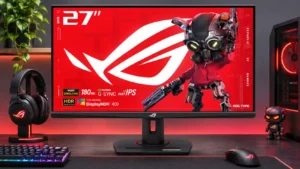
FreeSync and G-Sync support help keep gameplay smooth across changing frame rates. Variable overdrive also keeps artifacts in check as refresh falls.
Pros: value for money, Resolution
Cons: HDR performance, port selection

FreeSync and G-Sync compatibility help keep fast games smooth, with generally clean response even under changing frame rates. The dedicated anti-flicker mode brings its own limitations.
Pros: color gamut, contrast
Cons: value for money, Resolution
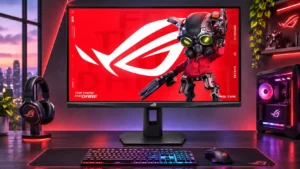
G-SYNC variable refresh normally combines with Pulsar cleanly across fluctuating game frame rates. Early firmware displayed some doubling issues that were subsequently addressed in testing.
Pros: motion clarity, Backlight strobing
Cons: contrast, HDR performance
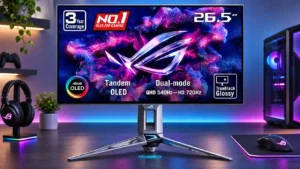
VRR support works across a broad refresh range, with consistently fast OLED response; its main caveat is possible flicker during frame-rate swings.
Pros: black levels, motion clarity
Cons: value for money, Dual-mode versatility

Broad adaptive-sync support generally keeps frame delivery smooth across different graphics cards. Uneven frame rates can still trigger OLED flicker.
Pros: sharpness, overall satisfaction
Cons: value for money, VRR flicker
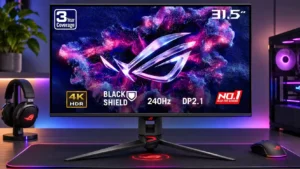
FreeSync and G-Sync support help keep gameplay fluid, though testing of the anti-flicker options uncovered a separate VRR-related weakness.
Pros: overall satisfaction, black levels
Cons: value for money, stand adjustability

Adaptive sync generally keeps games tear-free and responsive, although fluctuating frame rates can introduce OLED flicker and mitigation tradeoffs.
Pros: color gamut, overall satisfaction
Cons: reflection handling, VRR flicker
MediaSync/FreeSync support adds some motion flexibility within the display's narrow refresh range. It does not make the panel comparable with high-refresh gaming displays.
Pros: USB-C power delivery, port selection
Cons: HDR performance, refresh rate
FreeSync and G-SYNC can operate over DisplayPort, adding some flexibility for occasional gaming.
Pros: color accuracy, value for money
Cons: color gamut, black levels
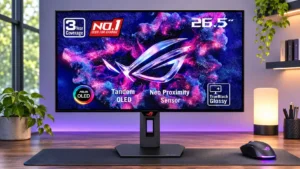
G-SYNC and FreeSync work well for variable-frame-rate gaming, though using stronger anti-flicker modes can narrow the effective VRR range.
Pros: overall satisfaction, response time
Cons: reflection handling, VRR flicker

Variable refresh generally suits smooth gaming, but the anti-flicker setting creates a narrow frame-rate range where VRR disengages and tearing or judder may appear.
Pros: black levels, sharpness
Cons: value for money, brightness
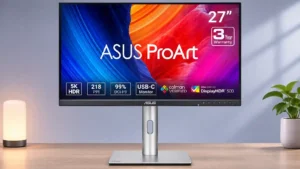
Adaptive-Sync is present, but its narrow operating range and incompatibility with overdrive limit the benefit for action games. It is more useful for modest media playback smoothness.
Pros: value for money, Resolution
Cons: HDR performance, refresh rate
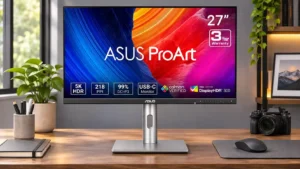
MediaSync offers a narrow variable-refresh range, and enabling it can restrict overdrive options.
Pros: color accuracy, overall picture quality
Cons: HDR performance, refresh rate