Best for competitive gaming suitability
ASUS ROG Strix OLED XG27ACDNG
5.0 attribute score
Highest scored product for this attribute based on supporting review evidence.

Highest scored product for this attribute based on supporting review evidence.
Balances the attribute score, supporting reviews, and overall product strength.
Has the broadest review evidence for this attribute.
Strongest overall product among items with scored evidence for this attribute.
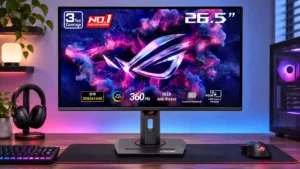
360Hz operation, near-instant response and low lag are excellent for shooters and esports when the PC can deliver high frame rates.
Pros: color gamut, overall satisfaction
Cons: reflection handling, VRR flicker
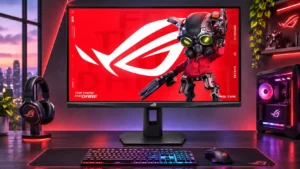
Among its clearest strengths are fast response, very low lag, 360Hz refresh, and crisp Pulsar motion. It is especially rewarding for fast competitive play on NVIDIA PCs.
Pros: motion clarity, Backlight strobing
Cons: contrast, HDR performance
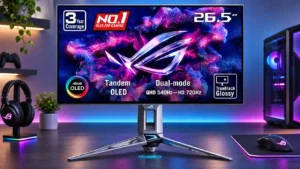
Elite competitive players get ultra-clear motion and extremely low latency, especially when they can exceed 300fps. The 720Hz mode is an optional niche tradeoff.
Pros: black levels, motion clarity
Cons: value for money, Dual-mode versatility
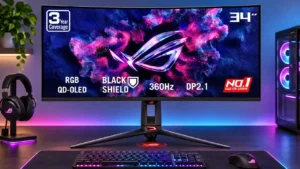
Instantaneous-feeling response, negligible input lag and 360Hz updates make this a standout for shooters and esports, assuming the PC can deliver high frame rates.
Pros: color gamut, contrast
Cons: value for money, Resolution
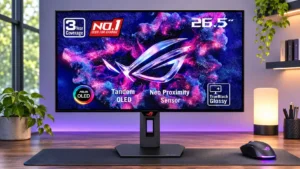
Very fast pixel transitions, low input lag and smooth 280Hz motion suit competitive games. Higher-refresh 360–500Hz models remain available for specialists.
Pros: overall satisfaction, response time
Cons: reflection handling, VRR flicker
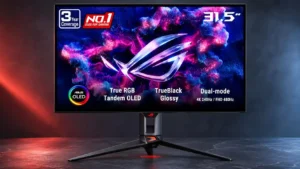
Switching from sharp 4K 240Hz to extremely responsive 1080p 480Hz gives fast-paced competitive games a meaningful speed and motion advantage.
Pros: black levels, sharpness
Cons: value for money, brightness
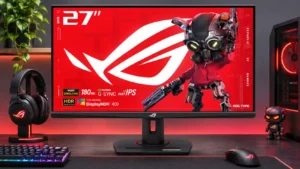
Fast pixel transitions, low latency, and 180Hz refresh suit quick multiplayer games particularly well. Extreme esports players may still want higher refresh rates.
Pros: value for money, Resolution
Cons: HDR performance, port selection
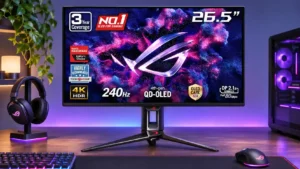
The 240Hz OLED speed, minimal input lag, and compact view make fast shooters highly responsive. It remains a demanding choice for PCs trying to push 4K frames.
Pros: sharpness, overall satisfaction
Cons: value for money, VRR flicker
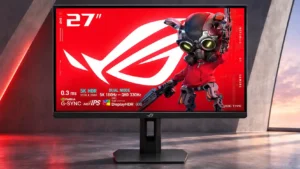
The 1440p/330Hz mode, responsive controls and motion options suit fast competition well, though OLED rivals may be preferable when pure esports speed is the only priority.
Pros: Pixel density, Resolution
Cons: GPU demands, HDR performance
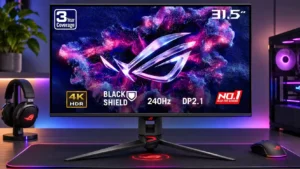
Instant response and low lag make the monitor fast enough for serious play, with simulated smaller-screen modes available. Some competitive players prefer 27-inch models with 360Hz or higher refresh rates...
Pros: overall satisfaction, black levels
Cons: value for money, stand adjustability
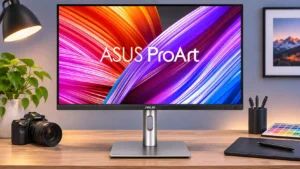
Low input lag helps, but a 60Hz refresh ceiling and only moderate response times hold it back for fast competitive play. It is not intended to replace a dedicated esports...
Pros: USB-C power delivery, port selection
Cons: HDR performance, refresh rate
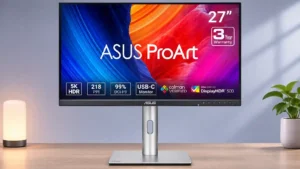
A 60Hz refresh ceiling and visible motion blur make this a poor fit for competitive shooters and other fast-paced esports games.
Pros: value for money, Resolution
Cons: HDR performance, refresh rate
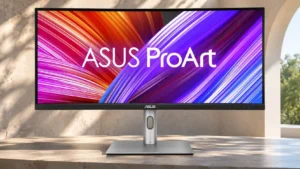
Fast competitive games are not this monitor's strength. Reviewers point to 60Hz refresh and modest response times as reasons to shop elsewhere.
Pros: color accuracy, value for money
Cons: color gamut, black levels
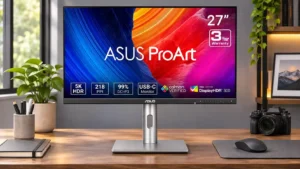
A 60Hz refresh ceiling and visible motion blur make this a poor substitute for a fast gaming monitor.
Pros: color accuracy, overall picture quality
Cons: HDR performance, refresh rate