Best overall
Asus ROG Swift 34 QD-OLED PG34WCDN
4.5 overall score
Highest ranked product in this category by consolidated review score.

Highest ranked product in this category by consolidated review score.
Balances a strong score with broader review coverage.
Leads this category on a matching scored feature.
Leads this category on a matching scored feature.
Most common complaint: speaker quality (1.5 category average)
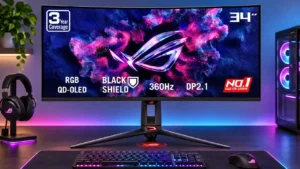
This 360Hz QD-OLED ultrawide delivers exceptional gaming motion, vibrant HDR and dramatically cleaner text. Its high price, less-than-perfect bright-room blacks and occasional HDR dimming are the main reasons to hesitate.
Pros: color gamut, contrast
Cons: value for money, Resolution
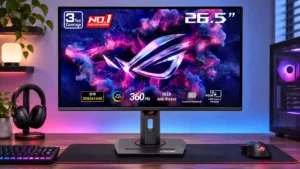
Lightning-fast 360Hz OLED gaming, rich color and an unusually flexible USB-C/KVM setup are the big draws. Strong room lighting, limited full-screen HDR brightness and static-content burn-in concerns keep it from...
Pros: color gamut, overall satisfaction
Cons: reflection handling, VRR flicker
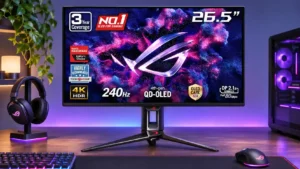
The 27-inch 4K OLED picture is exceptionally crisp and responsive, with useful USB-C and KVM extras. Its high price, oversized stand, and bright-room compromises limit its appeal.
Pros: sharpness, overall satisfaction
Cons: value for money, VRR flicker
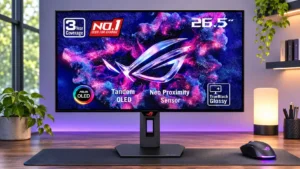
The glossy Tandem OLED panel delivers vivid, high-contrast HDR and exceptionally smooth 280Hz gaming at a competitive OLED price. The tradeoffs are mirror-like reflections, occasional VRR flicker and no USB-C...
Pros: overall satisfaction, response time
Cons: reflection handling, VRR flicker
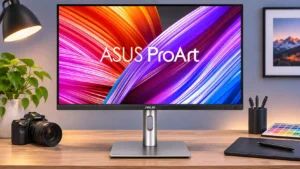
Excellent factory color, crisp 4K detail, and 96W USB-C docking make this a standout affordable editing monitor. Weak contrast, modest HDR, and 60Hz refresh are the tradeoffs.
Pros: USB-C power delivery, port selection
Cons: HDR performance, refresh rate
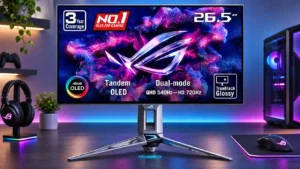
Exceptionally clear 540Hz motion and vibrant Tandem OLED HDR make this a compelling esports display. The premium cost, mirror-like reflections, and blurry 720p boost mode are its clearest compromises.
Pros: black levels, motion clarity
Cons: value for money, Dual-mode versatility
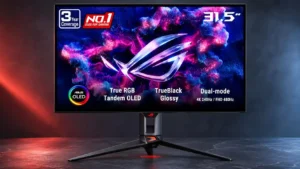
The RGB-stripe OLED is exceptionally sharp for text and brilliantly fast for gaming at 4K 240Hz or 1080p 480Hz. However, uneven HDR brightness, glossy reflections and a steep price make...
Pros: black levels, sharpness
Cons: value for money, brightness
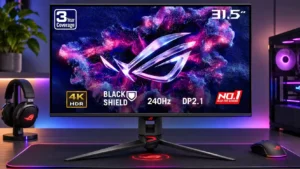
Spectacular 4K OLED gaming, rapid 240Hz motion and improved bright-room blacks make this a flagship standout. Its high price, sprawling stand and occasionally troublesome text clarity are the main reasons...
Pros: overall satisfaction, black levels
Cons: value for money, stand adjustability
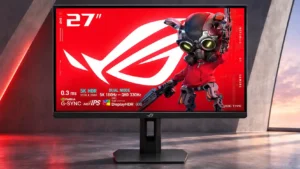
Exceptional 5K sharpness and a genuinely useful 1440p/330Hz mode make this a compelling work-and-play monitor. Weak edge-lit HDR and demanding GPU requirements are the major tradeoffs.
Pros: Pixel density, Resolution
Cons: GPU demands, HDR performance
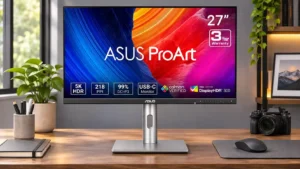
A crisp 5K panel, reliable SDR color and excellent glare control make this a strong-value creative monitor. The 60Hz refresh rate, edge-lit HDR and weak speakers are meaningful compromises.
Pros: color accuracy, overall picture quality
Cons: HDR performance, refresh rate
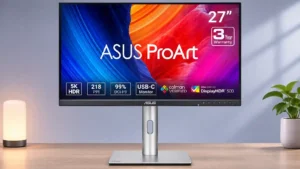
The PA32QCV brings exceptionally roomy, Mac-friendly 6K detail and capable color tools at a comparatively accessible price. Its matte coating, inconsistent panel uniformity and weak HDR are the clearest compromises.
Pros: value for money, Resolution
Cons: HDR performance, refresh rate
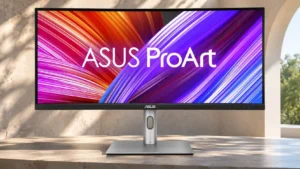
Excellent out-of-box SDR accuracy, a spacious ultrawide canvas and one-cable laptop docking make this a practical creator display. Modest HDR, 60Hz refresh and shallow blacks limit its appeal beyond that...
Pros: color accuracy, value for money
Cons: color gamut, black levels
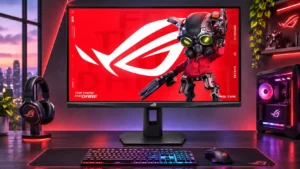
For NVIDIA-powered competitive gaming, the 360Hz IPS panel and Pulsar strobing deliver remarkably sharp motion. The tradeoff is weak HDR and contrast, limited connectivity, and a premium price.
Pros: motion clarity, Backlight strobing
Cons: contrast, HDR performance
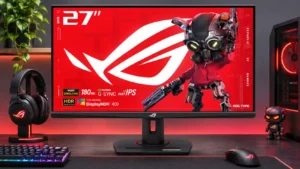
Exceptional IPS motion tuning and precise factory color make this a strong 1440p gaming buy, especially on sale. Gray blacks, limited HDR, and weak USB-C laptop charging are the tradeoffs.
Pros: value for money, Resolution
Cons: HDR performance, port selection