Best for Multi-computer workflows
Asus ROG Swift 34 QD-OLED PG34WCDN
5.0 attribute score
Highest scored product for this attribute based on supporting review evidence.

Highest scored product for this attribute based on supporting review evidence.
Balances the attribute score, supporting reviews, and overall product strength.
Has the broadest review evidence for this attribute.
Strongest overall product among items with scored evidence for this attribute.

KVM, USB ports, picture-by-picture support and multiple video inputs make it convenient to alternate between a gaming PC and another machine.
Pros: color gamut, contrast
Cons: value for money, Resolution

Switching a shared keyboard and mouse between attached computers is a standout convenience, helped by USB-C video and the built-in USB hub.
Pros: color gamut, overall satisfaction
Cons: reflection handling, VRR flicker
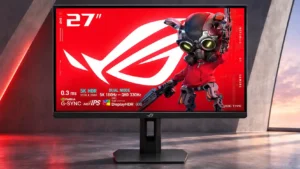
The KVM and multiple video inputs make it practical to use one keyboard and mouse across a gaming desktop and work laptop.
Pros: Pixel density, Resolution
Cons: GPU demands, HDR performance
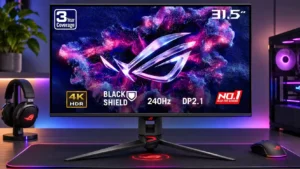
The KVM and USB-C connection make switching between a laptop and desktop convenient, although different per-input color profiles are not remembered automatically.
Pros: overall satisfaction, black levels
Cons: value for money, stand adjustability

USB-C, a KVM switch and picture-by-picture modes can make sharing one display between computers more practical.
Pros: black levels, sharpness
Cons: value for money, brightness

KVM switching and a USB hub make it easy to move keyboard and mouse control between two systems. It is especially convenient for a laptop-and-desktop combination.
Pros: sharpness, overall satisfaction
Cons: value for money, VRR flicker
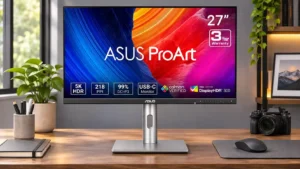
KVM switching and multiple inputs let a laptop and desktop share peripherals with less cable swapping.
Pros: color accuracy, overall picture quality
Cons: HDR performance, refresh rate
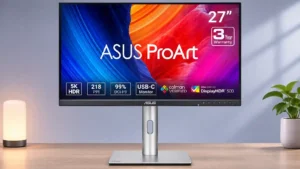
Inputs and Auto KVM can reduce clutter when switching between Mac and PC. Complex setups with sleeping computers or many USB devices may need separate switching hardware.
Pros: value for money, Resolution
Cons: HDR performance, refresh rate