
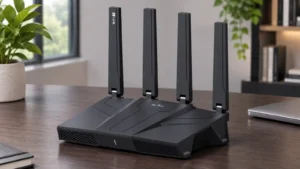
GL.iNet Flint 3 (GL-BE9300) Feature Scores
Overall Scorata score: 4.2/5
Based on 18 analyzed reviews · View source samples
Explore all 108 feature scores for GL.iNet Flint 3 (GL-BE9300), organized into pros and cons.
Scores by Feature
Summary
108 reviewed features-
Very positive 4.5-5.056 (52%)
-
Positive 3.5-4.422 (20%)
-
Neutral 2.5-3.426 (24%)
-
Negative 1.5-2.44 (4%)
Pros
Sort
-
Five 2.5GbE ports are consistently praised as a practical advantage for fast internet and local networking.
-
OpenWrt, LuCI and the friendly management layer deliver unusually extensive control over networking, with advanced options far beyond mainstream consumer routers.
-
The unusually generous five-port Ethernet layout is a standout feature, especially at the router's price.
-
VPN client setup is a standout feature, with popular provider profiles and simple configuration workflows.
-
The OpenWrt package manager opens up a wide range of additional applications and networking tools without needing another appliance for every function.
-
Built-in VPN server capabilities are highly useful for secure remote access and are generally easy to configure.
-
Configurable dual-WAN ports offer valuable flexibility for redundancy and balancing two internet connections.
-
Setup is consistently praised for being straightforward, with guided steps and clear options for browser or mobile configuration.
-
Wireless speeds are generally strong, especially at short range and with modern clients; performance is less consistent with MLO enabled in some tests.
-
The web interface is generally clean, approachable and feature-rich, with LuCI available for advanced configuration. Some operating modes and technical screens are less convenient.
-
Built-in AdGuard Home makes network-wide ad and tracker blocking convenient without a separate appliance, although some sites may need allowlisting.
-
The combination of Wi-Fi 7, fast Ethernet and powerful software is competitively priced. Value is less clear for older-device households and buyers who prioritize VPN throughput or mesh coverage.
-
Nearby clients can achieve impressive throughput, including stable multi-gig-class wireless speeds in favorable conditions.
-
Overall reactions are favorable toward the extensive features and practical wired speeds, tempered by software and coverage limitations and a few disappointing upgrade trade-offs.
-
6GHz delivers excellent close-range speeds and can help avoid congestion, but the benefit diminishes through walls and over longer distances.
-
Failover is a major strength, with wired, cellular tethering and repeater options available to maintain connectivity; existing sessions may still need to reconnect.
-
Fast wired and wireless throughput makes large downloads practical, especially with compatible clients and favorable placement.
-
Every LAN port can operate at multi-gigabit speeds, avoiding the slow gigabit ports common on competing routers.
-
Multi-gig connectivity is unusually comprehensive for a midrange router, with fast ports across the entire wired layout.
-
The setup wizard, QR codes and helpful guides simplify getting online; some advanced screens offer much less assistance.
-
Construction feels solid and the external antennas are particularly sturdy.
-
Several real-world home tests found strong connections across floors, including installations with thick walls.
-
Wi-Fi 7 brings fast modern wireless connectivity at an attractive price, especially for compatible clients, although not every implementation feature is equally mature.
-
The modern wireless standard, five multi-gig ports and ample storage provide headroom for future networking equipment and software expansion.
-
GoodCloud and integrated remote networking services provide convenient remote administration; more demanding users may find the controls less extensive than enterprise-style platforms.
-
Integrated VPN and filtering tools provide strong security flexibility without requiring separate networking appliances.
-
Many advanced features are included without a subscription, although the supplied accounts disagree about which Bark parental-control functions require payment.
-
The graphical dashboard makes connected devices, internet sources, traffic and system status easy to check at a glance.
-
Packaging is tidy, organized and attractively presented, with a straightforward unboxing experience.
-
Wired testing produced consistent gigabit and multi-gigabit results, making the Ethernet side a dependable strength.
-
Parental controls offer useful scheduling and filtering, but ease of use and the availability of free versus paid Bark features drew mixed reactions.
-
Built-in ad and tracker blocking helps reduce unwanted tracking requests across the home network.
-
Foldable antennas and mounting holes make wall placement a convenient option according to several hands-on accounts.
-
WireGuard is easy to configure and can deliver useful speeds, though its throughput ceiling is lower than the previous model's.
-
The generous 8GB of built-in storage provides space for additional OpenWrt packages.
-
VPN testing produced strong speeds around the advertised ceiling, but maximum throughput is a step down from Flint 2, especially for VPN-heavy households.
-
The mobile setup option is convenient for users who prefer configuring a router from their phone.
-
Port forwarding is straightforward, supports VPN interfaces, and includes helpful visual diagrams of rules.
-
The status light can be disabled or scheduled, an appreciated option for dark rooms.
-
The three-band wireless configuration offers useful flexibility and strong wireless performance for home or office networks.
-
Browser setup gives users a straightforward starting point and easy access to more granular controls.
-
Everyday menus and basic tasks are generally approachable, though more technical settings can be inconsistent and require networking knowledge.
-
The enclosure has extensive ventilation, which is reassuring for a router with powerful radios and multiple fast Ethernet ports.
-
Latency is adequate for everyday use, and some gaming tests showed excellent responsiveness. A wired connection remains preferable for the lowest possible delay.
-
Connections were stable for common online tasks, with one multi-floor test reporting particularly reliable connectivity.
-
Flexible schedules allow families to manage access and set periods when wireless networks are available.
-
Policy routing provides useful control over which devices and domains use a VPN, though setting up those rules can take some effort.
-
The antennas are sturdy and fold neatly for placement, but their limited rotation and non-removable design reduce positioning flexibility.
-
Distance performance is mixed: some homes maintained usable speeds far from the router, while other tests found a noticeable drop-off.
-
The angular black enclosure has an appealing technical aesthetic for some, but its conspicuous styling may not blend into a living room.
-
The mobile app is handy for routine settings, including VPN and parental controls, while complex routing is better handled in the web interface.
-
AstroWarp provides a convenient way to link remote routers through a home gateway, with one demonstration maintaining the home IP address across several locations.
-
A home upgrade using the less congested 6GHz band delivered much more consistent gaming performance than the previous crowded setup.
-
AdGuard-based filtering offers helpful browsing protection and safe-search controls.
-
The guided firmware upgrade is easy to initiate during setup and returns users to the setup flow afterward.
-
The management interface loads pages quickly and feels responsive.
-
A test on a 2.5Gbps PPPoE fiber service succeeded at full line speed after an unrelated ISP equipment issue was resolved.
-
Excellent speeds support multiple users performing demanding tasks simultaneously.
-
Clearly organized categories make the administrative menus easy to navigate without getting lost in technical jargon.
-
The configurable five-port layout can double as a useful multi-gigabit switch, especially in repeater mode.
-
Wired tests on a symmetrical fiber plan produced consistently excellent upload results.
-
One test achieved a substantial speed improvement even with a Wi-Fi 6 client.
-
Repeater mode is straightforward to configure and offers a useful way to reuse the router's fast Ethernet ports or extend an existing network.
-
Guest networks provide useful isolation options, although an early firmware test found their configuration limited compared with full VLAN support.
-
The router can handle fast PPPoE service while running other features, but concurrent downloads can still cause gaming ping fluctuations.
-
Range is good for a single router in many layouts, but it falls short of dedicated mesh systems and can deteriorate at greater distances.
-
The interface provides convenient control over administrative access, including the ability to disable SSH.
-
The repeater can handle wireless networks that require a captive-portal login conveniently.
-
Encrypted DNS is part of the extensive built-in networking and privacy toolset.
-
The included cable, power adapter, plug plates and getting-started materials cover the essentials.
-
The dedicated 2.4GHz network is useful for connecting older smart-home equipment.
-
The front status light is discreet and provides a useful indication of operating state.
-
Combining multiple 2.5GbE ports offers useful aggregate capacity when compatible equipment is used, but individual connections remain limited by their own interfaces.
-
The memory and device capacity are appealing for busy networks with many connected devices, although the advertised maximum is not a universal guarantee.
-
The DNS configuration includes a useful selection of popular providers and customizable settings.
-
Moving to 6GHz substantially improved gaming ping consistency in one home upgrade, but a wired connection still performed more consistently.
-
The vendor backports security fixes despite using an older Linux kernel.
-
Built-in dynamic DNS is convenient and free, but the default interface limits users to GL.iNet's own service.
Cons
Sort
-
Automatic channel optimization was criticized for not reliably identifying the best available channel or network configuration.
-
The chassis is substantial and can be awkward to hide or fit into a compact space.
-
One test found MLO more reliable with hardware acceleration disabled, and some parental-control features also require it to be turned off.
-
The lack of dedicated WPS and Wi-Fi-disable buttons disappoints buyers who prefer physical controls.
-
USB file sharing was unreliable on macOS in one test, with errors and corrupted or unreadable files.
-
Accessing the internal fan involves enough disassembly to make servicing awkward.
-
There is no individual 10GbE port, a significant limitation for users with 10-gigabit equipment or faster internet service.
-
Early firmware made mesh expansion difficult, although a later account reports support for compatible mesh nodes through an update.
-
USB tethering and storage add flexibility, but the single port and inconsistent storage-device recognition limit simultaneous uses.
-
One unit arrived with a somewhat battered outer box, attributed to delivery handling.
-
One reviewer wanted custom DNS records to be configurable directly alongside DHCP reservations.
-
Wireless stability was affected by fluctuating MLO performance in one test, suggesting the need for software improvements.
-
The substantial enclosure is relatively heavy for a router.
-
Separate networks and isolation are useful, but early firmware lacked native VLAN controls. A later source reports native VLANs arriving in September 2026, and isolation can still complicate local-device discovery.
-
A dedicated MLO network is convenient for compatible devices, but the implementation and performance are mixed, with reports of fluctuating throughput, limited simultaneous-link behavior and disappointing speeds.
-
USB file sharing can provide convenient light-duty network storage, but drive recognition and macOS file corruption caused problems in hands-on tests.
-
The processor handles fast PPPoE traffic capably, but its lower clock speed and VPN throughput represent a regression from the previous model.
-
The 2.5Gbps WAN port is useful for multi-gigabit service but caps faster single-link plans.
-
Client management offers useful statistics and device controls, but setting a static IP directly from the client list would improve it.
-
The powerful radios and multi-gigabit ports draw a noticeable amount of electricity, though typical power consumption remains below peak figures.
-
Extender mode and fast roaming offer some flexibility, but reproducing smooth multi-node operation with early firmware requires technical expertise.
-
The 5GHz band can deliver over gigabit speeds in favorable conditions, but the previous router has greater rated bandwidth and better long-range performance on this band.
-
The 2×2 radios limit peak performance compared with 4×4 designs, although typical home clients may not benefit much from the extra streams.
-
Basic setup is approachable, but advanced routing, segmentation and less-guided settings demand additional technical knowledge.
-
A single router can cover a suitable medium-sized home, but coverage is conditional on wall materials, floor plan and placement.
-
The 2.4GHz band can sustain a distant connection suitable for streaming, but its rated bandwidth is lower than the predecessor's and some tests showed modest speeds.
-
Firmware experiences are mixed: some found the system stable, while others encountered MLO instability and early connectivity bugs.
-
The additional 2.5GbE ports and Wi-Fi 7 are meaningful improvements, but upgrading from Flint 2 is less attractive for VPN-first or older-device households.
-
Wall penetration varies considerably. Some installations improved on previous routers, while 6GHz tends to lose reach through building materials.
-
The vendor's OpenWrt fork is flexible and approachable, but Qualcomm's older kernel and less mature upstream support disappoint users who want vanilla OpenWrt.
Use Cases
Best for
Sort
-
Extensive OpenWrt controls, VPN tools and configurable network interfaces are ideal for advanced administration, though early native VLAN limitations frustrate demanding users.
-
Five fast Ethernet ports make this especially useful for multi-gig switches, desktops and NAS equipment without relegating devices to slower gigabit sockets.
-
Initial configuration is largely guided and straightforward, with password creation, wireless setup and QR codes easing the process for newcomers.
-
USB file sharing is an appealing extra for light use, but failed drive recognition and corrupted file transfers make a dedicated NAS a safer option.
-
The 2.5GbE WAN and LAN ports are well suited to multi-gigabit fiber service; one hands-on test handled a full 2.5Gbps PPPoE line.
-
Small offices benefit from flexible failover, secure remote access and multiple fast wired connections, particularly when advanced network control matters.
-
Compatible Wi-Fi 7 devices can benefit from the fast 6GHz band and newer wireless capabilities, making this a more worthwhile upgrade for modern networks.
-
Built-in VPN servers and remote networking tools make it easy to reach home devices while away.
-
Fast wired and nearby wireless connections provide useful throughput for large local transfers and downloads.
-
High wireless throughput and adequate coverage support high-resolution streaming, including 4K video at a distant location in one home test.
-
Gaming performance is generally strong, with some excellent latency results, but wireless ping can fluctuate under simultaneous download load.
-
Basic home use can be straightforward and fast, though one reviewer found early software shortcomings made it less compelling as a main home router.
-
The flexible software and fast ports appeal to homelab users, although early firmware's lack of native VLANs and uncertainty around full-speed traffic shaping are important caveats.
-
Integrated VPN and remote access tools make this useful for remote workers, especially those who need to connect securely to their home network.
-
A smaller home or apartment is a particularly good match for the fast single-router setup, provided the layout allows adequate coverage.
-
Device grouping, guest isolation and scheduling are useful tools for separating children's devices and managing access.
-
Strong throughput and ample resources make simultaneous high-bandwidth tasks and busy home networks practical.
-
Stable connections and improved wireless latency make video calls practical in typical home use.
-
The feature set and all-multi-gig ports are unusually good for the price, without requiring flagship spending.
-
Cloud gaming felt extremely responsive in a hands-on Xbox Game Pass session, with no noticeable latency problems.
-
Drop-in gateway mode makes it useful for adding VPN and ad-blocking capabilities to an existing home network without replacing all its equipment.
-
Tech enthusiasts benefit from granular network controls and an extensible OpenWrt foundation.
-
Dedicated lower-frequency networks and isolation options make it practical to accommodate older smart-home equipment.
-
Latency and connection stability are sufficient for casual gaming, although wired Ethernet remains preferable for the lowest delay.
-
Wireless throughput is comfortably adequate for ordinary browsing, streaming and gaming.
-
Ordinary web browsing is comfortably supported by the stable connection.
Conditional or not ideal for
Sort
-
Mesh network expansionEarly firmware was criticized for lacking straightforward mesh expansion; a later account reports EasyMesh support arriving in September 2026. Dedicated mesh systems remain a stronger choice when seamless coverage is the priority.
-
Large or multi-story homesSome multi-floor installations achieved good speeds and stable connections. Difficult layouts or thick walls can still require multiple access points or a dedicated mesh system.
-
Legacy-device householdsOlder devices connect normally and may still see improvements, but they cannot exploit the 6GHz and Wi-Fi 7 advantages; upgrading from a capable Wi-Fi 6 router may offer little benefit.
-
Internet plans above 2.5 GbpsIndividual WAN ports top out at 2.5Gbps, making the router a poor fit for faster single-link internet plans.
-
Gigabit-or-slower internet plansIt can handle a gigabit or slower line comfortably, but much of the extra Ethernet and wireless capacity may go unused if clients are also older.
-
Alternative operating systemsThe vendor's modified OpenWrt system offers substantial flexibility, but installing a standard upstream OpenWrt build is less straightforward than on the previous model.
-
Access point modeAccess point mode is available, but one reviewer disliked losing convenient wired access to the web management interface in that mode.
-
iPhone useAn iPhone 16 Pro MLO test produced usable speeds, but fell short of the reviewer’s previous access-point results.