Best for power consumption
GL.iNet GL-BE3600 Slate 7
5.0 attribute score
Highest scored product for this attribute based on supporting review evidence.

Highest scored product for this attribute based on supporting review evidence.
Balances the attribute score, supporting reviews, and overall product strength.
Has the broadest review evidence for this attribute.
Strongest overall product among items with scored evidence for this attribute.

Overall: 4.5/5
Power draw is consistently low, typically around single-digit watts in several tests. That makes USB-C power banks and laptop power practical for travel use.
Pros: VPN client support, value for money
Cons: 6 GHz performance, USB storage sharing
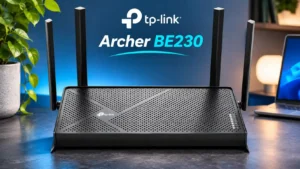
Overall: 4.1/5
Low power draw makes it economical to leave the router running continuously.
Pros: value for money, Wi-Fi speed
Cons: 6 GHz performance, subscription requirements
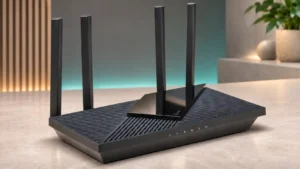
Overall: 4.0/5
Measured power consumption is low, making continuous operation inexpensive in the cited test.
Pros: value for money, parental controls
Cons: subscription requirements, multi-gig Ethernet support
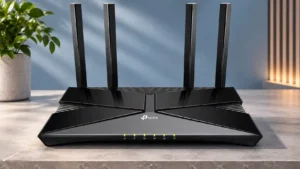
Overall: 3.7/5
Low power draw makes the router practical for always-on home networking.
Pros: Overall satisfaction, value for money
Cons: USB port support, 160 MHz support
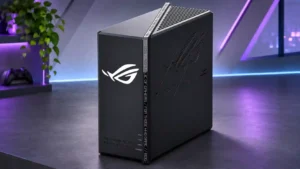
Overall: 4.3/5
Power consumption compared favorably with a more power-hungry competitor in one test.
Pros: Wi-Fi speed, Ethernet port count
Cons: 10 GbE support, WAN port speed
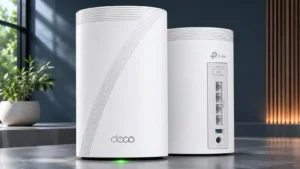
Overall: 4.2/5
Operating power costs are modestly lower than those of a higher-end Deco system in one comparison.
Pros: value for money, Wi-Fi speed
Cons: subscription requirements, long-range speed
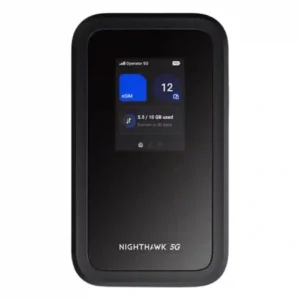
Overall: 4.1/5
Moderate workloads use roughly a workday’s worth of battery, while heavier multi-device sessions increase power draw noticeably.
Pros: eSIM flexibility, cellular connectivity
Cons: interface responsiveness, Ethernet port count
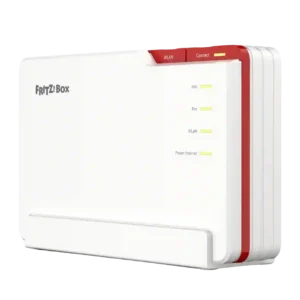
Overall: 4.0/5
Power use is acceptable under heavy activity but less impressive at idle, where reviewers feel efficiency could be better.
Pros: telephony features, value for money
Cons: LAN port speed, wall-mounting support

Overall: 4.1/5
Power consumption is higher than typical routers, especially during downloads and heavier activity.
Pros: wireless performance, Wi-Fi speed
Cons: value for money, size and footprint