
If you want better expandability
Choose GL.iNet Flint 2 (GL-MT6000). It scores 5.0 vs 2.7 for expandability, with a 4.4 overall score.

Five 2.5GbE ports and extensive, approachable OpenWrt controls make this a compelling Wi-Fi 7 router. Its VPN throughput is lower than its predecessor’s, and difficult whole-home coverage may still call for a dedicated mesh system.
Power users, Wi-Fi 7 households and small offices that need fast wired networking, configurable VPN access and multiple ways to maintain internet connectivity.
Households needing effortless mesh coverage across difficult buildings, internet plans above 2.5Gbps per connection, or a meaningful upgrade with only older clients and gigabit internet.
The GL.iNet Flint 3 stands out for its five 2.5GbE Ethernet ports, flexible OpenWrt-based firmware and extensive built-in networking tools. It makes particular sense for homes or small offices with fast wired equipment, compatible Wi-Fi 7 clients or a need for VPNs and redundant internet connections. Initial setup is generally straightforward, and AdGuard Home is a useful addition. Wireless performance is strong close to the router, but range varies considerably with the building and client hardware. VPN speeds can be impressive in isolation, yet the older Flint 2 offers a higher throughput ceiling. Early reviews also found mesh and VLAN limitations; a later account reports that September 2026 firmware added EasyMesh and native VLANs. For buyers needing effortless coverage across a difficult building or maximum VPN speed, alternatives may be a better fit.
Compared with other Routers, this product is above average in Wireless repeater mode, ISP compatibility, content filtering, near average in range, parental controls, below average in automatic channel optimization, physical controls, Weight and handling.
| Attribute | This product | Category average | Difference |
|---|---|---|---|
| automatic channel optimization | 2.0 | 4.4 | -2.4 |
| physical controls | 2.5 | 4.6 | -2.1 |
| Weight and handling | 2.5 | 4.5 | -2.0 |
| Wireless repeater mode | 5.0 | 3.0 | +2.0 |
| network stability | 2.5 | 4.5 | -2.0 |
| size and footprint | 2.5 | 4.1 | -1.6 |
| ISP compatibility | 5.0 | 3.3 | +1.7 |
| network segmentation | 2.9 | 4.4 | -1.5 |
Choose GL.iNet Flint 2 (GL-MT6000). It scores 5.0 vs 2.7 for expandability, with a 4.4 overall score.
Choose GL.iNet Beryl AX (GL-MT3000). It scores 4.9 vs 2.5 for size and footprint, with a 4.4 overall score.
Choose ASUS ZenWiFi BT10. It scores 5.0 vs 2.5 for physical controls, with a 4.0 overall score.
Choose ASUS ROG Strix GS-BE18000. It scores 5.0 vs 2.8 for USB port support, with a 4.3 overall score.
Compared with GL.iNet Flint 3 (GL-BE9300)
It makes sense if you need 6GHz Wi-Fi 7 or five 2.5GbE ports. The predecessor may be a better choice for Wi-Fi 6 households or users prioritizing maximum VPN throughput.
Earlier firmware was criticized for lacking straightforward mesh expansion. A later supplied account reports EasyMesh support from firmware 4.10.0 in September 2026; dedicated mesh systems can still offer superior coverage.
Several accounts cite a ceiling around 680Mbps, and hands-on testing approached that figure. Actual throughput varies with the VPN provider, network and configuration, and the previous model has higher rated VPN speeds.
Yes, the all-2.5GbE Ethernet layout is well suited to this use, and a hands-on test handled a 2.5Gbps PPPoE connection successfully. Faster single-link internet plans are limited by the WAN port.
Basic setup is widely praised for being straightforward, with web and mobile options. More technical routing, VLAN and VPN policies require networking knowledge.
The USB port supports network storage, but some tests encountered drive-recognition and file-corruption problems. A dedicated NAS is preferable for dependable storage.
Yes, built-in AdGuard Home can filter advertising and tracking across the network. Some legitimate services may need allowlisting.
These are a few of the reviews included in our analysis.


We review the GL.iNet Flint 3 (GL-BE9300), a tri-band Wi-Fi 7 router with five 2.5G ports and built-in VPN. See who it's for and how it compares.
GL.iNet Flint 3 (GL-BE9300) buyer's spec analysis: five 2.5G ports, OpenWrt 23.05 at launch, the $209.99 price, and how it fits a segmented...
The GL.iNet Flint 3 BE9300 offers Wi‐Fi 7, five 2.5GbE ports, VPNs, OpenWrt, VLANs, and Multi-WAN. See its real strengths, limits, range...
The Flint 3 fixes the Flint 2's back panel and moves to Wi-Fi 7, and it comes with one surprising asterisk. The upgrades over the Flint 2 are...
The GL.iNet Flint 3 BE9300 WiFi 7 2.5GbE router is best for multi-gig power users needing five 2.5GbE ports, VPNs, VLANs, and 6GHz. It is...

Choose the R95 for a busy home that needs fast Wi-Fi 7, strong range, multi-gig ports, and low-lag gaming. Skip it for a small, lightly connected space or if advanced...
Pros: Wi-Fi 7 support, Wi-Fi speed

Best for frequent travel, fast VPNs, dual 2.5GbE and resilient multi-WAN. Skip it if you need full 6GHz/320MHz Wi‑Fi 7, mesh, or desktop-class USB storage and long-range indoor coverage.
Pros: VPN client support, value for money
Cons: 6 GHz performance, USB storage sharing

Exceptional VPN speeds, strong Wi-Fi 6 coverage and extensive OpenWrt controls make the Flint 2 a compelling value. Its advanced setup, missing 6GHz band and firmware-specific caveats matter if you...
Pros: setup ease, configuration flexibility
Cons: Wi-Fi 7 support, USB storage sharing
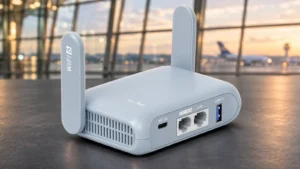
The Beryl AX packs exceptionally flexible VPN and networking tools into a pocket-sized router. It is a great travel companion, but hotel login issues, limited whole-home range and a single...
Pros: Overall satisfaction, size and footprint
Cons: Captive portal handling, Ethernet port count