#1
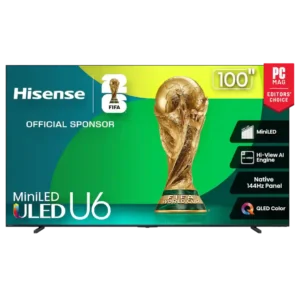
Overall: 4.2/5
The high native refresh rate is praised for producing visibly smoother animation and gaming. At this price, 144Hz capability is repeatedly treated as a premium-level feature.
Pros: overall satisfaction, value for money
Cons: smart TV platform, blooming control
#2
Overall: 3.4/5
A native 144Hz panel is exceptional for this price range, though faster input support does not guarantee blur-free motion.
Pros: picture quality, value for money
Cons: viewing angles, HDR performance
#3
Overall: 3.9/5
The 144Hz panel draws praise for making the TV feel unusually gaming-capable at its price.
Pros: overall satisfaction, picture quality
Cons: Weight and handling, black levels
#4
Overall: 3.9/5
The high native refresh rate supports smooth sports and fast PC play, although display response and mode compatibility matter as much as the headline number.
Pros: peak brightness, overall satisfaction
Cons: value for money, shadow detail
#5
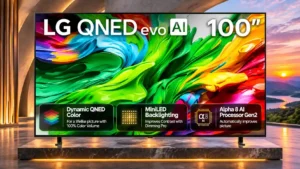
Overall: 3.7/5
Support for 120Hz and compatible 144Hz sources is a useful specification for sport and action gaming, though smoothness depends on pixel response too.
Pros: picture quality, maximum volume
Cons: sound quality, bass performance
#6
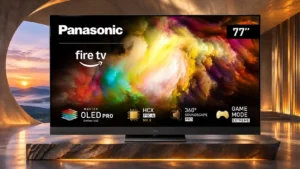
Overall: 4.0/5
A 144Hz ceiling adds appeal for PCs while consoles remain well served at 120Hz.
Pros: overall satisfaction, picture quality
Cons: size options, value for money
#7
Overall: 3.8/5
The 144Hz panel supports smooth high-refresh gaming and is a clear advantage over conventional 60Hz televisions.
Pros: overall satisfaction, picture quality
Cons: value for money, local dimming performance
#8
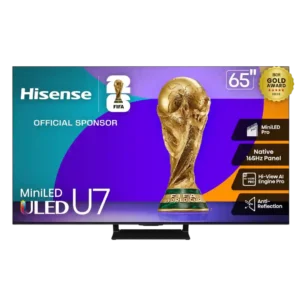
Overall: 4.0/5
The native high refresh rate is a major selling point, with 165Hz support giving PC gamers more headroom than typical 120Hz TVs.
Pros: overall satisfaction, picture quality
Cons: reliability, build quality
#9

Overall: 4.0/5
A maximum 165Hz is attractive for high-end PC gaming, with 120Hz support covering modern consoles.
Pros: reflection handling, overall satisfaction
Cons: Dolby Vision support, bass performance
#10
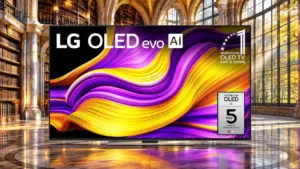
Overall: 4.2/5
Refresh rate is a mixed area, combining useful capabilities with practical caveats.
Pros: overall satisfaction, picture quality
Cons: banding control, remote control quality
#11
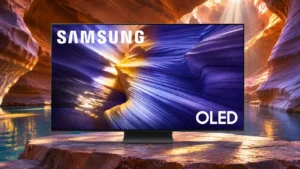
Overall: 3.9/5
A 144 Hz ceiling is excellent for a television, albeit lower than some 165 Hz flagship rivals.
Pros: value for money, overall satisfaction
Cons: Dolby Vision support, sound quality
#12

Overall: 4.2/5
A high 4K refresh ceiling adds fluidity for capable gaming PCs, while 8K input is limited to 60Hz.
Pros: high-refresh-rate gaming, gaming performance
Cons: value for money, bass performance
#13
Overall: 3.9/5
The 120Hz refresh rate is perfectly workable for consoles but looks conservative beside premium TVs offering 144Hz or 165Hz.
Pros: gaming performance, peak brightness
Cons: HDMI 2.1 support, HDMI 2.1 port count
#14

Overall: 3.9/5
A 120Hz ceiling represents a welcome jump from 60Hz sets while falling short of the faster refresh options now available.
Pros: color volume, black levels
Cons: Inconsistent panel and coating by size, sound quality
#15
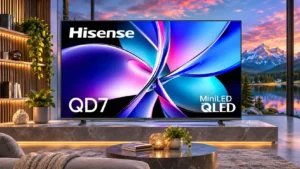
Overall: 3.9/5
The 50-, 55-, and 65-inch versions are constrained by 60Hz panels, while the 75-, 85-, and 100-inch variants offer much more appealing 144Hz capability.
Pros: picture quality, contrast ratio
Cons: HDR performance, motion handling
#16
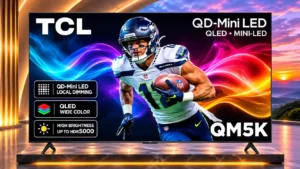
Overall: 3.6/5
The native 4K ceiling is 60Hz. Larger models can trade resolution for up to 144Hz, but that does not make this a native high-refresh 4K display.
Pros: black levels, picture quality
Cons: HDR performance, blooming control
#17
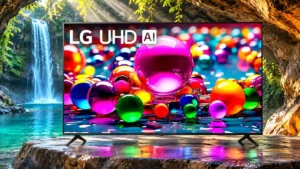
Overall: 3.0/5
A native 60Hz panel handles regular TV and conventional gaming, but it cannot meet 120fps demands.
Pros: viewing angles, smart TV platform
Cons: overall satisfaction, refresh rate
#18
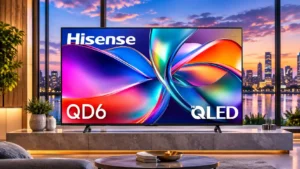
Overall: 3.0/5
The 43- through 85-inch models top out at 4K/60Hz, falling short of premium gaming displays.
Pros: color accuracy, Picture detail
Cons: HDR performance, motion clarity
#19
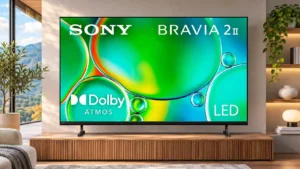
Overall: 3.6/5
The native 60 Hz ceiling is fine for ordinary shows and casual games but is a major drawback for anyone expecting 120 Hz motion.
Pros: picture quality, overall satisfaction
Cons: sound quality, reliability
#20
Overall: 3.0/5
The 60Hz ceiling rules out 120Hz play at either 4K or lower resolutions. It handles ordinary sources, but smooth high-frame-rate action needs a faster TV.
Pros: picture quality, smart TV platform
Cons: value for money, refresh rate
#21

Overall: 3.3/5
The native 60Hz ceiling is a firm limitation for high-frame-rate console and PC play; ordinary 60fps games remain usable.
Pros: color accuracy, upscaling quality
Cons: picture quality, sound quality
#22
Overall: 3.0/5
A 60Hz panel is sufficient for simple television viewing but a disappointment for owners expecting 120Hz gaming from a QLED model.
Pros: color gamut, smart TV platform
Cons: value for money, overall satisfaction
#23
Overall: 3.3/5
The native 60Hz panel is adequate for routine TV watching but rules out the higher-refresh experience available on modern gaming displays.
Pros: picture quality, motion handling
Cons: HDR performance, HDR brightness
