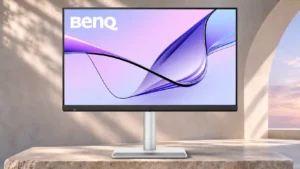
Overall: 4.4/5
The native 5K resolution makes macOS text and interface elements look properly sized without the compromises some reviewers noticed on 27-inch 4K screens.
Pros: port selection, color accuracy
Cons: built-in speakers, speaker quality

Overall: 4.4/5
The native 5K resolution makes macOS text and interface elements look properly sized without the compromises some reviewers noticed on 27-inch 4K screens.
Pros: port selection, color accuracy
Cons: built-in speakers, speaker quality
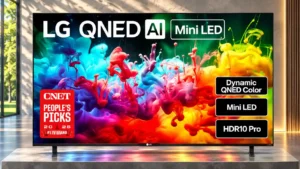
Overall: 3.4/5
Low-resolution video scales without conspicuous oversharpening, making old discs easier to watch.
Pros: picture quality, color accuracy
Cons: remote control quality, black levels
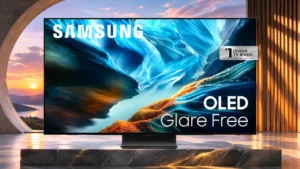
Overall: 4.1/5
Older and lower-quality sources are enlarged smoothly to 4K, with little jagged edging or loss of fine texture.
Pros: black levels, contrast ratio
Cons: Dolby Vision support, stutter handling
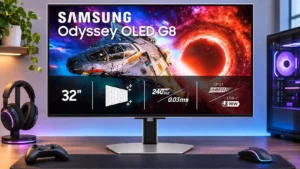
Overall: 4.1/5
AI upscaling clearly improves 720p and 1080p sources, while 1440p gains are smaller. It needs the display to receive a truly sub-4K signal and can look sharpened.
Pros: PC gaming compatibility, reflection handling
Cons: color accuracy, VRR flicker
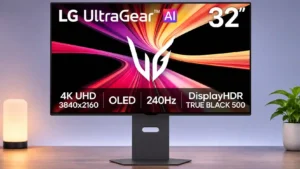
Overall: 3.9/5
The on-monitor AI scaling noticeably cleans up the 1080p/480Hz mode at low strength. High strength can over-sharpen, and noisy low-quality sources may create artifacts.
Pros: brightness, color gamut
Cons: AI scene optimization, value for money
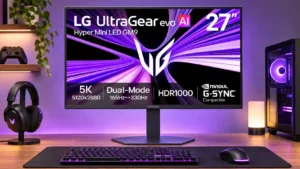
Overall: 4.0/5
On-display AI upscaling can sharpen a lower-resolution console or video feed. Gains on PCs are smaller and sometimes hard to activate, where native game upscalers tend to be better.
Pros: Resolution, Dual-mode versatility
Cons: value for money, GPU demands
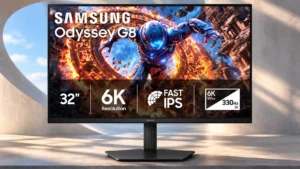
Overall: 3.5/5
The 3K mode looks surprisingly good for a halved-resolution display, while desktop text and older games can expose softness or tiny interfaces.
Pros: Resolution, sharpness
Cons: value for money, HDR performance
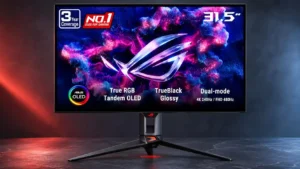
Overall: 4.3/5
Downscaling to 1080p is comparatively smooth for a dual-mode 4K screen, but smaller emulated windows and operating-system scaling reduce sharpness or complicate text sizing.
Pros: black levels, sharpness
Cons: value for money, brightness
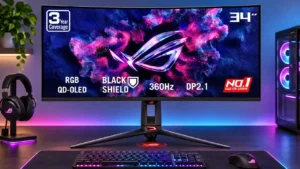
Overall: 4.5/5
Screen-size emulation is flexible, but a tested 27-inch mode looked softer than expected pending a proposed firmware correction.
Pros: color gamut, contrast
Cons: value for money, Resolution
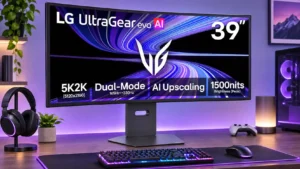
Overall: 4.1/5
AI upscaling can sharpen certain low-resolution console signals, but PC use is inconsistent or impractical and cannot replace modern GPU upscaling.
Pros: Resolution, overall satisfaction
Cons: value for money, Image scaling
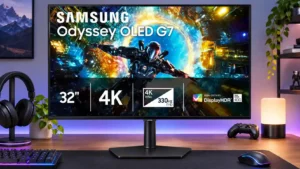
Overall: 3.8/5
Running at Full HD or adjusting Windows scaling brings visible softness and usability annoyances despite the faster gameplay.
Pros: overall satisfaction, contrast
Cons: value for money, port selection
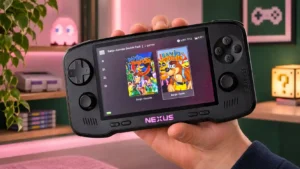
Overall: 4.0/5
Aspect-ratio choices and retro visual effects help games fit the screen, but imperfect non-integer scaling and filter limitations bother some players.
Pros: controller features, display quality
Cons: TV output connectivity, Suspend and resume
Overall: 4.4/5
Unusual console resolutions or aspect ratios can require compromises; not every requested source mode is accepted.
Pros: refresh rate, Text fringing
Cons: Resolution, GPU demands
Overall: 3.8/5
Nonstandard retro-console signals and certain scaled resolutions can produce incorrect proportions or soft images.
Pros: value for money, panel type
Cons: brightness, port selection