
Overall: 3.8/5
Ambient-light sensing adjusts the art image's brightness and tone, helping it look realistic throughout changing room light.
Pros: cable management, design and appearance
Cons: value for money, Dolby Vision support

Overall: 3.8/5
Ambient-light sensing adjusts the art image's brightness and tone, helping it look realistic throughout changing room light.
Pros: cable management, design and appearance
Cons: value for money, Dolby Vision support

Overall: 3.4/5
Brightness can adapt subtly to room lighting, making the display more comfortable and its framed-art presentation more natural.
Pros: art display mode, picture quality
Cons: contrast ratio, high-refresh-rate gaming

Overall: 3.8/5
The ambient light sensor helps maintain a comfortable image as room lighting changes, reducing the need for manual adjustments.
Pros: picture quality, color accuracy
Cons: HDR performance, sound quality

Overall: 4.4/5
The ambient-light sensor can keep screen brightness in step with the surrounding room, adding convenience to long Mac desktop sessions.
Pros: port selection, color accuracy
Cons: built-in speakers, speaker quality
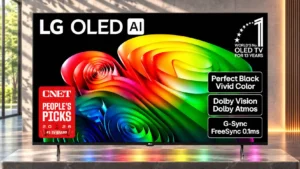
Overall: 3.8/5
AI Picture Pro adapts to ambient conditions and program type, producing pleasing results without manual intervention.
Pros: value for money, peak brightness
Cons: color accuracy, stand quality

Overall: 3.9/5
The ambient sensor can adjust brightness and color temperature smoothly as room lighting changes, a useful convenience even if some prefer fixed settings.
Pros: motion clarity, Backlight strobing
Cons: contrast, HDR performance
Overall: 4.3/5
Automatic light sensing is convenient when a room changes from sunny to dim, although some find its automatic picture choices too aggressive.
Pros: picture quality, black levels
Cons: bass performance, HDR brightness

Overall: 3.5/5
Ambient light sensing helps artwork blend into the room rather than glowing too brightly. Some pieces still benefit from manual adjustment at night.
Pros: art display mode, design and appearance
Cons: overall satisfaction, HDMI port accessibility

Overall: 4.2/5
Ambient-light adaptation can gently adjust the screen for changing room conditions without repeated manual changes.
Pros: overall satisfaction, glare resistance
Cons: motion handling, viewing angles
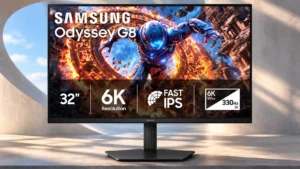
Overall: 3.5/5
Dynamic Brightness can boost perceived contrast, although its histogram-based behavior is not equivalent to a physical ambient-light sensor.
Pros: Resolution, sharpness
Cons: value for money, HDR performance
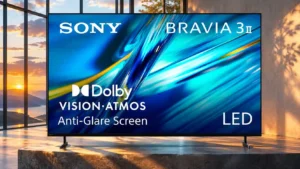
Overall: 3.8/5
Ambient-light sensing can keep the image comfortable when room lighting changes. Manual brightness control is available by choosing a different energy setting.
Pros: HDMI 2.1 port count, overall satisfaction
Cons: HDR performance, bass performance

Overall: 4.2/5
True Tone and ambient adjustments can be comfortable, but automatic brightness sometimes makes the screen too dim or reacts unexpectedly to surrounding light.
Pros: refresh rate, HDR performance
Cons: value for money, Device compatibility

Overall: 4.4/5
Raise-to-wake and automatic brightness generally make glancing at the display convenient. Nighttime dimming has drawn some criticism.
Pros: heart rate accuracy, display quality
Cons: band quality, smartwatch features
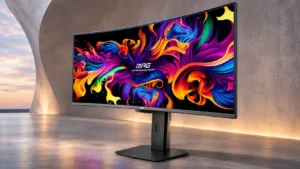
Overall: 4.4/5
Sensor-driven brightness and color changes can be useful when lighting varies, but some find automatic adjustments distracting or slow.
Pros: refresh rate, Text fringing
Cons: Resolution, GPU demands
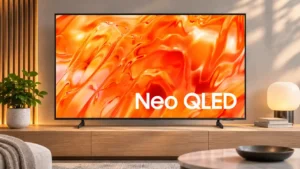
Overall: 3.1/5
Adaptive brightness can make a carefully chosen picture level fluctuate, so fixed settings are preferable for accuracy-minded viewing.
Pros: picture quality, overall satisfaction
Cons: sound quality, black levels
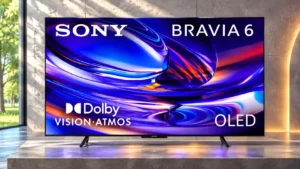
Overall: 3.8/5
Ambient-light adjustment may make casual viewing easier, but it changes the picture as room lighting shifts. Those who need a steady image should pay attention to the setting.
Pros: HDMI 2.1 port count, Video input versatility
Cons: value for money, overall satisfaction

Overall: 4.0/5
Automatic dimming can engage too quickly outdoors, while some find the screen insufficiently dim at night.
Pros: battery life, heart rate accuracy
Cons: value for money, software smoothness
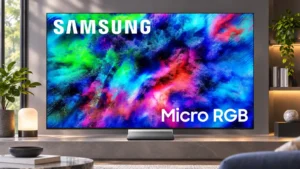
Overall: 3.7/5
Ambient-light adjustment can adapt picture brightness, but a firmware-related handshake bug may turn it on unexpectedly. Disabling optimization can also change measured HDR output noticeably.
Pros: color volume, overall satisfaction
Cons: value for money, color accuracy
Overall: 3.8/5
Ambient-light dimming can undermine carefully chosen picture settings, so leaving it off may produce a more consistent image.
Pros: picture quality, contrast ratio
Cons: blooming control, glare resistance
Overall: 4.2/5
Eco and adaptive brightness settings can alter the picture differently between presets, so owners may need to adjust each mode separately.
Pros: picture quality, overall satisfaction
Cons: design and appearance, Dolby Vision support