Best for VRR compatibility
ASUS ROG Strix OLED XG32UCWMG
5.0 attribute score
Highest scored product for this attribute based on supporting review evidence.

Highest scored product for this attribute based on supporting review evidence.
Balances the attribute score, supporting reviews, and overall product strength.
Has the broadest review evidence for this attribute.
Strongest overall product among items with scored evidence for this attribute.
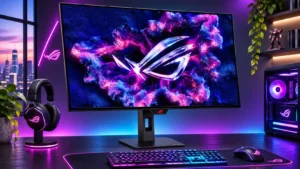
Overall: 4.2/5
G-SYNC and FreeSync support cover common GPUs, although OLED flicker can compromise the otherwise smooth adaptive-sync experience.
Pros: overall satisfaction, black levels
Cons: reflection handling, Color brightness
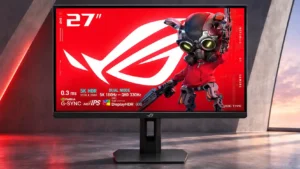
Overall: 4.1/5
Variable refresh rate helps prevent tearing, with ELMB Sync offering the valuable ability to combine VRR and blur reduction.
Pros: Pixel density, Resolution
Cons: GPU demands, HDR performance
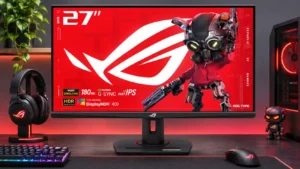
Overall: 3.8/5
Both major PC adaptive-sync ecosystems are supported, helping reduce tearing without demanding one graphics-card brand.
Pros: value for money, Resolution
Cons: HDR performance, port selection
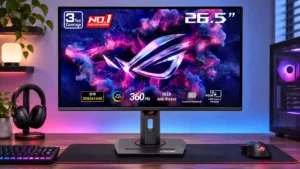
Overall: 4.4/5
FreeSync, G-SYNC Compatible and HDMI VRR give good support across modern hardware, though some settings require care to avoid disabling the feature.
Pros: color gamut, overall satisfaction
Cons: reflection handling, VRR flicker
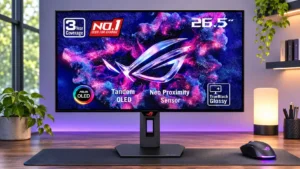
Overall: 4.4/5
FreeSync and G-SYNC support allow variable refresh across NVIDIA and AMD gaming systems.
Pros: overall satisfaction, response time
Cons: reflection handling, VRR flicker
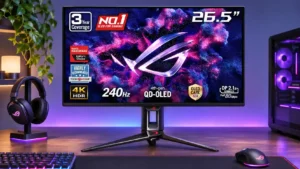
Overall: 4.4/5
Support for major PC and HDMI VRR formats makes the monitor flexible across devices and GPUs. Flicker with sudden frame-rate changes is the main caveat.
Pros: sharpness, overall satisfaction
Cons: value for money, VRR flicker
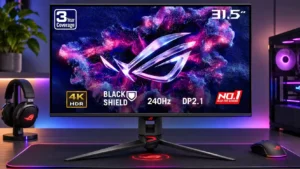
Overall: 4.2/5
The monitor supports smooth G-Sync and FreeSync operation at high refresh rates. Some firmware-specific anti-flicker options did not work as intended in one test.
Pros: overall satisfaction, black levels
Cons: value for money, stand adjustability
Overall: 3.9/5
Variable refresh operates broadly and can run alongside Pulsar on NVIDIA systems; an early owner experienced some game-specific disruptions.
Pros: motion clarity, Backlight strobing
Cons: contrast, HDR performance
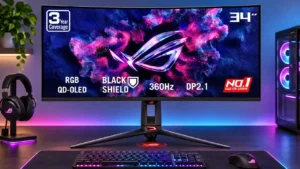
Overall: 4.5/5
Multiple major VRR formats are supported, but the anti-flicker setting narrows the active VRR range and can disable compensation at low frame rates.
Pros: color gamut, contrast
Cons: value for money, Resolution
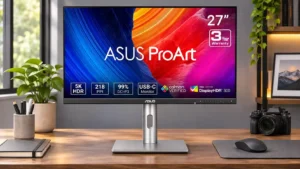
Overall: 4.1/5
VESA MediaSync can help steady frame pacing near 60fps but is less versatile than gaming-oriented high-refresh VRR.
Pros: color accuracy, overall picture quality
Cons: HDR performance, refresh rate