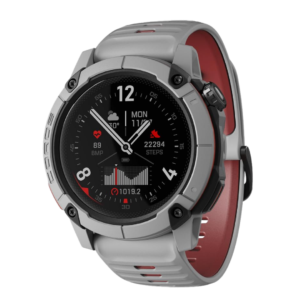
Suunto Race 3S Review

Brand: Suunto
Released: October 29, 2026
Updated: 4 minutes ago
4.0
Overall review score
405
Review insights
60
Scored features
31
Expert reviews

Bottom Line

Accurate GPS, detailed offline maps and a comfortable premium build make this a compelling compact trail watch. At $599, limited smartwatch features and cheaper rivals make it harder to recommend.

Trail runners, hikers and athletes with smaller wrists who want detailed offline maps, dependable GPS and extended workout battery life.

Budget-conscious buyers, those who need full smartwatch functionality, or athletes who want precise wrist heart rate during every interval or strength session.

Verdict

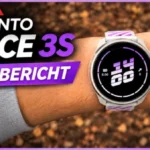
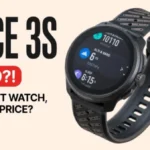
The Suunto Race 3S gets the fundamentals of a compact sports watch right. Its titanium components, sapphire glass and bright AMOLED display make it feel premium without excessive bulk. GPS performance is consistently strong, and detailed offline maps with climb guidance are especially useful on planned trail routes. The redesigned heart rate sensor is a meaningful improvement, although intervals, cold starts and strength workouts can still challenge wrist-based measurements. Battery life is impressive for the size, but some rivals last longer between charges. The biggest drawback is the $599 launch price: alternatives offer comparable tracking or larger displays for less, while Suunto's menus and workout customization still have rough edges. It's most compelling for runners who specifically value the compact design and Suunto mapping experience, preferably at a discount.

Feature Scorecards

Summary

60 reviewed features
  • Very positive 4.5-5.0
    19 (32%)
  • Positive 3.5-4.4
    22 (37%)
  • Neutral 2.5-3.4
    12 (20%)
  • Negative 1.5-2.4
    7 (12%)

Pros highlights

  • 4.4
    27 reviews strong consensus
    battery life: 4.4, 27 reviews, strong consensus
    Battery endurance is strong for the size, commonly lasting five to six days with daily GPS and always-on use. Larger rivals can last longer, and navigation increases drain.
  • 4.4
    21 reviews moderate consensus
    heart rate accuracy: 4.4, 21 reviews, moderate consensus
    The redesigned optical sensor is a substantial improvement, often matching chest straps closely on runs. Cold starts, rapid intervals and wrist-heavy workouts can still produce lag or missed peaks.
  • 4.8
    18 reviews strong consensus
    GPS accuracy: 4.8, 18 reviews, strong consensus
    Dual-band positioning is consistently a standout, with accurate distances and routes on roads and trails. Dense buildings and some difficult forest sections can still introduce minor errors.
  • 4.4
    18 reviews strong consensus
    mapping and navigation: 4.4, 18 reviews, strong consensus
    Free detailed offline maps are a standout, with contour lines, place names and useful route following. They cannot generate a new route directly on the watch, and zooming can occasionally show black tiles.
  • 5.0
    16 reviews strong consensus
    outdoor visibility: 5.0, 16 reviews, strong consensus
    The screen is readily legible in direct sunshine, making pace and navigation easier to check outdoors.
  • 4.5
    15 reviews moderate consensus
    display quality: 4.5, 15 reviews, moderate consensus
    The sharp, vibrant AMOLED is a major strength, though the compact screen can make fine map details harder to read.

Cons highlights

  • 2.7
    26 reviews low consensus
    value for money: 2.7, 26 reviews, low consensus
    At its $599 US launch price, many find the upgrades difficult to justify against less expensive alternatives. A few consider the premium materials, mapping and sensor improvements worth paying for.
  • 3.3
    8 reviews low consensus
    software smoothness: 3.3, 8 reviews, low consensus
    Some find the watch snappy, while others encounter lag when scrolling widgets or opening functions despite the faster processor.
  • 2.6
    7 reviews moderate consensus
    smartwatch features: 2.6, 7 reviews, moderate consensus
    Notifications and offline music cover basic needs, but missing mainstream streaming, payments outside China and advanced smartwatch conveniences limit its appeal.
  • 3.4
    7 reviews moderate consensus
    training analysis: 3.4, 7 reviews, moderate consensus
    The training platform provides extensive load and recovery metrics, but acronym-heavy displays can obscure their meaning.
  • 2.5
    6 reviews low consensus
    workout data customization: 2.5, 6 reviews, low consensus
    Default sport modes cannot be edited directly, requiring custom profiles and syncing; the three-screen limit also restricts flexibility.
  • 2.1
    5 reviews strong consensus
    flashlight usefulness: 2.1, 5 reviews, strong consensus
    A screen-based light is available, but the lack of a dedicated LED flashlight is a missed opportunity for outdoor use.

Use Cases

Best for

  • 4.8
    15 reviews strong consensus
    Running: 4.8, 15 reviews, strong consensus
    Accurate GPS, improved wrist heart rate and readable maps make it a capable running watch, especially for longer outings.
  • 4.6
    12 reviews moderate consensus
    Ultramarathons: 4.6, 12 reviews, moderate consensus
    Long dual-band GPS endurance and offline navigation suit many ultramarathon distances, though very long events or heavy navigation can warrant a battery check or larger watch.
  • 4.5
    12 reviews moderate consensus
    Small wrists: 4.5, 12 reviews, moderate consensus
    The relatively compact case is attractive for slimmer wrists, though its 46mm width can still be too large for very small wrists.

Not ideal for

  • Budget-conscious buyers
    1.9
    14 reviews strong consensus
    Budget-conscious buyers: 1.9, 14 reviews, strong consensus
    Budget-conscious shoppers have strong cheaper alternatives, particularly if they do not need premium materials or extended GPS endurance.
  • Smartwatch replacement
    2.0
    3 reviews strong consensus
    Smartwatch replacement: 2.0, 3 reviews, strong consensus
    It is better suited to sports tracking than replacing a full-featured smartwatch with payments, streaming and a large app ecosystem.

Compared With Category Average

Compared with other Smartwatches, this product is above average in mapping and navigation, materials quality, external sensor support, near average in battery life, brightness, below average in safety features, workout data customization, flashlight usefulness.

Comparison summary

47 compared features
  • Above average 0.4+ pts higher
    19 (40%)
  • Same as average within 0.3 pts
    18 (38%)
  • Below average 0.4+ pts lower
    10 (21%)

Largest category differences

Attribute This product Category average Difference
safety features 2.0 3.9 -1.9
workout data customization 2.5 4.2 -1.7
flashlight usefulness 2.1 3.8 -1.7
value for money 2.7 3.8 -1.1
health tracking accuracy 2.5 3.9 -1.4
mapping and navigation 4.4 3.4 +0.9
materials quality 4.9 4.0 +0.9
reliability 2.5 3.7 -1.2

Consider This Instead

If you want better flashlight usefulness

Choose Garmin Fenix 8. It scores 4.9 vs 2.1 for flashlight usefulness, with a 3.9 overall score.

Compare

If you want better value for money

Choose Suunto Run. It scores 4.7 vs 2.7 for value for money, with a 4.0 overall score.

Compare

If you want better contactless payments

Choose Garmin Enduro 3. It scores 5.0 vs 2.3 for contactless payments, with a 4.2 overall score.

Compare

Compared in Reviews

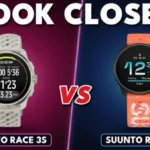
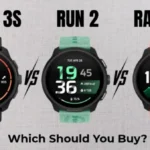
Compared with Suunto Race 3S

  • Compared Still delivers nearly the same training and navigation features.
  • Downgrade Is the less capable previous generation.
  • Compared Remains appealing for buyers who already use a chest strap.
  • Better Offers a larger display for reading maps.
  • Better Has longer battery life and a larger screen for less money.
  • Worse Its optical sensor was less reliable in testing.
  • Better Lasts a few hours longer in dual-band GPS mode.
  • Better Includes more features for the price.

FAQ

Is the Suunto Race 3S good for trail running?

Yes. Accurate dual-band GPS, detailed offline maps and climb guidance make it particularly capable for planned trail routes.

How long does the battery last?

Several testers managed five to six days with daily GPS workouts and always-on display. Navigation, brightness and activity settings affect runtime.

How accurate is wrist heart rate?

It is substantially improved and often close to chest strap readings during steady runs. Rapid intervals, cold starts and strength training can still introduce errors.

Does the watch have offline maps?

Yes. Free maps include detailed terrain and route information, but routes must be planned externally rather than recalculated on the watch.

Can it stream music or make contactless payments?

Music is limited to locally transferred files rather than streaming services. Contactless payment is limited to China in the supplied coverage.

Is it worth upgrading from the Race S?

The brighter display, improved optical sensor, premium materials and longer GPS battery are meaningful, but the older model remains attractive if you already use a chest strap or do not need longer recording.

Sample Expert Reviews We Analyzed

These are a few of the reviews included in our analysis.
Video Reviews

Article Reviews

techstandpoint.com

Suunto's small titanium race watch costs CA$799 in Canada, almost double what the Race S sells for now.

Review score
3.3

Top Smartwatches to Consider

#1 Coros Nomad
4.4

Best for long battery life, accurate GPS and useful offline maps at a strong price. Skip it if you need payments, richer apps, a built-in LED flashlight or polished smartwatch...

Pros: mapping and navigation, value for money

Cons: smartwatch features, contactless payments
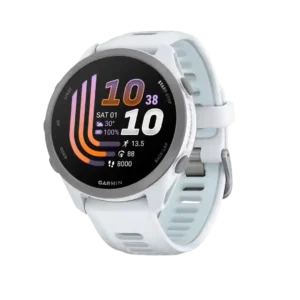
#2 Garmin Forerunner 170 Music
4.3

Best for accurate run tracking, deep Garmin coaching and phone-free Spotify in a light package. Skip it if you need full maps, triathlon mode, Apple Music support or the strongest...

Pros: value for money, GPS accuracy

Cons: mapping and navigation, third-party app support
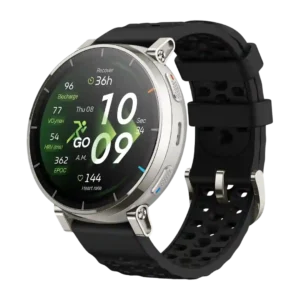
#3 Amazfit Active 3 Premium
4.3

Good if you want premium running features, long battery life, and maps for under $200. Skip it if you need flawless heart-rate data, multiband GPS, LTE, or richer app support.

Pros: value for money, battery life

Cons: heart rate accuracy, third-party app support
#4 Garmin Forerunner 70
4.3

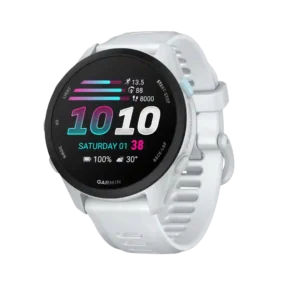
Best for accurate running metrics, excellent coaching tools, a bright AMOLED display, and dependable battery life. Skip it if you need offline maps, music storage, contactless payments, multi-band GPS, or...

Pros: battery life, value for money

Cons: mapping and navigation, smartwatch features