
If you want better parental controls
Choose TP-Link Archer AX55. It scores 4.0 vs 3.5 for parental controls, with a 4.0 overall score.

The Archer BE230 brings fast everyday Wi-Fi and two 2.5 GbE ports to a remarkably low price. The trade-offs are uneven range, no 6 GHz band and optional paid controls.
Budget-conscious buyers in apartments or small-to-medium homes, especially those with gigabit-or-slower plans or a single fast wired device. It is also a practical upgrade from an older router and a useful starting point for wired EasyMesh expansion.
Buyers expecting maximum Wi-Fi 7 speeds, internet plans above 2.5 Gbps, or reliable single-router coverage across a large or obstacle-heavy home. Advanced network administrators and families wanting extensive parental controls without a subscription may prefer another model.
The Archer BE230, also sold as the Archer BE3600, is an unusually capable budget router. Tests consistently praise its price, quick setup and pair of 2.5 GbE ports, which make it a practical upgrade for gigabit internet or a faster wired connection. Nearby wireless throughput is often excellent, and several tests found smooth streaming and gaming even with multiple devices active. Range is less predictable: some homes achieved excellent coverage through walls, while others saw a substantial slowdown at 25 feet or farther. The dual-band design also omits 6 GHz and 320 MHz channels, so buyers wanting the fastest Wi-Fi 7 experience should look higher up the range. EasyMesh gives owners room to expand, ideally using Ethernet backhaul. Basic management and parental controls are useful, but advanced HomeShield features cost extra.
Compared with other Routers, this product is above average in advertised speed accuracy, band steering, Instruction readability, near average in Wi-Fi 7 support, 2.5 GbE support, below average in gaming optimization, MIMO support, ISP compatibility.
| Attribute | This product | Category average | Difference |
|---|---|---|---|
| gaming optimization | 2.0 | 4.4 | -2.4 |
| MIMO support | 2.3 | 4.3 | -2.1 |
| ISP compatibility | 2.0 | 3.9 | -1.9 |
| 320 MHz support | 2.0 | 3.8 | -1.8 |
| hardware reliability | 2.0 | 3.8 | -1.8 |
| advertised speed accuracy | 4.5 | 2.7 | +1.8 |
| wireless backhaul | 2.0 | 3.6 | -1.6 |
| device capacity | 3.0 | 4.5 | -1.5 |
Choose TP-Link Archer AX55. It scores 4.0 vs 3.5 for parental controls, with a 4.0 overall score.
Choose TP-Link Archer BE550. It scores 4.4 vs 2.3 for 6 GHz performance, with a 4.3 overall score.
Choose TP-Link Deco 7 Pro BE63. It scores 4.5 vs 2.0 for 320 MHz support, with a 4.2 overall score.
Choose GL.iNet Flint 2 (GL-MT6000). It scores 4.5 vs 2.7 for subscription requirements, with a 4.4 overall score.
Compared with TP-Link Archer BE230
It supports Wi-Fi 7 technologies including MLO, but operates only on 2.4 and 5 GHz. It lacks the 6 GHz band and 320 MHz channels.
Yes, gigabit service is a particularly good match. Its two 2.5 GbE ports can accommodate faster internet and a compatible wired device, but wireless speeds and the other LAN ports are more limited.
Coverage is typically good for modest homes, but results across walls and at long distances vary. EasyMesh can help extend coverage, preferably with Ethernet links between nodes.
No subscription is needed for ordinary router operation or basic controls. Advanced security, filtering and reporting are among the features that may require paid plans.
Yes. Wi-Fi 5 and Wi-Fi 6 devices can still connect, and some tests found speed improvements even on older clients.
Yes, it can share files from a connected drive and support basic backups. Wired access can perform well, but it is not a substitute for a full-featured NAS.
The supplied product reviews identify BE3600 as another retail name for the BE230. Check the specific listing and hardware version when purchasing.
These are a few of the reviews included in our analysis.


We’ve tested the latest Wi-Fi routers and found the best options—from budget models to top-of-the-line—to make your wireless network faster...
TP-Link Archer BE230 review: a dual-band Wi-Fi 7 router with two 2.5 Gbps ports. Buy it for a small home on gigabit; skip it if you want 6 GHz.
Read our hands-on review of the TP-Link Archer BE230 router for an insider perspective on its specs, setup, and features.
Dual-band Wi-Fi 7 with two multi-gig ports, a full VPN suite and EasyMesh, as long as you accept there is no 6 GHz band.
There are faster routers, but the Archer BE3600 is quick enough to suit almost anyone, and exceptionally versatile

Choose the R95 for a busy home that needs fast Wi-Fi 7, strong range, multi-gig ports, and low-lag gaming. Skip it for a small, lightly connected space or if advanced...
Pros: Wi-Fi 7 support, Wi-Fi speed

Best for frequent travel, fast VPNs, dual 2.5GbE and resilient multi-WAN. Skip it if you need full 6GHz/320MHz Wi‑Fi 7, mesh, or desktop-class USB storage and long-range indoor coverage.
Pros: VPN client support, value for money
Cons: 6 GHz performance, USB storage sharing

Exceptional VPN speeds, strong Wi-Fi 6 coverage and extensive OpenWrt controls make the Flint 2 a compelling value. Its advanced setup, missing 6GHz band and firmware-specific caveats matter if you...
Pros: setup ease, configuration flexibility
Cons: Wi-Fi 7 support, USB storage sharing
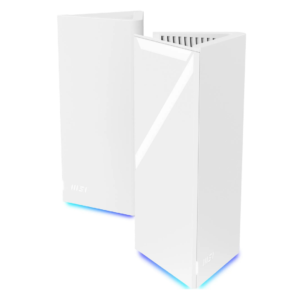
Best for affordable tri-band Wi-Fi 7, abundant 2.5GbE ports, and deep free controls. Skip it if you need consistently strong garden coverage, foolproof app setup, or proven top-tier speeds across...
Pros: value for money, design and appearance
Cons: node pairing ease, outdoor coverage