
If you want better device identification
Choose TP-Link Archer BE550. It scores 5.0 vs 2.0 for device identification, with a 4.3 overall score.

Exceptional VPN speeds, strong Wi-Fi 6 coverage and extensive OpenWrt controls make the Flint 2 a compelling value. Its advanced setup, missing 6GHz band and firmware-specific caveats matter if you want effortless networking.
Technically confident home users, VPN users, gamers and budget-conscious multi-gigabit households who want fast connections and extensive control.
Buyers prioritizing effortless mesh expansion, the full benefits of Wi-Fi 7 devices or dedicated NAS-like file-sharing performance should consider alternatives.
The Flint 2 excels as a configurable standalone router, combining strong wireless range, two 2.5GbE ports and unusually capable WireGuard performance. Several tests approach gigabit VPN throughput, while others demonstrate useful coverage across floors and improved connectivity in distant rooms. OpenWrt, LuCI and optional packages make it particularly attractive for users who want local control, advanced routing, ad filtering and remote access. The basic interface is approachable, but more elaborate setups can require troubleshooting. Firmware version matters, and hardware acceleration may conflict with traffic monitoring or parental controls. USB file sharing is convenient rather than a replacement for a dedicated NAS. The absence of Wi-Fi 7 and 6GHz is a limitation for newer clients, and very large homes may still need additional access points. For a technically confident buyer, the combination of performance and flexibility represents strong value.
Compared with other Routers, this product is above average in wall-mounting support, product support lifespan, long-range speed, near average in setup ease, multi-gig Ethernet support, below average in device identification, status light usefulness, bandwidth controls.
| Attribute | This product | Category average | Difference |
|---|---|---|---|
| device identification | 2.0 | 4.4 | -2.4 |
| status light usefulness | 2.0 | 4.3 | -2.3 |
| bandwidth controls | 2.0 | 4.1 | -2.1 |
| per-device speed limits | 2.0 | 4.0 | -2.0 |
| 6 GHz performance | 2.0 | 3.8 | -1.8 |
| Wi-Fi 7 support | 2.3 | 3.9 | -1.7 |
| wall-mounting support | 5.0 | 3.3 | +1.7 |
| product support lifespan | 4.0 | 2.4 | +1.6 |
Choose TP-Link Archer BE550. It scores 5.0 vs 2.0 for device identification, with a 4.3 overall score.
Choose GL.iNet GL-BE3600 Slate 7. It scores 5.0 vs 2.0 for bandwidth controls, with a 4.5 overall score.
Choose TP-Link Archer BE900. It scores 5.0 vs 2.0 for status light usefulness, with a 4.1 overall score.
Choose TP-Link Deco 7 Pro BE63. It scores 4.7 vs 2.3 for Wi-Fi 7 support, with a 4.2 overall score.
Compared with GL.iNet Flint 2 (GL-MT6000)
Several tests reported roughly 800–900 Mbps or higher in favorable conditions, but actual throughput varies by provider, firmware and network configuration.
No. It is a dual-band Wi-Fi 6 router with 2.4GHz and 5GHz bands.
Several installations had excellent coverage across floors. Particularly large or obstructed layouts may still require extra access points.
Basic setup is generally straightforward through the web interface. Advanced VPN policies, ISP-specific settings and alternative firmware can take more work.
Yes, the two 2.5GbE ports can provide faster WAN and LAN connectivity. The four other Ethernet ports are gigabit.
USB file sharing works, but slow Samba transfer speeds and filesystem or write limitations make it less suitable as a dedicated NAS replacement.
These are a few of the reviews included in our analysis.



GL.iNet Flint 2 (GL-MT6000): Wi-Fi 6 router with dual 2.5G ports, WireGuard up to 900 Mbps, OpenVPN up to 880 Mbps, AdGuard Home, 1 GB RAM...
GL.iNet Flint 2 GL-MT6000 review: 77 specs and expert reviews show how it ranks among routers and whether it is worth buying.
The most flexible value choice for VPN and multi-gig users, provided its OpenWrt-oriented controls suit the buyer.
The GL.iNet Flint 2 GL-MT6000 remains a powerful OpenWrt-based Wi-Fi 6 VPN router. See its specs, firmware trade-offs, VPN claims, Multi-WAN...
The GL.iNet GL-MT6000 Flint 2 WiFi Router Review Great OpenWRT verdict: it is a powerful Wi-Fi 6 VPN router with 2.5GbE and official OpenWrt...

Choose the R95 for a busy home that needs fast Wi-Fi 7, strong range, multi-gig ports, and low-lag gaming. Skip it for a small, lightly connected space or if advanced...
Pros: Wi-Fi 7 support, Wi-Fi speed

Best for frequent travel, fast VPNs, dual 2.5GbE and resilient multi-WAN. Skip it if you need full 6GHz/320MHz Wi‑Fi 7, mesh, or desktop-class USB storage and long-range indoor coverage.
Pros: VPN client support, value for money
Cons: 6 GHz performance, USB storage sharing

Exceptional VPN speeds, strong Wi-Fi 6 coverage and extensive OpenWrt controls make the Flint 2 a compelling value. Its advanced setup, missing 6GHz band and firmware-specific caveats matter if you...
Pros: setup ease, configuration flexibility
Cons: Wi-Fi 7 support, USB storage sharing
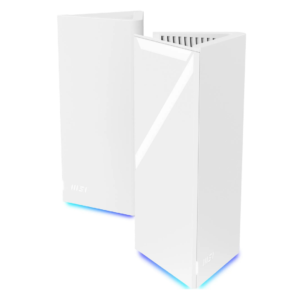
Best for affordable tri-band Wi-Fi 7, abundant 2.5GbE ports, and deep free controls. Skip it if you need consistently strong garden coverage, foolproof app setup, or proven top-tier speeds across...
Pros: value for money, design and appearance
Cons: node pairing ease, outdoor coverage