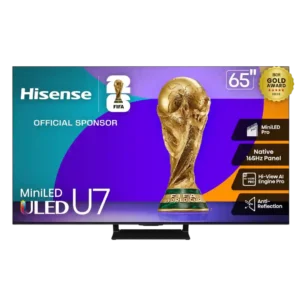
Overall: 4.0/5
Brightness stays impressively strong across both highlights and larger bright areas, helping HDR retain impact beyond tiny test windows.
Pros: overall satisfaction, picture quality
Cons: reliability, build quality

Overall: 4.0/5
Brightness stays impressively strong across both highlights and larger bright areas, helping HDR retain impact beyond tiny test windows.
Pros: overall satisfaction, picture quality
Cons: reliability, build quality

Overall: 4.2/5
Unlike many displays that dim large bright areas aggressively, the QN900F maintains strong brightness across much of the screen. This gives snowy scenes and bright sports broadcasts extra impact.
Pros: high-refresh-rate gaming, gaming performance
Cons: value for money, bass performance
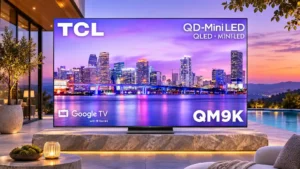
Overall: 3.9/5
Large bright areas retain remarkable impact for an LCD, although peak output can decline over longer intervals and depends on the material.
Pros: peak brightness, overall satisfaction
Cons: value for money, shadow detail

Overall: 4.2/5
The set remains unusually bright even across large white scenes, rather than relying solely on tiny HDR highlights.
Pros: picture quality, glare resistance
Cons: value for money, bass performance
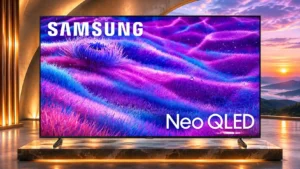
Overall: 3.8/5
Strong full-screen HDR output helps broad bright scenes retain impact, despite less impressive small-window peaks against rivals.
Pros: overall satisfaction, picture quality
Cons: value for money, local dimming performance
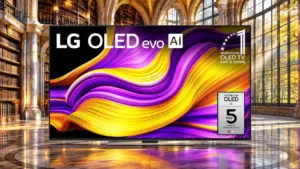
Overall: 4.2/5
Bright scenes stay more convincing than on earlier OLED generations, with less dimming as larger areas light up. Some very bright full-field content can still favor top Mini LED TVs.
Pros: overall satisfaction, picture quality
Cons: banding control, remote control quality

Overall: 4.0/5
Improved full-field brightness makes daytime scenes lively, though OLED protection can still restrain sustained peak output.
Pros: reflection handling, overall satisfaction
Cons: Dolby Vision support, bass performance
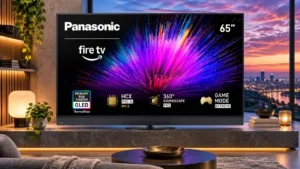
Overall: 4.3/5
Full-screen bright content fares well for an OLED, although very bright stationary elements still dim with time.
Pros: picture quality, color accuracy
Cons: bass performance, HDMI 2.1 port count

Overall: 4.0/5
Large bright areas remain impressively consistent, especially on the brighter 98-inch panel.
Pros: picture quality, black levels
Cons: HDR brightness, value for money
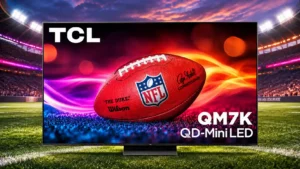
Overall: 3.9/5
Large bright scenes retain useful luminance, though the TV cannot sustain its highest small-highlight peaks across a full screen.
Pros: peak brightness, value for money
Cons: reflection handling, glare resistance
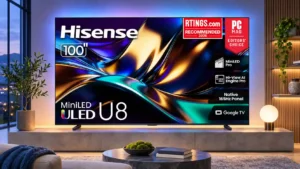
Overall: 4.1/5
Large bright scenes remain dazzling, but the set sometimes reduces output during prolonged high-brightness content.
Pros: peak brightness, HDR brightness
Cons: sound quality, viewing angles
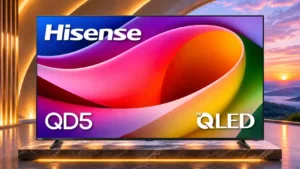
Overall: 3.9/5
Brightness stays consistent across different highlight sizes, so full-screen bright scenes do not noticeably dim further.
Pros: overall satisfaction, picture quality
Cons: Weight and handling, black levels

Overall: 3.9/5
Full-screen brightness remains a relative OLED weakness, especially beside the brightest rivals, although SDR full-field performance is less limiting than on older OLEDs.
Pros: gaming performance, peak brightness
Cons: HDMI 2.1 support, HDMI 2.1 port count
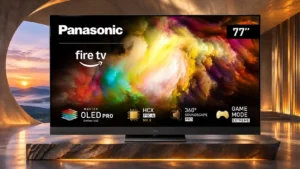
Overall: 4.0/5
Large bright scenes expose aggressive dimming, although one owner found it held up better than a pricier rival.
Pros: overall satisfaction, picture quality
Cons: size options, value for money

Overall: 4.2/5
Large bright scenes remain a weakness compared with pricier OLED sets, although the B5 still performs well in controlled lighting.
Pros: value for money, color accuracy
Cons: HDR brightness, reflection handling

Overall: 4.0/5
Sustained, mostly bright imagery cannot match the punch of smaller highlights, so full-screen snowfields and similar scenes lose some intensity.
Pros: value for money, overall satisfaction
Cons: Remote control usability, sound quality
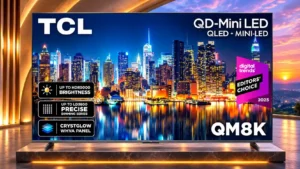
Overall: 4.0/5
Peak brightness is dazzling, but the TV does not always maintain its maximum output indefinitely. Normal content seldom exposes the shortfall.
Pros: peak brightness, picture quality
Cons: HDMI 2.1 port count, reflection handling

Overall: 3.9/5
Large, bright scenes expose the OLED’s power limits, with noticeably reduced full-screen luminance. WOLED and QD-OLED versions also behave differently.
Pros: color volume, black levels
Cons: Inconsistent panel and coating by size, sound quality