
If you want better HDMI 2.1 port count
Choose Hisense UR8SG. It scores 5.0 vs 2.6 for HDMI 2.1 port count, with a 4.0 overall score.

Enormous HDR brightness and excellent local dimming make the 98QM8K a dramatic big-screen buy. Direct reflections, motion blur, limited HDMI 2.1 ports, and mixed built-in sound temper the excitement.
Centered-seating home theaters, bright-room HDR movie watching, and console gaming benefit from the extraordinary 98-inch picture and strong gaming support.
Wide seating layouts, rooms with bright windows directly opposite the screen, and setups needing more than two high-bandwidth HDMI sources are less suitable. The built-in speakers may also disappoint buyers avoiding a soundbar.
The TCL 98QM8K makes an unusually compelling case for a nearly 100-inch home theater. Its dazzling HDR highlights, rich color, deep blacks, and tightly controlled blooming deliver the scale and punch usually associated with far more expensive setups. Modern consoles and gaming PCs benefit from low lag, variable refresh rate, and 4K at up to 144Hz. The compromises are important, though: only two HDMI ports support full gaming bandwidth, and the massive panel demands careful positioning and a wide stand. The glossy screen can mirror lamps and windows, far-off-center seats lose color, and some fast transitions smear or stutter. Factory accuracy and built-in sound also draw uneven assessments, while one sample developed audible fan noise at extreme brightness. At a meaningful discount, it is a striking large-screen buy; at a price close to newer alternatives, its limitations deserve more scrutiny.
Compared with other TVs, this product is above average in local dimming zone transitions, HDR brightness, local dimming performance, near average in picture quality, motion handling, below average in G-SYNC compatibility, Soundbar clearance, HDMI 2.1 support.
| Attribute | This product | Category average | Difference |
|---|---|---|---|
| G-SYNC compatibility | 2.0 | 4.2 | -2.2 |
| Soundbar clearance | 2.0 | 4.1 | -2.1 |
| HDMI 2.1 support | 2.3 | 4.1 | -1.8 |
| gradient handling | 2.0 | 3.9 | -1.9 |
| local dimming zone transitions | 5.0 | 3.1 | +1.9 |
| HDMI 2.1 port count | 2.6 | 4.1 | -1.6 |
| HDR brightness | 4.8 | 3.4 | +1.4 |
| local dimming performance | 4.7 | 3.2 | +1.5 |
Choose Hisense UR8SG. It scores 5.0 vs 2.6 for HDMI 2.1 port count, with a 4.0 overall score.
Choose Sony BRAVIA 3 II. It scores 4.6 vs 2.3 for low-resolution content handling, with a 3.8 overall score.
Choose TCL QM9K. It scores 5.0 vs 2.3 for HDMI 2.1 support, with a 3.9 overall score.
Choose Hisense U7SG. It scores 4.7 vs 3.1 for reflection handling, with a 4.2 overall score.
Products reviewers directly compared with this model, grouped into quick takeaways.
Yes. It has extraordinary HDR and SDR brightness, although lamps and windows directly opposite the glossy screen can still reflect strongly.
Two of its four HDMI inputs support high-bandwidth gaming signals such as 4K at 120Hz or 144Hz. The eARC port is separate and limited to lower bandwidth.
Yes. It supports 4K at 120Hz, VRR, and automatic low-latency mode on compatible inputs; PC gaming can reach 4K at 144Hz.
Not strictly: some listeners praise the built-in sound and bass. Others report muddy audio, limited volume, or weak dialogue, so a soundbar is sensible for a screen this large.
Its viewing angle is better than some earlier VA TVs, but the tested 98-inch model can lose color saturation when viewed far off center.
Yes. The 98-inch uses two widely spaced feet rather than the center pedestal on smaller sizes; low screen clearance can cause a soundbar to block the picture.
Not necessarily. Filmmaker Mode can look natural immediately, but results vary by sample and preset, and calibration can substantially improve accuracy.
These are a few of the reviews included in our analysis.
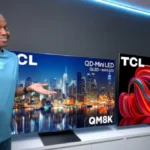


TCL QM8K earns an A from our critic. Flagship brightness and flagship dimming for mid range money, with a short fault list that stays...
TCL QM8K review covering brightness, blooming, gaming, motion, viewing angles, HDMI 2.1, prices, and whether the 65, 75, 85, or 98-inch model...
TCL QM8K review covering QD-Mini LED picture quality, HDR, motion, 4K 144Hz gaming, B&O audio and differences between the 65- to 98-inch sizes.
Compare the TCL QM8K and QM8L for picture quality, HDR, color, gaming, HDMI connectivity, sound, sizes and value before choosing your...
Compare the Hisense U8QG and TCL QM8K for picture quality, HDR brightness, blooming, motion, gaming, HDMI connectivity, sound, sizes, and value.
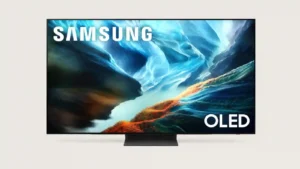
Choose the S90H for bright-room OLED viewing, deep blacks and top-tier gaming without flagship pricing. Skip it if you want Dolby Vision, a glossy screen or the simplest smart-TV software.
Pros: glare resistance, black levels
Cons: Dolby Vision support, color gamut
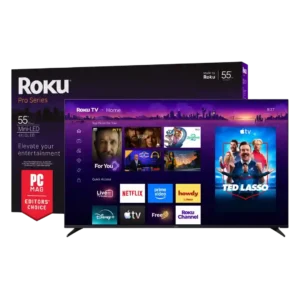
Best for bright Mini-LED picture, excellent built-in audio, easy Roku navigation, and responsive 4K/120 gaming. Skip it if you want ad-free menus, premium motion consistency, or stronger confidence in long-term...
Pros: overall satisfaction, picture quality
Cons: reliability, portability and versatility
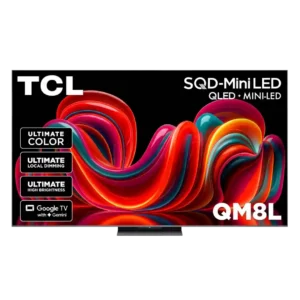
Choose the QM8L for a big, brilliantly bright TV with vivid HDR, deep mini-LED blacks, low input lag, and four HDMI 2.1 ports. Skip it if you need OLED-clean motion,...
Pros: picture quality, value for money
Cons: stand quality, judder handling
Choose the G6 for class-leading bright-room OLED picture, rich color, deep blacks and elite gaming. Skip it if you want strong built-in audio, polished launch firmware, no account sign-in, or...
Pros: picture quality, peak brightness
Cons: value for money, sound quality