Best for brightness
LG 27GX790B-B
5.0 attribute score
Highest scored product for this attribute based on supporting review evidence.

Highest scored product for this attribute based on supporting review evidence.
Balances the attribute score, supporting reviews, and overall product strength.
Has the broadest review evidence for this attribute.
Strongest overall product among items with scored evidence for this attribute.
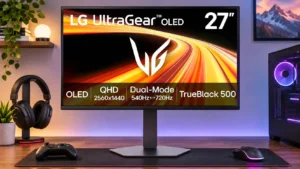
The Tandem OLED reaches impressive HDR brightness for its class, although sustained brightness can fall and direct sunlight remains demanding.
Pros: competitive gaming suitability, refresh rate
Cons: Dual-mode versatility, GPU demands
Brightness is consistently excellent, with measured SDR and HDR output strong enough for bright rooms. Even the harshest reviewer considered brightness one of the monitor's best traits.
Pros: port selection, overall satisfaction
Cons: value for money, cable management
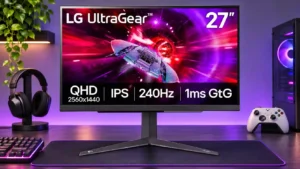
Bright SDR output is a real asset in sunny rooms, although the impressive headline luminance cannot compensate for weak HDR contrast.
Pros: refresh rate, overall satisfaction
Cons: HDR performance, contrast
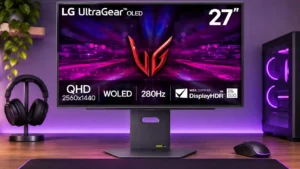
The fourth-generation Tandem OLED panel often looks brighter than older WOLED monitors, especially in SDR and very small HDR highlights. Not every tested game or HDR setting delivers the expected...
Pros: reflection handling, HDR performance
Cons: screen uniformity, Screen coating clarity
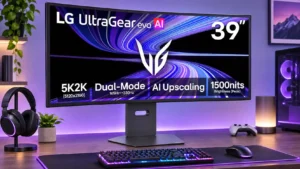
For an OLED ultrawide, brightness is excellent in both SDR and HDR, although sunny windows and larger bright scenes can still expose limits.
Pros: Resolution, overall satisfaction
Cons: value for money, Image scaling
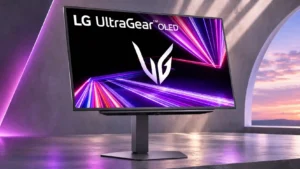
OLED brightness is strong in many games and HDR highlights, but not consistently the brightest among newer Tandem OLED screens. Strong direct light can still overwhelm visibility.
Pros: overall satisfaction, value for money
Cons: reflection handling, screen uniformity
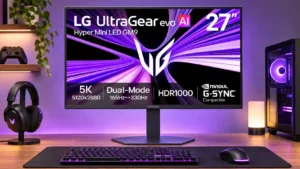
Brilliant SDR output and large HDR highlights make daylight use easy. Small highlights are less forceful, and independent tests disagree over whether sustained HDR brightness falls after several minutes.
Pros: Resolution, Dual-mode versatility
Cons: value for money, GPU demands
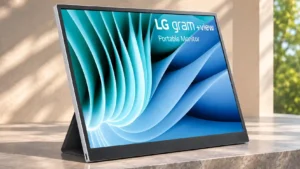
Many testers find the display bright enough indoors and in moderately bright settings, though direct sun and comparisons with brighter competitors expose limits.
Pros: portability and weight, overall satisfaction
Cons: port selection, Device compatibility
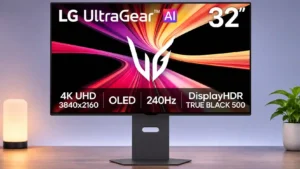
The Tandem OLED panel makes a noticeable leap over older LG OLEDs for several owners, especially in HDR. One disappointed owner found it dimmer than rival QD-OLEDs, and full-screen brightness...
Pros: brightness, color gamut
Cons: AI scene optimization, value for money
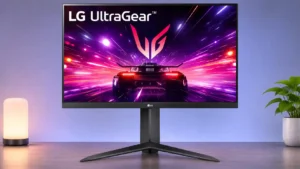
The panel is bright enough for most indoor desks, with one test finding stronger-than-average SDR output. Direct sunlight can still overpower it.
Pros: adaptive sync performance, response time
Cons: HDR performance, console gaming compatibility
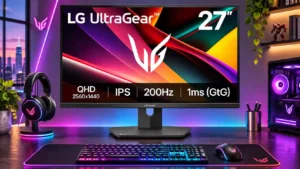
Most assessments consider the brightness sufficient for normal daytime use; one Mac owner needed to raise it manually. It still cannot make HDR highlights look truly premium.
Pros: refresh rate, value for money
Cons: HDR performance, contrast
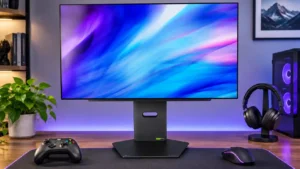
Brightness is generally adequate for a gaming room and HDR highlights stand out, but sunny offices and the newest OLED rivals reveal its limitations.
Pros: refresh rate, competitive gaming suitability
Cons: value for money, brightness