Best for console gaming compatibility
LG 27GR83Q-B
5.0 attribute score
Highest scored product for this attribute based on supporting review evidence.

Highest scored product for this attribute based on supporting review evidence.
Balances the attribute score, supporting reviews, and overall product strength.
Has the broadest review evidence for this attribute.
Strongest overall product among items with scored evidence for this attribute.
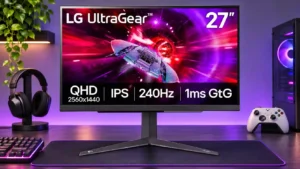
PS5 and Xbox owners benefit from strong HDMI compatibility, 120Hz support, VRR, and useful 4K-input downscaling. HDR quality remains the main console caveat.
Pros: refresh rate, overall satisfaction
Cons: HDR performance, contrast
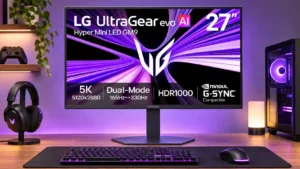
PlayStation testing confirms 4K/120Hz video with HDR and VRR, while lower-resolution console sources can benefit from optional upscaling.
Pros: Resolution, Dual-mode versatility
Cons: value for money, GPU demands
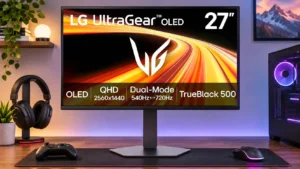
A PS5 Pro worked well in hands-on play, with smooth motion and appealing OLED visuals.
Pros: competitive gaming suitability, refresh rate
Cons: Dual-mode versatility, GPU demands
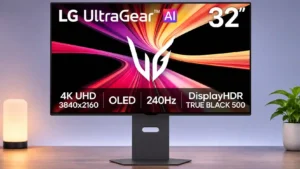
HDMI 2.1 supports 4K, HDR and 120Hz console play; the image impresses, though consoles cannot use the full 240Hz or 480Hz capabilities.
Pros: brightness, color gamut
Cons: AI scene optimization, value for money
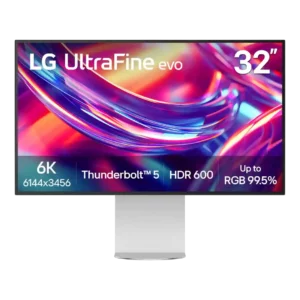
The monitor can switch easily between computers and a game system through its multi-input setup. The connection flexibility is good, even though the panel itself is not aimed at serious...
Pros: port selection, overall satisfaction
Cons: value for money, cable management
Modern consoles work well with the display at 16:9, although their lack of ultrawide output means black sidebars.
Pros: Resolution, overall satisfaction
Cons: value for money, Image scaling
PS5 games can look superb with rich OLED contrast and HDR. A long-term owner experienced recurring PS5 no-signal problems that required power-cycling.
Pros: overall satisfaction, value for money
Cons: reflection handling, screen uniformity
PS5 and Xbox work with modern HDMI signals and enjoy OLED contrast, but they cannot exploit 480Hz and a few lower-refresh quirks remain.
Pros: refresh rate, competitive gaming suitability
Cons: value for money, brightness
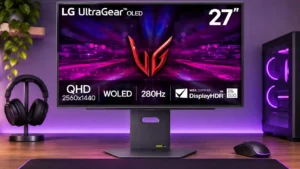
PlayStation support is generally strong, including high-refresh operation from accepted 4K signals. Xbox Dolby Vision is absent, and some console setups require changing HDMI compatibility settings.
Pros: reflection handling, HDR performance
Cons: screen uniformity, Screen coating clarity
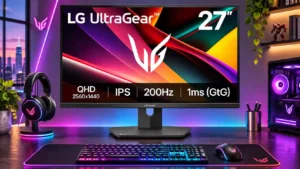
Modern consoles can play at QHD and high refresh, but the lack of HDMI 2.1 and PS5 VRR support prevents some of the flexibility found on competitors.
Pros: refresh rate, value for money
Cons: HDR performance, contrast
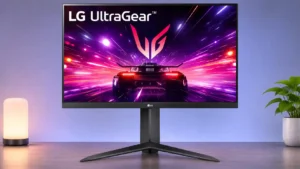
The monitor can accept common 1080p console signals, including 120Hz, but lacks some console-oriented VRR and ALLM behavior. It is a better choice for PC-only than console-only gaming.
Pros: adaptive sync performance, response time
Cons: HDR performance, console gaming compatibility
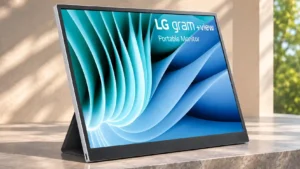
With no HDMI input, connecting a console requires an appropriate converter or another display; console use is not a core strength.
Pros: portability and weight, overall satisfaction
Cons: port selection, Device compatibility