Best for value for money
LG 27GX704A-B
4.7 attribute score
Highest scored product for this attribute based on supporting review evidence.

Highest scored product for this attribute based on supporting review evidence.
Balances the attribute score, supporting reviews, and overall product strength.
Has the broadest review evidence for this attribute.
Strongest overall product among items with scored evidence for this attribute.
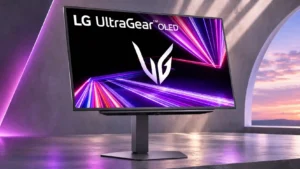
At sale prices around $380–$500, the glossy 240Hz OLED package gets strong value praise. Its higher launch pricing looks less competitive beside newer models.
Pros: overall satisfaction, value for money
Cons: reflection handling, screen uniformity
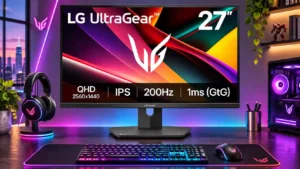
Multiple reviews applaud the amount of gaming speed and QHD clarity available at discount prices. The value is strongest when the LG is meaningfully cheaper than more fully featured rivals.
Pros: refresh rate, value for money
Cons: HDR performance, contrast
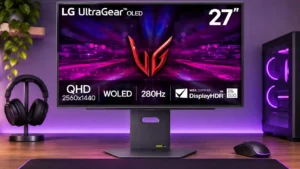
At around the strongest sale prices, fast Tandem OLED performance looks compelling. At launch-like pricing, the omitted docking features and picture compromises are much harder to forgive.
Pros: reflection handling, HDR performance
Cons: screen uniformity, Screen coating clarity
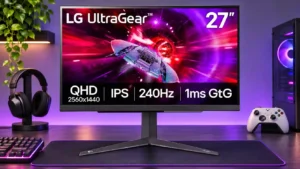
The value rises sharply when discounted into the roughly $300–$400 range. Several testers consider its original $500 positioning hard to justify against newer, less expensive rivals.
Pros: refresh rate, overall satisfaction
Cons: HDR performance, contrast
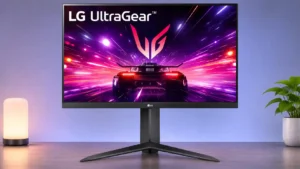
Its 180Hz IPS panel and adjustable stand make a convincing inexpensive package. Value becomes less compelling when its price approaches faster competitors.
Pros: adaptive sync performance, response time
Cons: HDR performance, console gaming compatibility
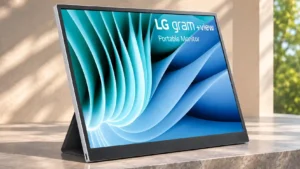
Some consider the sharp, bright panel worth its premium, while others recommend cheaper screens for basic tasks or fixed-desktop use.
Pros: portability and weight, overall satisfaction
Cons: port selection, Device compatibility
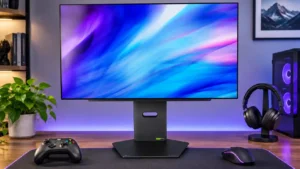
The monitor looks strongest on sale: its unique 480Hz speed can justify the premium for enthusiasts, but regular prices invite faster or sharper rivals.
Pros: refresh rate, competitive gaming suitability
Cons: value for money, brightness
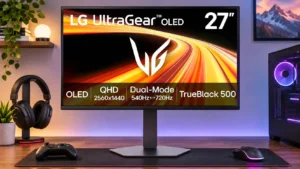
At a steep discount, its 540Hz OLED performance compares favorably with pricier rivals; at full price, many gamers can spend far less without giving up much.
Pros: competitive gaming suitability, refresh rate
Cons: Dual-mode versatility, GPU demands
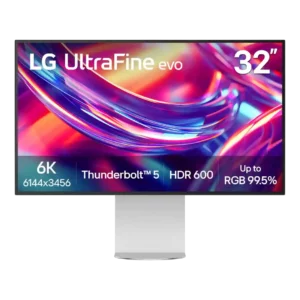
Value is highly price- and workflow-dependent. Reviewers who need 6K and Thunderbolt often justify the premium, especially at discounted pricing, while others argue cheaper 6K or 4K OLED alternatives make...
Pros: port selection, overall satisfaction
Cons: value for money, cable management
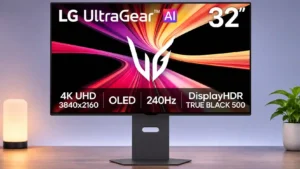
The monitor is expensive and not always a compelling upgrade from last-generation OLEDs. Its relative value improves when priced below top-end rivals.
Pros: brightness, color gamut
Cons: AI scene optimization, value for money
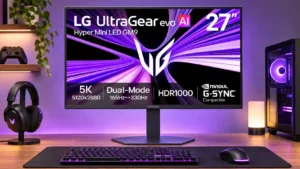
The original premium pricing draws repeated criticism when 4K OLED or Mini LED monitors cost much less. Deep discounts make its unusual 5K flexibility more compelling.
Pros: Resolution, Dual-mode versatility
Cons: value for money, GPU demands
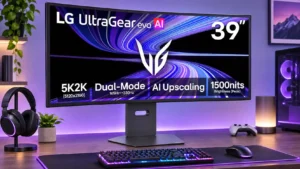
The OLED picture quality is top-tier, but its premium price and cheaper competitors make the value proposition hard to defend.
Pros: Resolution, overall satisfaction
Cons: value for money, Image scaling