
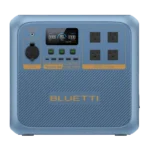
Bluetti Pioneer Na Feature Scores
Explore all 117 feature scores for Bluetti Pioneer Na, organized into pros and cons.
Scores by Feature
Summary
117 reviewed features-
Very positive 4.5-5.061 (52%)
-
Positive 3.5-4.427 (23%)
-
Neutral 2.5-3.413 (11%)
-
Negative 1.5-2.413 (11%)
-
Very negative below 1.53 (3%)
Pros
Sort
-
This is the strongest consensus in the entire review set: the Pioneer Na keeps charging and discharging at temperatures that stop many lithium stations. The caveat is substantial throttling and lower usable capacity in severe cold.
-
Standby draw is outstanding, repeatedly measuring around the low single digits with the station idle and roughly 8-9W with the inverter enabled.
-
Reviewers repeatedly praise sodium's abundance and reduced reliance on lithium and cobalt as meaningful environmental advantages. Several see this as part of the technology's long-term appeal.
-
Most reviewers recommend the Pioneer Na strongly for cold-climate users, while critics question its price, bulk, or first-generation compromises. The product is much easier to justify as a specialist winter station than as a general-purpose value pick.
-
The 4,000-plus-cycle rating is generally viewed as excellent and competitive with quality LFP stations. A few reviewers note that some LFP benchmarks retain more capacity at the same cycle count.
-
Most reviewers describe the chassis, controls, and internal construction as solid or premium. That positive impression is separate from the much weaker drop-test results for the exterior shell.
-
Warm-condition AC charging is a major strength, with many tests landing around an hour or less and several reviewers calling it exceptionally fast. Deep-freeze charging can throttle sharply, so the headline speed does not carry into the coldest conditions.
-
Sodium-ion is the product's defining advantage, earning praise for cold tolerance, stability, safety, and promising efficiency. The tradeoff is lower energy density and a shorter real-world track record than mature LFP.
-
Measured usable capacity is excellent, with several tests recovering roughly 92-96% on AC and unusually strong results relative to the 900Wh rating.
-
The familiar front-facing controls are widely praised as clear, accessible, and easy to use, including in tight spaces or while wearing gloves.
-
Recharging is one of the strongest selling points in normal temperatures, with very fast AC and combined AC-plus-solar recovery. Frozen packs recharge much more slowly until they warm.
-
Measured usable efficiency is one of the Pioneer Na's standout strengths, with several reviewers recording unusually high AC and DC results.
-
Reviewers are optimistic about a decade-scale service life, but the chemistry is still new enough that those long-term claims have not been proven in the field.
-
Most reviewers like the convenient top charging pad, and several tests worked reliably. One review found repeated stop-start behavior with certain Pixel phones, so compatibility is not universal.
-
Noise is usually well controlled and often praised as quiet, especially at normal loads. Fast charging can make the fans more noticeable, and a few testers measured higher levels than recent Bluetti models.
-
Power Lifting and surge tests are a strong point, with the station briefly supporting loads well above its continuous 1,500W rating.
-
Reviewers consistently find the screen easy to read, with useful battery, input, output, and runtime information available at a glance.
-
Combining AC and solar is a standout feature, allowing extremely high total input and sub-hour recharging under favorable conditions.
-
The Bluetti app is generally praised for clear monitoring, power controls, schedules, and settings. It is not always the fastest or most feature-rich implementation, but reviewers found it genuinely useful.
-
Solar charging performs well for the battery size, including strong real-world results in imperfect weather, though the 500W ceiling prevents faster recovery.
-
The unusual blue-and-gold styling is widely liked and helps the unit stand out, though one reviewer dislikes the baby-blue finish and hard-to-read orange lettering.
-
Most reviewers like the distinctive blue styling and familiar Bluetti form, though one critic found the older look and orange-on-blue labeling dated or hard to read.
-
Low standby draw and cold-tolerant chemistry make the unit unusually well suited to sitting ready in garages, vehicles, or emergency setups.
-
Cooling is a strength under normal conditions, with effective airflow and controlled temperatures during heavy loads. Moisture and ice around the fan area remain a separate outdoor-use concern.
-
Day-to-day operation is a strong point, with simple front-panel controls, useful app management, and minimal learning curve.
-
The broad cold operating window is a defining advantage and makes the station unusually practical for unheated garages, vehicles, cabins, and winter work.
-
Heavy-load and source-switching tests showed stable voltage and uninterrupted operation, which is reassuring for connected electronics.
-
Reviewers successfully ran several electronics and appliances at once without instability, showing strong multi-device handling within the inverter limit.
-
As a solar generator it works well, with reliable wake-and-charge behavior and enough input for camping or off-grid replenishment. Connector choice and single-port input are the main compromises.
-
The familiar Bluetti layout and straightforward controls make the station quick to understand and operate despite the new battery chemistry.
-
Firmware updating through the Bluetti app works smoothly in the reviews that tested or discussed it.
-
The 1,500W inverter and Power Lifting mode handle many kettles, heaters, air fryers, and tools, sometimes above the nominal rating. Very high-inrush tools and non-resistive loads remain beyond its comfort zone.
-
The Pioneer Na is movable and van-friendly, but not light. Reviewers see it as portable for short carries rather than something suited to hiking or frequent long-distance hauling.
-
Short- and medium-term testing was very reassuring, with reviewers reporting no reboots, errors, or operating failures in normal use.
-
Freezer tests showed the station booting promptly in deep cold, a major practical advantage for units stored in vehicles, garages, or cabins.
-
The app and display make it easy to see real-time consumption and understand which connected devices are using power.
-
Source switching is excellent, with reviewers reporting sub-20ms transitions and no interruption to connected routers or devices.
-
At rest or under light demand, reviewers found the station exceptionally quiet.
-
Forward-facing outputs are excellent in tight spaces, letting users keep the station against a wall, on a shelf, or in a vehicle without reaching around it.
-
Overload protection behaved correctly in stress tests, shutting the inverter down cleanly when loads exceeded its safe range.
-
Instrumented testing confirms clean pure-sine-wave behavior, supporting laptops, electronics, and other sensitive loads.
-
Deep-freeze tests showed immediate, confident startup when conventional lithium systems were struggling.
-
Across both short and longer-term use, the station starts and runs dependably without recurring reboot or error behavior.
-
Short-duration output exceeds the 1,500W continuous rating and is effective for startup surges and resistive appliances.
-
The 1,500W output is enough for a broad range of camping, workshop, and emergency loads, though it is not a high-power whole-home class inverter.
-
The app makes it easy to toggle outputs, change charging modes, and adjust settings from nearby.
-
Bluetti panels work well, and reviewers also note compatible third-party panels can be used within the input limits.
-
UPS behavior tested reliably across multiple reviews, switching without lockups or visible interruption.
-
Charging efficiency is mostly strong, though results vary by mode and one review measured weaker round-trip efficiency than expected.
-
The display is generally bright, informative, and effective, although one reviewer noted it uses an older screen design than Bluetti's newest models.
-
Low-noise charging modes work well, cutting fan sound to very low levels at the cost of slower recharge speed.
-
Instrumented testing showed stable voltage under load, including demanding appliance use.
-
Compact-enough dimensions and exceptionally low idle draw make it easy to keep ready in a vehicle, garage, or backup location, although the weight still matters.
-
The overall output mix covers most common loads and is generally considered versatile, though the USB balance keeps it from feeling fully modern.
-
The 1,500W inverter generally meets its continuous rating and can sustain demanding loads, but users should respect the limit for high-inrush tools.
-
The 100W USB-C port meets its rating and is considered sufficient for laptops, drones, and most modern gear.
-
The built-in handles are considered comfortable and well shaped enough for short carries, even if the station itself is heavy.
-
Storage upkeep is simple, generally requiring periodic partial recharging rather than frequent maintenance.
-
Storage upkeep is considered manageable: periodic top-ups are required, but reviewers describe the routine as relatively easy and lighter than some lithium alternatives.
-
Long-term ownership economics look favorable when cycle life is considered, with reviewers citing strong lifetime value and favorable cost-per-cycle math.
-
Long-term storage requires periodic partial charging, but reviewers consider the routine straightforward and not burdensome.
-
App access is convenient and works well nearby, but its dependence on short-range Bluetooth limits where that convenience applies.
-
The handles make short carries manageable, but 35 pounds is still enough that reviewers do not consider this effortless to move.
-
Heavy charging and load testing produced good thermal behavior, with reviewers reporting no overheating and effective fan control.
-
The app provides strong real-time visibility into power flow, making it easy to identify loads and adjust usage.
-
A stress test near the inverter's continuous limit completed without issues, showing strong sustained-load behavior.
-
A teardown found quality copper interconnects, capacitors, and internal components rather than budget-grade parts.
-
A full-load heat-soak test passed without unusual smells or other signs of thermal distress.
-
Thermal management earns strong marks for protecting internal components from excess heat even during demanding operation.
-
The display's runtime estimate is praised as accurate and easy to read alongside live input and output information.
-
For modest loads and short outages, runtime is practical and well matched to the 900Wh class. Extended off-grid living or long home outages will exhaust it too quickly.
-
At maximum load the fans are audible but generally moderate rather than harsh, with one reviewer calling the sound non-intrusive even under full output.
-
The inverter is capable and efficient, but opinions are mixed because the 1,500W rating and older surrounding hardware feel modest for the price.
-
Four AC outlets give the 900Wh station plenty of plug-in flexibility for its size.
-
The BMS is praised for broad real-time monitoring and protection against conditions such as overcharge, short circuit, and overheating.
-
One instrumented load test held the expected 60Hz output and passed cleanly.
-
One reviewer says the sodium chemistry also handles vehicle temperature swings confidently, complementing its much stronger cold-weather story.
-
One reviewer specifically praised the box for including AC, car, and solar charging leads rather than forcing extra purchases.
-
The BMS receives praise for its layered electrical safeguards, including explicit over-voltage protection.
-
The station can charge while powering connected devices, a useful capability for mobile and backup setups.
-
A detailed teardown found the layered construction relatively straightforward to disassemble and reassemble, with plugs instead of excessive glue or fragile clips.
-
The BMS is positively regarded for layered protection that includes short-circuit safeguards.
-
Among the discussed kits, the 200W panel option is called the best value-per-watt choice for multi-day camping without grid access.
-
Voltage and sine-wave tests are strong for ordinary electronics, but two reviews found significant audible interference with sensitive amplification gear.
-
Electrical performance largely meets or exceeds stated claims, but drop resistance and some rugged-use marketing drew skepticism after hands-on testing.
-
The regulated 12V output delivered respectable DC capacity in testing, making it useful for vehicle-style loads and DC accessories.
-
In one deep-freeze comparison, the Pioneer Na's charge-state display recovered normally while the comparison LFP unit's reading did not.
-
Low-load timeout controls offer useful granularity, letting users tune when AC or DC outputs shut down automatically.
Cons
Sort
-
This is a major weakness for a winter-focused product: snow, ice, and condensation can collect around fans and ports and even trigger protective shutdowns.
-
The four USB-A ports are one of the most consistent complaints. Reviewers see the mix as dated for 2026 and would rather trade some of them for additional USB-C.
-
The fixed 900Wh battery is a clear limitation for buyers who expect their backup needs to grow, since external battery expansion is not supported.
-
Two technical tests found noticeable inverter-induced buzz in amplifiers and similar equipment. Users powering PA systems, guitar amps, or ham-radio gear may need conditioning.
-
Drop testing is the biggest durability warning: units kept working, but exterior panels, clips, and casing suffered far more visible damage than the rugged marketing suggested.
-
The most consistent physical drawback is size: sodium-ion stores less energy per volume, leaving the Pioneer Na bulkier than similarly capable LFP stations.
-
Exterior plastic is the weak point: drop tests caused panels and clips to pop loose and left visible cracks.
-
Real-world drop tests undermine the ruggedness claims, with visible damage and cracking from falls below the advertised test height.
-
At roughly 35 pounds, the Pioneer Na is repeatedly criticized as heavy for 900Wh. Handles keep it movable, but comparable LFP stations can be substantially lighter.
-
Charging from a vehicle is slow, generally limited to roughly 120W and requiring many hours for a full recovery.
-
The station is not waterproof, so reviewers warn against leaving it exposed to snow, rain, or wet conditions.
-
The single USB-C port is widely viewed as too little for a modern power station. Its capability is useful, but the port count feels behind current device needs.
-
The older barrel-style solar/DC connector is a recurring gripe. It works, but reviewers prefer more modern, durable connectors and dislike needing adapters.
-
One detailed test measured very poor MPPT efficiency and called the result atrocious, though the reviewer noted they lacked time to repeat the measurement.
-
The lack of dependable Wi-Fi is a meaningful limitation for remote checks and control. Some outdoor users do not mind Bluetooth-only operation, but others found it a poor fit for home backup monitoring.
-
The product cannot grow with external battery modules, a clear weakness for buyers who may need more than the fixed 900Wh later.
-
The internal battery is not removable, which makes the station a poor fit for buyers who want a replaceable-pack path or future capacity flexibility.
-
The single solar input and barrel connector often require adapters when combining portable panels, adding friction to otherwise capable solar charging.
-
The 900Wh pack is enough for short outages, camping, and modest appliances, but reviewers repeatedly call it small for the unit's size and price. Power users and longer backup scenarios will want more.
-
Monitoring works well within Bluetooth range but is weak for whole-home or off-site use because Wi-Fi is absent or unreliable.
-
The sodium pack is bulky relative to the amount of energy it stores, so the unit is less compact than comparable lithium alternatives.
-
One reviewer flags Bluetti’s customer-service reputation as mixed, adding a small ownership caveat to otherwise positive hardware impressions.
-
Day-one and six-month experiences are positive, but reviewers consistently caution that sodium-ion lacks the decade of field history needed to validate its lifespan claims.
-
The 500W solar ceiling is adequate for a 900Wh battery and can refill it quickly in good sun, but several reviewers consider it modest and dislike the single-input arrangement.
-
Bluetooth works well at close range, but reviewers repeatedly found its practical range limited. In small vans it is fine; farther away, the connection can become spotty.
-
Warranty coverage provides some reassurance, but reviewers noted inconsistency in reported terms and at least one shorter-than-usual Bluetti warranty.
-
Value is highly use-case dependent. Cold-climate buyers often see the premium as justified, while general-purpose shoppers can get more capacity, lower weight, or stronger output for less money from mature LFP options.
-
DC performance drew mixed reactions: measured usable output was respectable, but one reviewer considered the DC capability dated for a new-generation station.
-
The Pioneer Na works well for routers, lights, CPAPs, refrigeration, and other essentials during shorter outages. Its 900Wh battery is not intended for long whole-home backup.