
If you want better customer support
Choose TP-Link Archer AX55. It scores 5.0 vs 1.0 for customer support, with a 4.0 overall score.

The Archer AX10 offers impressive 5 GHz speeds and simple setup for a budget router. It is best suited to smaller homes, with limited long-range performance, no USB and basic advanced controls.
Budget-conscious buyers in apartments or modest homes with typical sub-gigabit broadband, who want easy setup, smooth everyday streaming and good nearby 5 GHz speeds.
Users who need multi-gigabit networking, dependable long-range coverage across a large home, advanced network administration or simultaneous wireless VR should consider a more capable router.
The TP-Link Archer AX10 is a sensible budget Wi-Fi 6 router for apartments and modest homes. Its strongest asset is 5 GHz throughput, which can approach the performance of more expensive models at short distances. Gigabit Ethernet delivers dependable wired speeds, while the Tether app and browser interface make setup and routine management straightforward. The compromises are real: 2.4 GHz performance is comparatively weak, distant-room coverage varies, and the lack of 160 MHz channels, USB and multi-gigabit Ethernet limits advanced uses. Parental controls and QoS are basic, and WPA3, MU-MIMO and mesh functionality are described inconsistently across hardware and firmware versions. For ordinary streaming, browsing and moderate-speed broadband, it offers good value. Larger homes, demanding wireless gaming setups and users who need sophisticated network controls should consider more capable equipment.
Compared with other Routers, this product is above average in band steering, ISP compatibility, subscription requirements, near average in wireless performance, Wi-Fi speed, below average in customer support, firewall quality, threat protection.
| Attribute | This product | Category average | Difference |
|---|---|---|---|
| customer support | 1.0 | 3.7 | -2.7 |
| firewall quality | 2.0 | 4.7 | -2.7 |
| threat protection | 2.3 | 4.4 | -2.2 |
| USB port support | 2.2 | 4.2 | -2.0 |
| WPA3 support | 2.2 | 4.3 | -2.1 |
| network segmentation | 2.5 | 4.5 | -2.0 |
| multi-gig Ethernet support | 2.5 | 4.3 | -1.8 |
| activity reports | 2.0 | 3.8 | -1.8 |
Choose TP-Link Archer AX55. It scores 5.0 vs 1.0 for customer support, with a 4.0 overall score.
Choose TP-Link Archer BE230. It scores 4.8 vs 2.0 for Cross-brand mesh compatibility, with a 4.1 overall score.
Choose GL.iNet GL-BE3600 Slate 7. It scores 4.8 vs 2.2 for USB port support, with a 4.5 overall score.
Choose ASUS ROG Strix GS-BE18000. It scores 5.0 vs 2.3 for threat protection, with a 4.3 overall score.
Compared with TP-Link Archer AX10
Yes. Modest homes and apartments are its strongest fit, particularly with a central placement.
Several close-range tests reached roughly 730–841 Mbps on Wi-Fi 6, but speeds decline with distance and the 2.4 GHz band is considerably slower.
Ordinary gaming and 4K streaming generally work well with good signal strength. Ethernet is preferable for latency-sensitive gaming.
Compatible OneMesh extenders can improve coverage on supported hardware and firmware. Check the exact revision before buying an extender.
WPA3 availability differs across accounts and versions. Basic web filtering and scheduling are available, but advanced parental controls are limited.
Its gigabit Ethernet ports work well for ordinary broadband and impose a 1 Gbps wired ceiling. It cannot fully utilize multi-gigabit service.
No. The AX10 lacks USB ports, so it cannot directly share a USB drive or printer.
These are a few of the reviews included in our analysis.




TP-Link Archer AX10 review: 77 specs and expert reviews show how it ranks among routers and whether it is worth buying.
See what the TP-Link Archer AX10’s AX1500 Wi-Fi 6 label means, which devices can use its features, and how to match firmware to your hardware...
See the TP-Link Archer AX10 in detail, including photos, price, score, full specifications, and performance test data.
Practical Wi‑Fi 6 performance and budget pricing make the TP‑Link Archer AX10 a tempting upgrade—discover which compromises you’ll need to...
The TP-Link Archer AX10 is a dual-band Wi-Fi 6 router with 2.4GHz and 5GHz bands. It supports WPA3 security and OneMesh technology, allowing...

Choose the R95 for a busy home that needs fast Wi-Fi 7, strong range, multi-gig ports, and low-lag gaming. Skip it for a small, lightly connected space or if advanced...
Pros: Wi-Fi 7 support, Wi-Fi speed

Best for frequent travel, fast VPNs, dual 2.5GbE and resilient multi-WAN. Skip it if you need full 6GHz/320MHz Wi‑Fi 7, mesh, or desktop-class USB storage and long-range indoor coverage.
Pros: VPN client support, value for money
Cons: 6 GHz performance, USB storage sharing

Exceptional VPN speeds, strong Wi-Fi 6 coverage and extensive OpenWrt controls make the Flint 2 a compelling value. Its advanced setup, missing 6GHz band and firmware-specific caveats matter if you...
Pros: setup ease, configuration flexibility
Cons: Wi-Fi 7 support, USB storage sharing
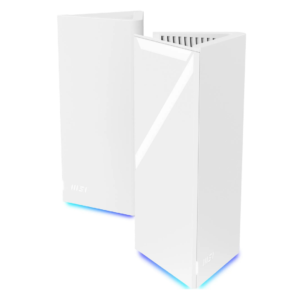
Best for affordable tri-band Wi-Fi 7, abundant 2.5GbE ports, and deep free controls. Skip it if you need consistently strong garden coverage, foolproof app setup, or proven top-tier speeds across...
Pros: value for money, design and appearance
Cons: node pairing ease, outdoor coverage