Best for mesh scalability
eero 6
5.0 attribute score
Highest scored product for this attribute based on supporting review evidence.

Highest scored product for this attribute based on supporting review evidence.
Balances the attribute score, supporting reviews, and overall product strength.
Has the broadest review evidence for this attribute.
Strongest overall product among items with scored evidence for this attribute.

Overall: 3.7/5
Expansion is straightforward, including adding compatible units to an existing eero network as coverage needs grow.
Pros: setup ease, value for money
Cons: Ethernet port count, Wi-Fi speed

Overall: 4.8/5
Multiple AQUILA PRO AI routers can be connected easily, giving the system room to grow with a larger home.
Pros: Wi-Fi 7 support, Wi-Fi speed

Overall: 4.2/5
Compatible Deco units can easily be added as coverage needs grow.
Pros: value for money, Wi-Fi speed
Cons: subscription requirements, long-range speed
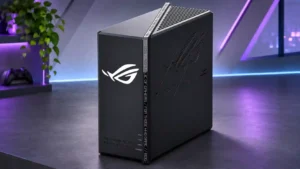
Overall: 4.3/5
Compatibility with other ASUS routers, including older models, makes later mesh expansion practical.
Pros: Wi-Fi speed, Ethernet port count
Cons: 10 GbE support, WAN port speed
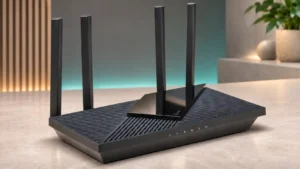
Overall: 4.0/5
Expansion is affordable and practical, though compatibility varies by hardware revision and some rivals offer stronger scalability.
Pros: value for money, parental controls
Cons: subscription requirements, multi-gig Ethernet support
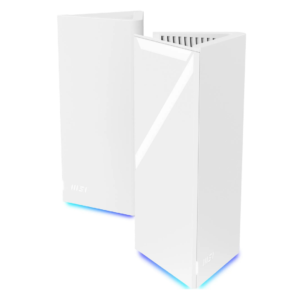
Overall: 4.3/5
A two-node kit suits small to mid-sized spaces, but limited availability of individual nodes makes larger deployments less straightforward.
Pros: value for money, design and appearance
Cons: node pairing ease, outdoor coverage

Overall: 3.7/5
Native mesh expansion is not a strength, making it difficult to extend coverage seamlessly as needs grow.
Pros: Wi-Fi 7 support, Future upgrade readiness
Cons: Device compatibility