Best for wireless backhaul
MSI Roamii BE Pro
4.8 attribute score
Highest scored product for this attribute based on supporting review evidence.

Highest scored product for this attribute based on supporting review evidence.
Balances the attribute score, supporting reviews, and overall product strength.
Has the broadest review evidence for this attribute.
Strongest overall product among items with scored evidence for this attribute.
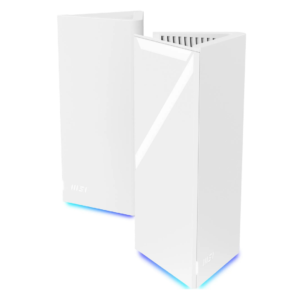
Overall: 4.3/5
Wireless backhaul was excellent in some tests and adequate for normal use, though one review found a steep secondary-node slowdown.
Pros: value for money, design and appearance
Cons: node pairing ease, outdoor coverage

Overall: 4.2/5
Wireless backhaul can deliver exceptional speed for the price, but distance, obstacles and shared airtime can impair it.
Pros: value for money, Wi-Fi speed
Cons: subscription requirements, long-range speed

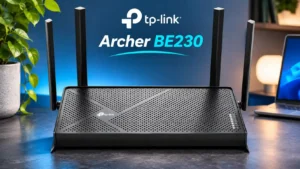
Overall: 4.5/5
Repeater/WISP mode is a core travel function and usually works well, including on captive-portal networks. One test did encounter random failures to connect, so it is not flawless across firmware...
Pros: VPN client support, value for money
Cons: 6 GHz performance, USB storage sharing

Overall: 3.7/5
Wireless links between nodes can substantially reduce speed; the convenience of cable-free installation comes with a performance penalty.
Pros: setup ease, value for money
Cons: Ethernet port count, Wi-Fi speed
Overall: 4.1/5
Wireless backhaul shares available radio bandwidth, potentially cutting speed substantially as traffic passes between nodes.
Pros: value for money, Wi-Fi speed
Cons: 6 GHz performance, subscription requirements
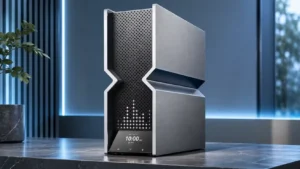
Overall: 4.1/5
A dedicated wired backhaul is preferable when mesh bandwidth demands are high; the split 5GHz band is not necessarily a strong wireless backhaul solution.
Pros: wireless performance, Wi-Fi speed
Cons: value for money, size and footprint