Best for Resolution
MSI MPG 322URX QD-OLED
5.0 attribute score
Highest scored product for this attribute based on supporting review evidence.

Highest scored product for this attribute based on supporting review evidence.
Balances the attribute score, supporting reviews, and overall product strength.
Has the broadest review evidence for this attribute.
Strongest overall product among items with scored evidence for this attribute.

Overall: 4.0/5
4K sharpness on the large OLED panel makes games and text richly detailed, but high frame rates require a serious GPU.
Pros: overall satisfaction, DisplayPort connectivity
Cons: value for money, reliability over time

Overall: 4.2/5
The 3840×2160 panel brings finely defined games, text and media to a compact screen. Its extra detail is one of the clearest reasons to upgrade.
Pros: HDR performance, DisplayPort connectivity
Cons: value for money, brightness

Overall: 4.0/5
Native 4K yields strikingly sharp 27-inch images and text, at the expense of lower definition in FHD speed mode.
Pros: Dual-mode versatility, refresh rate
Cons: black levels, contrast

Overall: 4.4/5
The 3840×2160 resolution is exceptionally sharp at 32 inches and clearly more detailed than 27-inch QHD displays. It also demands a powerful GPU for high-refresh gaming.
Pros: brightness, reflection handling
Cons: cable management

Overall: 3.9/5
A 27-inch 2560×1440 screen balances sharpness, desktop room and gaming performance nicely, but cannot match native 4K fine detail.
Pros: HDR performance, black levels
Cons: viewing angles, response time
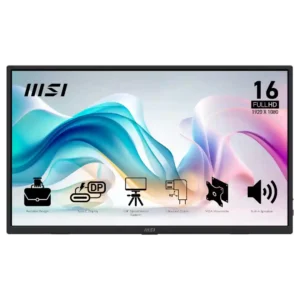
Overall: 4.1/5
1080p is generally sharp enough at 15.6 inches and works well for office tasks, but some buyers find it merely adequate compared with higher-resolution screens.
Pros: value for money, portability and weight
Cons: built-in speakers, color gamut

Overall: 4.4/5
3440×1440 helps balance ultrawide gaming detail against attainable high frame rates, but is visibly less dense than modern 4K alternatives.
Pros: refresh rate, Text fringing
Cons: Resolution, GPU demands