Best for console gaming compatibility
MSI MPG 322URX QD-OLED
4.7 attribute score
Highest scored product for this attribute based on supporting review evidence.

Highest scored product for this attribute based on supporting review evidence.
Balances the attribute score, supporting reviews, and overall product strength.
Has the broadest review evidence for this attribute.
Strongest overall product among items with scored evidence for this attribute.
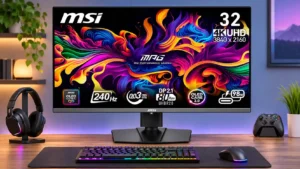
Overall: 4.0/5
Two HDMI 2.1 connections support current console gaming well, including 4K/120Hz use. At 60Hz, the 240Hz-focused premium is harder to justify.
Pros: overall satisfaction, DisplayPort connectivity
Cons: value for money, reliability over time
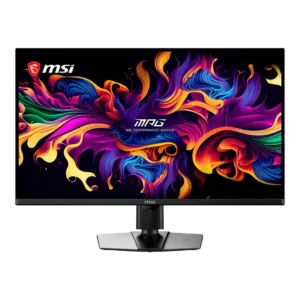
Overall: 4.4/5
Modern consoles receive strong 4K/120Hz, VRR, HDMI 2.1, and CEC support. Black-frame insertion cannot be used from a 120Hz console signal, and Dolby Vision is absent.
Pros: brightness, reflection handling
Cons: cable management
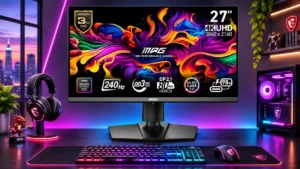
Overall: 4.2/5
Modern consoles work well at 4K up to 120Hz through HDMI 2.1, with vivid OLED contrast and fast response. They cannot exploit the entire 240Hz capacity.
Pros: HDR performance, DisplayPort connectivity
Cons: value for money, brightness
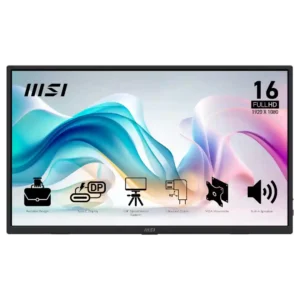
Overall: 4.1/5
Console compatibility is generally solid, especially with Nintendo Switch, though some setups require HDMI plus external power.
Pros: value for money, portability and weight
Cons: built-in speakers, color gamut
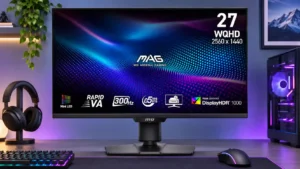
Overall: 3.9/5
PS5 and Xbox benefit from HDMI 2.1, VRR and 120Hz support, including scaled 4K input in Console Mode. Dolby Vision and some less common 4K video cadences are unavailable.
Pros: HDR performance, black levels
Cons: viewing angles, response time
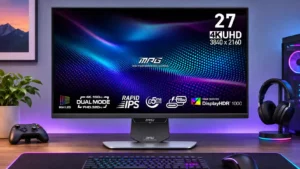
Overall: 4.0/5
HDMI 2.1 supports PlayStation and Xbox at 4K120 with VRR; the PC-only 160/320Hz figures do not apply to consoles.
Pros: Dual-mode versatility, refresh rate
Cons: black levels, contrast
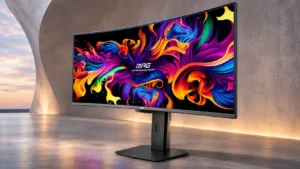
Overall: 4.4/5
HDMI and dedicated console mode offer a useful connection path; console resolution or refresh behavior can vary.
Pros: refresh rate, Text fringing
Cons: Resolution, GPU demands