
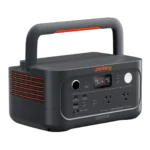
Jackery Explorer 500 v2 Feature Scores
Explore all 94 feature scores for Jackery Explorer 500 v2, organized into pros and cons.
Scores by Feature
Summary
94 reviewed features-
Very positive 4.5-5.049 (52%)
-
Positive 3.5-4.417 (18%)
-
Neutral 2.5-3.414 (15%)
-
Negative 1.5-2.414 (15%)
Pros
Sort
-
Compactness is a defining strength. Reviewers repeatedly praised the lunch-box-like footprint, easy vehicle storage, and ability to deliver meaningful capacity without becoming bulky.
-
Portability is exceptional for the capacity, combining low weight, a compact body, and an easy carry handle that works well for camping, vehicles, and job sites.
-
Overall sentiment is strongly positive: the Explorer 500 v2 is repeatedly praised as a compact, capable, easy-to-live-with mid-range station. The recurring reservations are its 500W ceiling and missing connected features.
-
Mains charging is a major strength, with most accounts describing roughly 70–80 minute full charges as fast or competitive. One more skeptical take called the charging specs merely okay.
-
Simplicity is a major strength: the controls are approachable, setup is straightforward, and the lack of complex menus appeals even to nontechnical users.
-
At roughly 5.7kg, the unit is consistently praised as light for its capacity and easy to carry one-handed.
-
The 100W USB-C PD port is a standout feature, repeatedly praised for charging laptops directly at full speed without needing an AC brick.
-
Quiet operation is one of the product’s strongest comfort advantages, with several reviewers describing it as nearly silent or whisper-quiet in normal use.
-
Long-term battery life is one of the clearest advantages, with multiple reviews expecting many years of regular use and much slower degradation than older designs.
-
Combining power sources is highly useful, cutting full recharge time and giving off-grid users more flexibility when fast turnaround matters.
-
Reliability is a consistent strength, with the product described as dependable, built to last, and easy to trust on regular trips.
-
Multiple phones, laptops, cameras, and other small devices can be powered together comfortably as long as total draw stays within the 500W limit.
-
Construction quality is consistently excellent, with reviewers describing the station as well made, premium, and dependable enough for regular camping use.
-
Cycle life is widely seen as a strength, with several reviewers impressed by the long service-life claims. Some caution remains because the headline 6,000-cycle figure uses a 70% capacity threshold and lacks long-term independent verification.
-
UPS behavior is generally viewed positively for routers, computers, and short outages, including a seamless hands-on transfer. A more cautious analysis noted that sensitive-equipment performance has not been independently quantified.
-
Runtime is strong for light loads and camping essentials but varies sharply by use case; laptops and small fridges fare well, while higher-draw backup use drains the modest battery quickly.
-
The integrated LED is a useful bonus for camping and outages, offering practical illumination and emergency modes.
-
For short blackouts, the station is well suited to routers, laptops, lights, and other essentials. Its capacity and output are too limited to replace a larger home-backup system.
-
LiFePO4 chemistry is treated as a substantial improvement, with durability and long-term ownership benefits outweighing the modest energy-density tradeoff.
-
The cleaner, more subdued redesign is widely liked, with reviewers praising its shape, styling, and reduced use of the older bright-orange look.
-
The move to LiFePO4 is one of the most praised upgrades, improving expected service life and making the v2 much more compelling than older chemistry.
-
Paired with a solar panel, the station works well as a compact off-grid solar setup for camping and mobile use.
-
The solar-panel bundles are viewed favorably, especially when they include the panel and extension cable needed for a practical off-grid setup.
-
Energy-saving behavior is generally useful for reducing idle drain and extending stored power, though one reviewer worried the physical switch could be bumped accidentally.
-
Value is strongest at discounted prices and for buyers who prioritize portability, battery life, and simplicity. At full price, some rivals offer more output or capacity for a similar spend.
-
Support receives strong marks, including praise for responsiveness and for the long support period accompanying the product.
-
The unit feels robust enough for travel, workshops, and campsite handling rather than something that needs to be babied.
-
Solar charging is well matched to the battery size, with a 100W panel producing practical full-day recharge times and clear gains over the previous generation.
-
Long-lived LiFePO4 cells, solar charging, and emission-free operation make the product appealing to buyers who want a lower-maintenance renewable-power option.
-
The five-year warranty/support package is repeatedly viewed as generous for a battery product.
-
The overall connection mix is versatile for laptops, phones, and small appliances, though heavier multi-device setups may still need an extra adapter or hub.
-
The roughly 512Wh capacity is well suited to weekend camping, small electronics, and brief outages, but it is not enough for sustained heavy backup. Opinions soften when it is compared with slightly larger mid-range models.
-
The controls and ports are arranged simply and intuitively, making the front panel easy to understand without digging through menus.
-
Within its intended range, load handling is strong; small household devices run comfortably, and one test even powered a 600W drill briefly.
-
The compact housing and folding handle make the station easy to stow in a car, campervan, or home between uses.
-
The folding carry handle contributes to easy transport and helps keep the unit convenient to stow when not in use.
-
The 200W solar-input ceiling is a meaningful upgrade and well matched to this capacity, even if it is not class-leading.
-
Stored-charge retention is a strength, helping the station remain ready after sitting unused for emergency backup.
-
The display is bright and crisp, staying clear enough to use outdoors in direct sunlight.
-
Outdoor legibility is excellent, with key status information remaining easy to read even in bright sun.
-
Backup handover was seamless in an office test, with no visible flicker, reboot, or delay when mains power was cut.
-
At about 5.7kg, the station is easy to pick up and carry with one hand.
-
Maintenance-free operation is a meaningful convenience compared with fuel-powered generators, especially for occasional backup use.
-
The finished plastic exterior and integrated handle give the unit a premium, well-made feel.
-
Stable output and pure-sine power make the station comfortable to use with sensitive electronics.
-
Pass-through charging is a major practical advantage for road trips and outages because devices can stay powered while the station itself recharges.
-
Pure-sine output was viewed as safe and stable for computers and other sensitive electronics.
-
The pure-sine inverter is a strong fit for sensitive electronics, providing grid-like power rather than a cheaper modified waveform.
-
Low self-discharge is useful for emergency storage because the station retains charge more effectively while sitting unused.
-
The lunch-box-like footprint is a major advantage, giving the station meaningful capacity without taking up much room.
-
Two AC outlets help make the front-panel connection mix feel practical for everyday use.
-
The safety and temperature-management systems inspire confidence for powering sensitive electronics indoors and outdoors.
-
Direct USB-C charging avoids unnecessary DC-to-AC conversion losses, making laptop charging more efficient than using a mains adapter.
-
The battery design is credited with keeping temperatures under control and improving thermal safety in normal use.
-
The shock-resistant, fire-protected casing is built for travel and practical handling rather than delicate indoor-only use.
-
Shock-resistant construction adds confidence for outdoor, workshop, and travel use where the unit may be moved or set down frequently.
-
The included manual is simple and straightforward, matching the product’s uncomplicated setup.
-
The power station arrived securely protected with cardboard corner supports and foam inserts.
-
CE, WEEE, and RoHS certifications add reassurance about manufacturing and environmental standards.
-
The broader Jackery ecosystem, warranty support, and brand reputation add appeal for buyers who already value the brand’s accessories and support.
-
Vehicle charging was considered reasonably quick for topping up while driving, even though it remains slower than mains charging.
-
The physical energy-saving control gives users a simple way to prevent unwanted low-load shutoff, which is useful for devices that must stay running.
-
Recharge speed is generally good, but one direct comparison found the 500 v2 slower than the larger 600 v2 despite only a modest price gap.
-
The 12V car socket is still useful for accessories, though one reviewer felt it is becoming less important as USB standards take over.
-
The DC8020 input is less common than XT60-style standards, but readily available adapters reduce some of the inconvenience.
-
The inverter shuts down under sustained overload as expected, but the way it communicates that cutoff could be clearer.
Cons
Sort
-
The 500W continuous ceiling is the clearest limitation. It is comfortable with small electronics and camping gear but not a good fit for heaters, full-size kettles, air fryers, or many power tools.
-
Bluetooth is absent, which several reviewers treated as a clear limitation for users who want connected control.
-
Wi-Fi is missing, preventing app-based monitoring and control and standing out against more connected competitors.
-
There is no app connectivity, a recurring drawback for buyers who want remote monitoring or settings. One reviewer saw the omission as a possible benefit for people who prefer a simpler, receiver-free device.
-
Low-wattage output monitoring is a weakness: the screen can show 0W even while a laptop is charging.
-
The display does not show remaining hours or minutes, a significant usability omission during backup use.
-
Some published claims deserve caution, including conflicting charge-time figures and aggressive cycle-life or class-leading marketing statements.
-
Battery capacity cannot be expanded, so buyers who may outgrow 512Wh will need to move to a larger system rather than add packs.
-
Capacity cannot be expanded, which limits the product for buyers whose power needs may grow beyond this mid-range size.
-
Without Wi-Fi or Bluetooth, users cannot initiate the kind of firmware updates that can add or improve functionality over time.
-
There is no dedicated quiet mode, so users cannot manually prioritize lower fan noise when the unit becomes audible under load.
-
There is no app-based remote control, which connected-power-station users may miss.
-
Remote monitoring is absent, so status and usage must be checked directly on the unit.
-
Water protection is limited; the unit should be kept sheltered if rain starts.
-
The basic package is sparse, and the missing car-charging cable disappointed more than one reviewer.
-
Extreme cold is not the ideal operating environment; one reviewer specifically advised against leaving the unit in freezing conditions.
-
The station is better suited to temperate conditions than extreme heat, and reviewers caution against leaving it in a very hot vehicle.
-
Performance is best in dry, temperate conditions rather than temperature extremes, limiting confidence for harsher environments.
-
Surge performance is uncertain: one analysis observed protection cutting in below the claimed 1,000W figure during a sustained overload test.
-
Third-party solar cabling is less convenient because an MC4-to-DC8020 adapter may be required and can be difficult to source.
-
Jackery’s own panels fit naturally, but using another brand is less convenient because of the proprietary DC8020 connection.
-
Surge capability is a point of caution because one overload test cut power below the advertised 1,000W surge figure.
-
Outdoor use is fine in fair conditions, but rain and temperature extremes call for added protection.
-
The single USB-A connection can feel limiting when several legacy devices need charging at once.
-
The USB-C count is adequate but not generous; more than one reviewer wished for an extra modern charging port.
-
Fan noise at heavier loads is inconsistent across accounts, ranging from very quiet to noticeably noisy, so full-load acoustics are a mixed point.
-
Delivered capacity varied by test method, ranging from close to the rated figure to a noticeably lower result under a heater load.
-
The 500W output is strong for small devices and a station this compact, but several competitors offer more inverter headroom in a similar size class.