
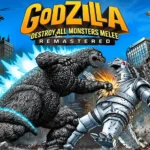
Godzilla: Destroy All Monsters Melee Remastered Feature Scores
Explore all 97 feature scores for Godzilla: Destroy All Monsters Melee Remastered, organized into pros and cons.
Scores by Feature
Summary
97 reviewed features-
Very positive 4.5-5.019 (20%)
-
Positive 3.5-4.436 (37%)
-
Neutral 2.5-3.420 (21%)
-
Negative 1.5-2.421 (22%)
-
Very negative below 1.51 (1%)
Pros
Sort
-
Classic rubber-suit designs, familiar attacks and authentic monster sounds capture the spirit of vintage Godzilla films particularly well.
-
Rebuilt monsters and richer color generally make a strong impression. Basic scenery, uneven assets and platform-specific visual reductions keep the overhaul from impressing everyone equally.
-
Hurling monsters, leveling cities and trading blows with friends delivers lively, often hilarious fun. Even critical accounts commonly enjoy the basic spectacle.
-
Throwing buildings and smashing opponents through city blocks are central pleasures. Some find the destruction wonderfully interactive, while others want more convincing collapse effects and easier targeting.
-
The tested PS5, Switch 2 and PC versions generally run smoothly. Technical performance is one of the remaster’s more consistent strengths.
-
Most accounts report smooth action in both handheld and docked Switch 2 play. Occasional multiplayer dips, a Rage-move pause and screen tearing appear in some tests.
-
The basic inputs are usually easy to pick up, and shared controls encourage trying different monsters. Understanding timing and deeper tactics takes more effort than the teaching supports.
-
Teleporting, burrowing, flight and individual attack traits give many monsters appealing identities. Some reviewers still find shared combos and near-clone fighters too similar.
-
The remaster is widely welcomed as a faithful way to revisit a neglected classic. Its substantial visual rebuild is tempered by preserved jank, limited added content and divisive progression changes.
-
The heavy arena brawling is accessible and often satisfying, with cover, throws and monster abilities adding strategy. Reviewers disagree sharply about whether that depth lasts beyond casual matches.
-
Many consider the compact brawler a good budget purchase, particularly for fans and social play. Less enthusiastic accounts question the price when novelty fades or unlocking feels padded.
-
Cities provide cover, throwable structures and hazards that make positioning worthwhile. Dense skyscraper districts are particularly enjoyable to fight through.
-
Core monster battles and local Versus modes are frequently highlighted as the main attraction. Tournament Mode is a useful way to access the full local lineup.
-
Short loading times keep the gap between monster battles pleasantly brief, including on Switch 2.
-
Shared couch play is warmly praised for accessible monster chaos and family fun, especially by reviewers explicitly discussing cooperative sessions.
-
Couch cooperative sessions are an enjoyable way to share the destructive action, and several reviewers identify them as a key reason to play.
-
Hands-on online accounts are mostly positive, including long-distance wireless matches. One tester experienced occasional disconnects.
-
Director and photo tools make composing miniature kaiju movies enjoyable. Active fights can make operating the camera awkward in one account.
-
Simple controls and a clear monster-smashing premise make the basic experience easy to understand.
-
Toe-stubbing reactions, scenery throws and other slapstick monster antics reliably provide laughs.
-
Familiar roars, powerful beams and city-collapse sounds reinforce the monster fantasy. Repetition, compressed effects and occasional harsh noises can grate.
-
Weighty creatures and more colorful, detailed cities help create the feeling of controlling an enormous monster.
-
The absence of microtransactions is a welcome positive, though it does not make the lengthy progression less frustrating.
-
Colorful monster artwork and a comic-book style give the remaster a striking identity. Some miss the original volcanic menus and dislike the cleaner, more plastic or cartoony look.
-
Nighttime beams, explosions and brighter effects create an appealing spectacle. Some effects become excessive enough to obscure the fight.
-
Local battles are the main attraction, while online play is a welcome way to reach distant friends. The reported one-on-one limit and missing crossplay substantially reduce its flexibility.
-
Production stills, videos and material from the original release add enjoyable historical context. Unlocking gallery items can be slow, and the archive is not as extensive as dedicated historical collections.
-
Weather and time variants add useful visual and atmospheric variety to familiar arenas.
-
The return to shared monster battles can reconnect players with strong childhood memories, making the social experience more affecting than its simple premise suggests.
-
Unlocking content through play and avoiding battle passes or paid characters feels refreshing to supporters of the old-school approach.
-
The overall recommendation is generally positive but conditional. Its strongest appeal is a playful monster brawler, with nostalgia and local company helping offset limited depth.
-
The preserved announcer and familiar delivery delight some returning players. Compressed clips and the lack of Japanese voices weaken the presentation for others.
-
Large monsters and short fights generally suit portable play very well. A zoomed-out monochrome Gauntlet mode can be much harder to follow on the small screen.
-
Adventure variants, Survival, Destruction and custom matches offer several ways to play. Some appreciate the range, while others find similar objectives and restricted map rotation repetitive.
-
Keeping characters out of a paid DLC gate is appreciated, even when unlocking them through play still takes too long.
-
Recognizable film moves and slapstick reactions can be delightful. Stiff thrown-monster poses, clipping and dated motion reveal the age of the underlying design.
-
Monster spectacle and changing weather or time of day give battles a distinctive atmosphere.
-
The score captures vintage creature-feature atmosphere for some listeners, while others find it generic or forgettable.
-
One Switch 2 test completed without crashes, providing a positive account of stability on that version.
-
Gallery items and historical viewables give collectors an enjoyable additional goal beyond fighting.
-
Flying monsters offer an enjoyable change of pace and effective mobility, though their advantages over grounded opponents can worsen balance.
-
The exaggerated monster violence works as slapstick, keeping hits and throws amusing even during repeated battles.
-
Support for one Joy-Con 2 per player lowers the practical barrier to assembling a local multiplayer group.
-
Accessible shared battles worked well for a reviewer playing with his sons, giving the game a positive family-play account.
-
The monster-wrestling premise feels unusually distinctive, without a straightforward one-to-one equivalent.
-
Physical editions on PS5 and Switch 2 are a meaningful positive for players who prefer owning a boxed release.
-
Single Joy-Con 2 support makes it easier to assemble a full local group with fewer controllers.
-
Saving after a quick fight preserves progress, making it easy to stop and resume portable play.
-
The battle interface is often cleaner and more modern, and move lists improve access to attacks. Other accounts find parts of the UI plain or merely functional.
-
Preserving this distinctive piece of the GameCube era appeals to the pleasure of revisiting and collecting older games.
-
Skippable cutscenes prevent the same brief story scenes from slowing every repeat Adventure run.
-
Cheesy alien dialogue matches the intentionally campy science-fiction setup.
-
Fights allow useful freedom to combine melee attacks with cover, ranged pressure and environmental tactics instead of relying only on punches.
-
The sparse cutscenes are cute and passable rather than a major visual attraction.
-
The demo demonstrates a substantial visual improvement and familiar fighting, but does not convince one tester to prefer it over War of the Monsters.
Cons
Sort
-
Unlocking monsters and stages is the most repeated complaint, often requiring too many similar battles. A smaller group finds the effort reasonable and the rewards satisfying.
-
Initial guidance is weak, especially around advanced mechanics, research requirements and the hidden Tournament Mode setting.
-
The camera can obscure fights near buildings and arena edges, zoom too far out or move erratically. These issues are among the most disruptive remnants of the original design.
-
Lining up energy beams and collecting or grabbing objects can be awkward. Small interaction zones and limited aim correction make missed actions frustrating.
-
Missing crossplay is consistently treated as a drawback, limiting which friends can join online matches.
-
Several accounts describe major monster-strength differences and exploitable tactics, although one finds the roster well balanced. Flying fighters and powerful defensive abilities attract particular attention.
-
Removing the original cheat codes disappoints returning players who loved instant unlocks and playful match modifications.
-
Identical monsters without alternate colors, distant camera framing and crowded effects can make it difficult to follow who is doing what.
-
Accessibility is limited by missing control profiles, remapping and visual adjustments. Subtitle sizing also drew criticism for lacking a comfortable middle setting.
-
The lack of a proper tutorial leaves important buttons and deeper tactics unexplained. Learning often depends on experimentation or outside help.
-
AI behavior ranges from predictable blocking and exploitable tactics to frustrating juggling. Several accounts want smarter opposition rather than artificial advantages.
-
Building collapses and monster reactions can look too simple or disconnected from contact. The visual rebuild does not always deliver more convincing physical destruction.
-
The rebuilt presentation raises expectations for a larger package. Missing sequel content, newer monsters and the handheld companion release leave some wishing for a more complete collection.
-
Illustrated menus can be attractive and easy to navigate. Important options such as Tournament Mode and AI difficulty are too easy to miss.
-
Smashing monsters together is immediately enjoyable, but the repeated fights can become tiring when stretched into long unlock sessions.
-
Hits can pass through monsters or register without visible contact, undermining the reliability of otherwise enjoyable fights.
-
Missing alternate colors or skins disappoint players who want more customization and make duplicate-monster battles harder to read.
-
One effect remained unusually loud despite lowering master volume, suggesting inconsistent adherence to the audio settings.
-
Missing brightness adjustment leaves dark character menus harder to correct on Switch 2.
-
Health bars lack useful enlargement options, limiting readability adjustments for players with visual needs.
-
Changing monsters does little to refresh the missions, so additional runs can feel like repeating the same objectives.
-
Repeated runs largely reuse the same missions, limiting variety even when the selected monster changes.
-
The spectacle loses momentum during repeated sessions for a less enthusiastic reviewer, making the action feel less rewarding over time.
-
The twelve-monster lineup offers recognizable favorites and enjoyable abilities. Its small size, missing icons and lack of newer film monsters are recurring limitations.
-
There is little fresh content beyond the first few hours for some players, and an individual standard Adventure run can be very short.
-
Some find a satisfying challenge beneath the simple inputs. Others encounter unfair bosses, low-level disadvantages and difficulty settings that do too little to help.
-
The default block-button position feels less comfortable than a remapped left-side input for one player.
-
The faithful revival has limited ambition to reinvent the formula or feel revolutionary.
-
The game is not a particularly comprehensive exploration of Godzilla characters and lore.
-
Boss fights can provide a satisfying test of tactics, but they can also rely on inflated health, ranged spam and unfair conditions.
-
The alien-invasion premise is thin and intentionally silly. It supplies an appropriate excuse for monster battles, though it offers little for anyone seeking distinct stories or a substantial narrative.
-
Control response varies by account: some find it sharp and easy to handle, while others struggle with delayed attacks, finicky grabs and old-fashioned stiffness.
-
Solo play divides opinion between a generous set of rewarding challenges and a thin sequence of repetitive fights. Unlock requirements can magnify whichever reaction a player has.
-
Technical experiences differ: one Switch 2 test was bug-free, while PC coverage reports controller and audio failures. Minor oddities also occur around result screens.
-
The altered victory screen loses the original winning-move replay, making celebrations feel less dynamic.
-
Choosing research targets gives players more control over their unlocks. Opinions split between rewarding old-school progression and a convoluted system that delays access to favorite monsters.
-
Friends, favorite monsters and unlocks can keep matches compelling. Solo repetition and the limited underlying content leave other players ready to move on quickly.
-
Practice helps a newcomer understand the heavy combat, but its training options are limited.
-
Character upgrades divide opinion: they can make developing a favorite monster rewarding, but low starting health and locked Rage attacks can feel like needless padding.
-
Sharper monsters, buildings and environmental detail help modernize the world. Several accounts still find arenas bland, low in polygons or uneven beside the creatures.
-
Slow, weighty actions help sell the scale of giant monsters. The same deliberate movement can feel cumbersome or excessively sluggish beside modern fighters.
-
Environmental weapons and power-ups give fights a playful tactical layer. Frustrations include awkward pickups, military interruptions and attacks that cannot be canceled.
Use Cases
Best for
Sort
-
Sharing a couch with friends is the most consistently praised way to enjoy the monster chaos. A minority tires of it quickly, and locked characters can delay the ideal game night.
-
Classic monsters, recognizable moves and rubber-suit atmosphere provide strong fan service. The compact roster and absence of recent incarnations may disappoint fans seeking a broad franchise celebration.
-
Returning players can recreate fond couch-battle memories with cleaner graphics and modern access. Purists may miss the original menus, pacing or cheat codes.
-
Four-player monster chaos makes a strong party activity with a low entry barrier. Several accounts recommend it even when guests know little about Godzilla.
-
A few matches at a time capture the immediate fun while reducing fatigue from the limited loop. Portable play is especially convenient for these brief sessions.
-
Simple inputs and spectacular results make casual monster brawling easy to enjoy without studying long combos.
-
The relatively modest asking price is a strong attraction for budget-minded fans, particularly when local multiplayer will get regular use.
-
Playing with familiar friends brings out the jokes, rivalries and spontaneous fun that make the simple brawling memorable.
-
Shared monster battles can be enjoyable with children, helped by straightforward inputs and the comic spectacle of throwing one another through buildings.
-
Docked Switch 2 battles generally run smoothly and provide enjoyable play with friends on a shared screen.
-
Demolishing a city can be a satisfying low-pressure alternative to fighting. Opinions split when rudimentary physics, awkward targeting or slow map rotation reduce that freedom.
-
Switch 2 is generally a strong fit, combining smooth play with portability. Visual reductions and isolated mode-readability problems remain caveats.
-
Quick fights, readable monsters and easy stopping points make handheld play attractive. Gauntlet’s distant camera and monochrome look are a notable exception.
-
Brief portable matches make it convenient to enjoy the game away from home and keep progression moving in spare moments.
-
Gathering friends around the same television is repeatedly identified as the most enjoyable way to play.
-
The faithful old-school design is a good fit for players wanting a modern way to enjoy a retro brawler.
-
High-level Challenge and later Survival fights provide demanding tests once players have developed their monsters.
-
Optimizing city demolition for a higher score adds a worthwhile reason to revisit Destruction Mode, even when map repetition limits its appeal.
-
Newcomers can enjoy the accessible chaos, especially with friends. The unchanged retro structure and limited modern content make it a weaker fit for others.
-
A couch session with one friend or loved one is identified as a particularly enjoyable way to play.
-
Accessible slower combat helps inexperienced participants stay involved in couch sessions instead of being overwhelmed by elaborate combos.
-
Playing beside a loved one suits the game’s relaxed social competition and ridiculous shared moments.
-
A couple of handheld rounds fit naturally into downtime without demanding a long session.
-
The compact brawler works well as an occasional second game alongside a larger release.
-
A Switch 2 account reports rock-solid frame rate in docked and handheld modes, making that tested experience suitable for players sensitive to unstable performance.
-
Handheld Adventure battles can provide a convenient, enjoyable way to unwind.
-
Local matches leave room for conversation, jokes and shared stories instead of demanding constant competitive optimization.
-
Messing around in Destruction Mode can work well while listening to a podcast, with research progress keeping the time rewarding.
-
Launching monsters across city skylines initially delivers a satisfying feeling of overwhelming power, even for a reviewer who tires of the game quickly.
-
Basic fighting proved approachable and fun for one four-year-old. Easy controls alone do not make the sustained monster combat appropriate for every young child.
Conditional or not ideal for
Sort
-
Ranked competitive playLimited technical depth, one-on-one online restrictions and missing crossplay make this a weak choice for serious ranked or tournament-focused play.
-
Players sensitive to visual clutterDuplicate characters and dense visual effects can obscure the action, making some matches a poor fit for players sensitive to clutter.
-
Single-player campaign fansCampaign-focused buyers face a split recommendation: some enjoy the tactical fights and unlocks, while others find too little story or lasting solo variety.
-
Motion-sensitive playersRapid camera shifts can feel nauseating, making the tested PC experience a questionable fit for motion-sensitive players.
-
Controller playA reported controller failure after a battle required restarting the game, undermining confidence in that PC controller-play experience.
-
Long play sessionsLong sessions are less appealing when modes repeat similar fights; nostalgia and unlock goals may be needed to sustain them.
-
Fighting gamesCasual arena-fighting fans can have a great time. Buyers expecting fast, highly technical combat may find the deliberate, simpler design disappointing.
-
CompletionistsCollecting monsters and extras gives completionists clear goals, but opinions differ on whether the repeated fights justify the time required.