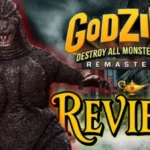
Godzilla: Destroy All Monsters Melee Remastered Review

Publisher: Atari
Released: November 3, 2026
Updated: 6 minutes ago
3.6
Overall review score
757
Review insights
97
Scored features
48
Expert reviews
Content guidance
Scorata recommended age 10+

Frequent fantasy monster fights involve punches, kicks, energy blasts, military attacks and large-scale city destruction. The action is exaggerated and often slapstick, but the sustained combat and explosions can overwhelm younger children.

Official rating T

Bottom Line

Spectacular monster battles make this an appealing couch brawler for Godzilla fans and returning players. The lengthy unlock grind, uneven controls and restricted online options keep it from being an easy recommendation for everyone.

Godzilla fans, returning players and groups wanting short, chaotic couch battles. Portable players can also make progress a few fights at a time.

Players seeking a deep technical fighter, a substantial story campaign or extensive online group options. The unlock grind is a poor fit if repeated solo battles quickly become a chore.

Verdict

Godzilla: Destroy All Monsters Melee Remastered is easiest to recommend when friends are coming over. Throwing skyscrapers, trading atomic blasts and discovering each monster’s tricks still creates entertaining chaos, while rebuilt models and familiar roars preserve the classic rubber-suit appeal. Its deliberate combat has more strategy than the simple inputs suggest, although opinions differ on how long that depth lasts. The main obstacle is unlocking the fun: research requirements and character levels can turn repeated fights into work before favorite monsters are available. Some players enjoy those goals, but others find solo play thin and repetitive. Online matches are welcome, yet reported one-on-one limits and missing crossplay make couch play the stronger draw. Fans seeking short, social monster battles are the best fit; buyers wanting a deep technical fighter or an expansive campaign should temper expectations.

Feature Scorecards

Summary

97 reviewed features
  • Very positive 4.5-5.0
    19 (20%)
  • Positive 3.5-4.4
    36 (37%)
  • Neutral 2.5-3.4
    20 (21%)
  • Negative 1.5-2.4
    21 (22%)
  • Very negative below 1.5
    1 (1%)

Pros highlights

  • 4.3
    41 reviews strong consensus
    graphics quality: 4.3, 41 reviews, strong consensus
    Rebuilt monsters and richer color generally make a strong impression. Basic scenery, uneven assets and platform-specific visual reductions keep the overhaul from impressing everyone equally.
  • 4.0
    38 reviews moderate consensus
    combat system: 4.0, 38 reviews, moderate consensus
    The heavy arena brawling is accessible and often satisfying, with cover, throws and monster abilities adding strategy. Reviewers disagree sharply about whether that depth lasts beyond casual matches.
  • 4.0
    35 reviews strong consensus
    remake/remaster quality: 4.0, 35 reviews, strong consensus
    The remaster is widely welcomed as a faithful way to revisit a neglected classic. Its substantial visual rebuild is tempered by preserved jank, limited added content and divisive progression changes.
  • 4.2
    27 reviews strong consensus
    learning curve: 4.2, 27 reviews, strong consensus
    The basic inputs are usually easy to pick up, and shared controls encourage trying different monsters. Understanding timing and deeper tactics takes more effort than the teaching supports.
  • 4.4
    23 reviews strong consensus
    world interactivity: 4.4, 23 reviews, strong consensus
    Throwing buildings and smashing opponents through city blocks are central pleasures. Some find the destruction wonderfully interactive, while others want more convincing collapse effects and easier targeting.
  • 4.1
    21 reviews strong consensus
    character diversity: 4.1, 21 reviews, strong consensus
    Teleporting, burrowing, flight and individual attack traits give many monsters appealing identities. Some reviewers still find shared combos and near-clone fighters too similar.

Cons highlights

  • 3.0
    34 reviews low consensus
    progression system: 3.0, 34 reviews, low consensus
    Choosing research targets gives players more control over their unlocks. Opinions split between rewarding old-school progression and a convoluted system that delays access to favorite monsters.
  • 3.0
    29 reviews low consensus
    solo play quality: 3.0, 29 reviews, low consensus
    Solo play divides opinion between a generous set of rewarding challenges and a thin sequence of repetitive fights. Unlock requirements can magnify whichever reaction a player has.
  • 1.7
    25 reviews moderate consensus
    grind level: 1.7, 25 reviews, moderate consensus
    Unlocking monsters and stages is the most repeated complaint, often requiring too many similar battles. A smaller group finds the effort reasonable and the rewards satisfying.
  • 2.8
    22 reviews moderate consensus
    character roster: 2.8, 22 reviews, moderate consensus
    The twelve-monster lineup offers recognizable favorites and enjoyable abilities. Its small size, missing icons and lack of newer film monsters are recurring limitations.
  • 3.1
    19 reviews low consensus
    replay value: 3.1, 19 reviews, low consensus
    Friends, favorite monsters and unlocks can keep matches compelling. Solo repetition and the limited underlying content leave other players ready to move on quickly.
  • 3.3
    19 reviews low consensus
    movement feel: 3.3, 19 reviews, low consensus
    Slow, weighty actions help sell the scale of giant monsters. The same deliberate movement can feel cumbersome or excessively sluggish beside modern fighters.

Use Cases

Best for

  • 4.7
    32 reviews strong consensus
    Local multiplayer: 4.7, 32 reviews, strong consensus
    Sharing a couch with friends is the most consistently praised way to enjoy the monster chaos. A minority tires of it quickly, and locked characters can delay the ideal game night.
  • 4.5
    24 reviews strong consensus
    Godzilla fans: 4.5, 24 reviews, strong consensus
    Classic monsters, recognizable moves and rubber-suit atmosphere provide strong fan service. The compact roster and absence of recent incarnations may disappoint fans seeking a broad franchise celebration.
  • 4.5
    18 reviews strong consensus
    Returning players: 4.5, 18 reviews, strong consensus
    Returning players can recreate fond couch-battle memories with cleaner graphics and modern access. Purists may miss the original menus, pacing or cheat codes.

Not ideal for

  • Ranked competitive play
    1.7
    5 reviews strong consensus
    Ranked competitive play: 1.7, 5 reviews, strong consensus
    Limited technical depth, one-on-one online restrictions and missing crossplay make this a weak choice for serious ranked or tournament-focused play.
  • Players sensitive to visual clutter
    1.8
    2 reviews limited evidence
    Players sensitive to visual clutter: 1.8, 2 reviews, limited evidence
    Duplicate characters and dense visual effects can obscure the action, making some matches a poor fit for players sensitive to clutter.

Compared With Category Average

Compared with other Video Games, this product is above average in crash stability, monetization fairness, save system reliability, near average in content variety, sound design, below average in accessibility options, cross-play support, tutorial quality.

Comparison summary

88 compared features
  • Above average 0.4+ pts higher
    23 (26%)
  • Same as average within 0.3 pts
    26 (30%)
  • Below average 0.4+ pts lower
    39 (44%)

Largest category differences

Attribute This product Category average Difference
accessibility options 1.8 3.8 -1.9
cross-play support 2.0 3.7 -1.7
crash stability 5.0 3.2 +1.8
tutorial quality 1.5 3.3 -1.8
onboarding experience 1.9 3.5 -1.7
character roster 2.8 4.1 -1.3
grind level 1.7 2.9 -1.2
character customization 2.3 3.9 -1.6

Consider This Instead

If you want better graphics quality

Choose Kirby Air Riders. It scores 4.9 vs 4.3 for graphics quality, with a 4.3 overall score.

Compare

Compared in Reviews

Products reviewers directly compared with this model, grouped into quick takeaways.

Super Smash Bros.

  • Similar: adventure structure The sequence of character battles leading to a boss is compared with Smash Bros.
  • Better: control profile customization The review wishes it offered named custom-control profiles like Smash.
  • Similar: directional attack inputs Directional attack inputs are likened to Smash Brothers as accessible but tactically useful.

Rampage (1986)

  • Similar: environmental destruction Its city destruction is likened to Rampage as part of the appeal.
  • Similar: monster destruction Its monster-controlled destruction resembles the arcade Rampage premise.
  • Similar: destructive brawling The monster destruction is described as part Rampage.

Street Fighter

  • Compared: combat speed The review stresses that its deliberate monster fights do not have Street Fighter’s speed.
  • Compared: pace and precision The slower monster brawling is distinguished from Street Fighter’s style rather than judged by the same expectations.
  • Compared: technical combat complexity Its straightforward mechanics may disappoint players expecting Street Fighter complexity.

FAQ

Is it best played alone or with friends?

Local multiplayer is the most consistently praised part. Solo modes divide opinion: some enjoy the challenges and unlocks, while others find the repeated fights thin.

How many monsters are available?

The supplied coverage describes twelve playable monsters, with four initially available. The limited lineup and missing newer monsters are recurring complaints.

Can I bypass the unlock grind?

Several sources identify a Tournament Mode setting that opens all monsters and stages for local Custom Battle. It disables progression and does not bypass online unlock requirements.

Does it support four-player online battles or crossplay?

Most detailed accounts describe four-player local battles, one-on-one online matches and no crossplay. Some early previews describe broader online features, so their claims conflict with the fuller launch coverage.

How does it play on Switch 2?

Most hands-on accounts report smooth docked and handheld play, with portability a major strength. Some note visual reductions, occasional frame drops or difficult handheld readability in Gauntlet.

Is the combat difficult to learn?

Basic attacks are generally approachable, but deliberate timing, defense and environmental tactics take practice. The lack of a proper tutorial makes the deeper mechanics harder to discover.

What is the U.S. content rating?

The official ESRB listing rates the remaster T for Teen, with Fantasy Violence. The supplied descriptions emphasize monster combat, energy attacks, military interference and city destruction.

Sample Expert Reviews We Analyzed

These are a few of the reviews included in our analysis.

Video Reviews

Article Reviews

Top Video Games to Consider

#1 Well Dweller
4.7

Best for fluid traversal, rewarding exploration, striking art, and forgiving quality-of-life features. Skip it if you want deep combat, radical genre innovation, or consistently demanding bosses.

Pros: difficulty balance, boss design

Cons: innovation, sandbox freedom
#2 Hades II
4.5

Best for superb combat, inventive builds, and richly voiced characters. Skip it if repeated runs, resource gathering, or visually busy battles outweigh the appeal of steady progress.

Pros: overall quality, combat system

Cons: pacing, grind level

#3 Valheim
4.5

Good if you want a beautiful, demanding survival sandbox built around exploration, building, progression, and memorable co-op. Skip it if long resource runs, harsh death recovery, and deliberate pacing sound...

Pros: town-building system, exploration quality

Cons: grind level, fast travel convenience
#4 Clair Obscur: Expedition 33
4.5

Choose Clair Obscur if you want a story-rich RPG with thrilling timed combat, gorgeous art, and standout music. Skip it if poor maps, tight parry timing, or occasional bugs and...

Pros: narrative quality, combat system

Cons: map and navigation design, menu usability