
If you want better USB port support
Choose TP-Link Deco 7 Pro BE63. It scores 4.7 vs 1.8 for USB port support, with a 4.2 overall score.

Fast 2.5GbE ports, simple setup and affordable whole-home coverage make this a compelling entry-level mesh. Without 6 GHz, wireless satellites can lose substantial speed, so Ethernet backhaul is preferable for faster broadband.
Budget-conscious households in small homes or apartments and first-time mesh buyers on gigabit-or-slower plans benefit most. Homes with Ethernet backhaul can also take advantage of the multi-gig ports.
Power users who want extensive browser-based configuration or households seeking full Wi-Fi 7 performance on fast broadband over wireless-only satellites should look elsewhere.
The Deco 7 BE25 makes mesh networking accessible without sacrificing fast wired connections. Its compact nodes are easy to place, the app makes setup straightforward, and two 2.5GbE ports on every unit are particularly useful for Ethernet backhaul and broadband above gigabit. Everyday browsing, simultaneous 4K streaming and ordinary smart-home use generally work well. The main compromise is its dual-band design: there is no 6 GHz radio or 320 MHz channel support, and wireless satellites can lose considerable throughput, especially under load. Tests differ on how much MLO helps, and results depend on clients and placement. Larger homes are better served with wired nodes. Basic parental controls are useful, but advanced features require a subscription. This is a strong budget choice for small homes or wired mesh installations, rather than an all-out Wi-Fi 7 performance upgrade.
Compared with other Routers, this product is above average in 160 MHz support, LAN port speed, Matter support, near average in setup ease, wireless backhaul, below average in congestion handling, USB port support, web interface setup.
| Attribute | This product | Category average | Difference |
|---|---|---|---|
| congestion handling | 2.1 | 4.4 | -2.3 |
| USB port support | 1.8 | 4.0 | -2.3 |
| web interface setup | 2.0 | 4.1 | -2.1 |
| wall-mounting support | 2.0 | 3.9 | -1.9 |
| web interface quality | 2.0 | 3.8 | -1.8 |
| 160 MHz support | 4.5 | 2.7 | +1.8 |
| performance under load | 2.7 | 4.1 | -1.4 |
| LAN port speed | 5.0 | 3.6 | +1.4 |
Choose TP-Link Deco 7 Pro BE63. It scores 4.7 vs 1.8 for USB port support, with a 4.2 overall score.
Choose TP-Link Deco 7 Pro BE67. It scores 5.0 vs 2.1 for congestion handling, with a 4.1 overall score.
Choose TP-Link Archer BE230. It scores 4.8 vs 2.0 for web interface setup, with a 4.1 overall score.
Choose ASUS ZenWiFi BT10. It scores 5.0 vs 2.5 for subscription requirements, with a 4.0 overall score.
Compared with TP-Link Deco 7 BE25
No. It uses 2.4 GHz and 5 GHz bands, with MLO and up to 240 MHz channel width, but lacks 6 GHz and 320 MHz support.
Yes. Wiring the nodes avoids much of the shared-radio bottleneck and lets the 2.5GbE ports deliver more consistent mesh performance.
Generally yes, especially in smaller homes. Wireless satellites may not deliver the full plan speed, so wired links help if consistent gigabit performance matters.
Basic family profiles, website filtering and scheduling are available without a subscription. Advanced controls, including daily time limits, require paid HomeShield features.
Setup and most management require the Deco mobile app. The web interface offers limited status and firmware functions.
Yes, compatible Deco nodes can be added or mixed with existing units. Older models may not deliver all the newer hardware’s performance benefits.
These are a few of the reviews included in our analysis.





The Deco BE25 gives you two 2.5 Gbps ports per unit and a 6,600 sq ft rating for budget money. What the missing 6 GHz band actually costs...
My TP-Link Deco BE25 review: the 2-pack beats a Wi-Fi 6 Deco X55 in small homes on fast plans, but only if the nodes sit close or are wired.
If you're looking to expand the reach of your home internet system and you'd rather avoid unsightly systems, TP-Link's "Deco" system might be...
Upgrading to a mesh router system is the best way to get rid of dead zones and ensure all the smart devices around the house keep getting...
Find the best Wi-Fi 7 mesh router in this top guide. My expert reviews and comparisons will assist you in selecting the perfect system for...

Choose the R95 for a busy home that needs fast Wi-Fi 7, strong range, multi-gig ports, and low-lag gaming. Skip it for a small, lightly connected space or if advanced...
Pros: Wi-Fi 7 support, Wi-Fi speed

Best for frequent travel, fast VPNs, dual 2.5GbE and resilient multi-WAN. Skip it if you need full 6GHz/320MHz Wi‑Fi 7, mesh, or desktop-class USB storage and long-range indoor coverage.
Pros: VPN client support, value for money
Cons: 6 GHz performance, USB storage sharing

Exceptional VPN speeds, strong Wi-Fi 6 coverage and extensive OpenWrt controls make the Flint 2 a compelling value. Its advanced setup, missing 6GHz band and firmware-specific caveats matter if you...
Pros: setup ease, configuration flexibility
Cons: Wi-Fi 7 support, USB storage sharing
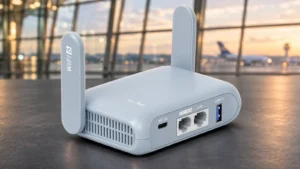
The Beryl AX packs exceptionally flexible VPN and networking tools into a pocket-sized router. It is a great travel companion, but hotel login issues, limited whole-home range and a single...
Pros: Overall satisfaction, size and footprint
Cons: Captive portal handling, Ethernet port count