If you want better 2.5 GbE support
Choose ASUS ROG Strix GS-BE18000. It scores 5.0 vs 2.0 for 2.5 GbE support, with a 4.3 overall score.

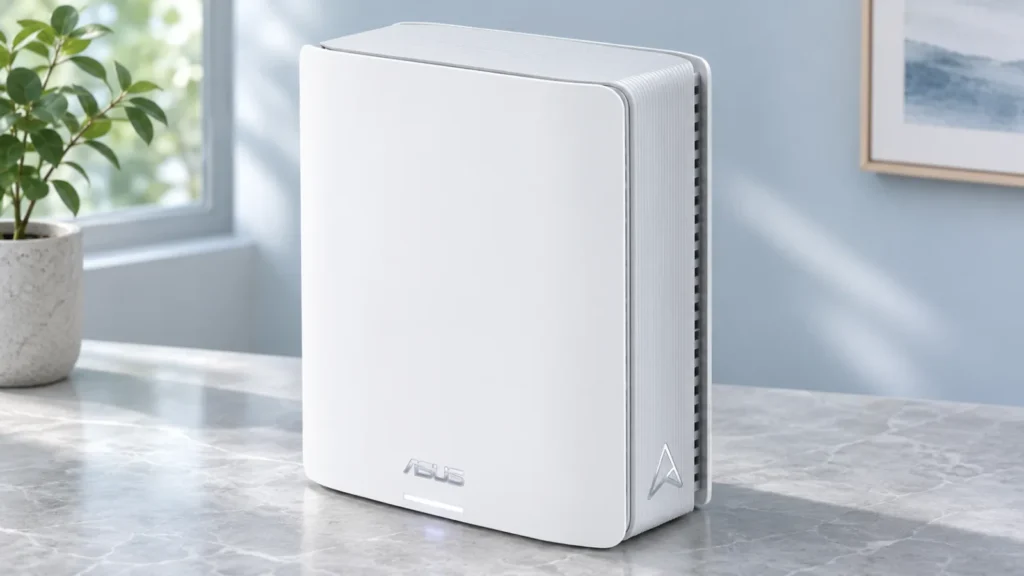
The BT10 combines impressive Wi-Fi 7 speeds, dual 10GbE ports and subscription-free controls. Its premium price and occasional serious mesh stability problems make wired backhaul and careful configuration especially attractive.
Multi-gigabit fiber households, advanced network administrators and families who want extensive included controls benefit most, particularly when Ethernet backhaul is available.
Budget-conscious buyers and people with modest homes or basic networking needs may find the price and configuration demands excessive.
The ASUS ZenWiFi BT10 is a powerful premium mesh system for buyers who want fast wireless throughput, multi-gigabit Ethernet and extensive control over their home network. Its dual 10GbE ports are particularly useful for fast fiber plans and wired backhaul, while included security and parental controls avoid the recurring fees found on many competitors. Setup is often straightforward, and the app and browser interface offer substantial flexibility. Performance is especially impressive near the router, although distant rooms and thick walls can reduce speeds. Firmware updates improved early reliability problems for many testers, but not every installation was trouble-free: persistent satellite outages, roaming drops and MLO jitter remain meaningful concerns. It is best suited to demanding households with the patience to configure their network, ideally with Ethernet between nodes. Cheaper systems are more sensible for basic internet access.
Compared with other Routers, this product is above average in 10 GbE support, subscription requirements, product support lifespan, near average in Wi-Fi speed, Overall satisfaction, below average in node synchronization, 2.5 GbE support, wall-mounting support.
| Attribute | This product | Category average | Difference |
|---|---|---|---|
| node synchronization | 2.3 | 4.9 | -2.6 |
| 2.5 GbE support | 2.0 | 4.4 | -2.4 |
| 10 GbE support | 5.0 | 3.0 | +2.0 |
| wall-mounting support | 2.0 | 3.9 | -1.9 |
| firmware update process | 2.0 | 3.9 | -1.9 |
| status light usefulness | 2.0 | 3.8 | -1.8 |
| node placement guidance | 3.0 | 4.8 | -1.8 |
| subscription requirements | 5.0 | 3.4 | +1.6 |
Choose ASUS ROG Strix GS-BE18000. It scores 5.0 vs 2.0 for 2.5 GbE support, with a 4.3 overall score.
Choose TP-Link Deco 7 Pro BE67. It scores 5.0 vs 2.0 for band steering, with a 4.1 overall score.
Choose TP-Link Archer BE550. It scores 5.0 vs 2.0 for LAN port speed, with a 4.3 overall score.
Choose TP-Link Deco 7 Pro BE63. It scores 5.0 vs 2.3 for node synchronization, with a 4.2 overall score.
Compared with ASUS ZenWiFi BT10
Yes. Dual 10GbE ports and strong close-range Wi-Fi 7 results make it particularly suitable for fast broadband plans.
The included AiProtection security and parental controls do not require a separate subscription. Optional third-party services may have their own fees.
MLO wireless backhaul can deliver very high throughput, but some installations encounter drops or jitter. Ethernet backhaul is preferable when available.
A separate IoT network helps older devices that cannot connect to the main Wi-Fi 7 network, though some configuration may be necessary.
A two-node system can cover substantial homes, but thick walls, floors and node placement affect usable range. Additional nodes or wired backhaul can improve coverage.
Pre-paired nodes and the app usually simplify setup. Advanced settings are extensive, and some installations require troubleshooting or use of the browser interface.
These are a few of the reviews included in our analysis.


We put 11 range extenders and mesh systems to the test to find the fastest and most reliable for streaming, gaming and working from home
Tri-band Wi-Fi 7, dual 10G ports and every advanced feature included rather than rented. Our assessment of the ASUS ZenWiFi BT10 and who...
This model is best suited to advanced users wanting 10GbE and rich controls. Key strengths: Outstanding peak speed; Two 10GbE ports per unit...
ASUS ZenWiFi BT10 review: tri-band Wi-Fi 7 mesh with dual 10G ports per node, ~6,000 sq ft coverage, and subscription-free security. 9.0/10 —...
The ASUS ZenWiFi BT10 is a great two-piece Wi-Fi 7 mesh system to have, but it's not cheap.

Choose the R95 for a busy home that needs fast Wi-Fi 7, strong range, multi-gig ports, and low-lag gaming. Skip it for a small, lightly connected space or if advanced...
Pros: Wi-Fi 7 support, Wi-Fi speed

Best for frequent travel, fast VPNs, dual 2.5GbE and resilient multi-WAN. Skip it if you need full 6GHz/320MHz Wi‑Fi 7, mesh, or desktop-class USB storage and long-range indoor coverage.
Pros: VPN client support, value for money
Cons: 6 GHz performance, USB storage sharing

Exceptional VPN speeds, strong Wi-Fi 6 coverage and extensive OpenWrt controls make the Flint 2 a compelling value. Its advanced setup, missing 6GHz band and firmware-specific caveats matter if you...
Pros: setup ease, configuration flexibility
Cons: Wi-Fi 7 support, USB storage sharing
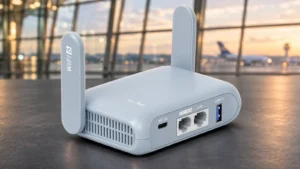
The Beryl AX packs exceptionally flexible VPN and networking tools into a pocket-sized router. It is a great travel companion, but hotel login issues, limited whole-home range and a single...
Pros: Overall satisfaction, size and footprint
Cons: Captive portal handling, Ethernet port count