
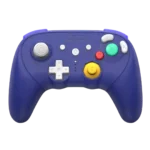
Retro Fighters BattlerGC Pro Feature Scores
Explore all 80 feature scores for Retro Fighters BattlerGC Pro, organized into pros and cons.
Scores by Feature
Summary
80 reviewed features-
Very positive 4.5-5.036 (45%)
-
Positive 3.5-4.424 (30%)
-
Neutral 2.5-3.413 (16%)
-
Negative 1.5-2.45 (6%)
-
Very negative below 1.52 (3%)
Pros
Sort
-
Comfort is one of the strongest points: the wider modern grips fit most hands naturally and remain pleasant through long GameCube and Switch sessions.
-
This is where the controller shines most consistently, delivering a modern wireless take on the GameCube layout that testers repeatedly recommend for original hardware and emulation.
-
The broad consensus is strongly positive, with many calling it a favorite or best-in-class GameCube-style controller, though hardware defects and connection failures create a meaningful minority of dissatisfied owners.
-
Construction is usually considered solid, substantial, and well made, but isolated failures such as a split trigger keep the durability picture from being flawless.
-
Pairing and switching systems are usually quick and straightforward, with most users describing setup as simple or nearly automatic after the first connection.
-
Hands-on impressions of input lag are overwhelmingly positive, with multiple testers reporting no noticeable delay and measured wired or 2.4GHz results among the fastest they had seen.
-
The dual-stage triggers are widely praised for tactile clicks and improved actuation, though isolated failures and slight late activation keep them from universal perfection.
-
The D-pad is one of the controller’s most praised upgrades, with a larger, clickier, smoother feel that many strongly prefer to the original GameCube pad.
-
Hall Effect sticks inspire strong confidence against drift, and reviewers repeatedly treat drift resistance as a core advantage over conventional GameCube-style alternatives.
-
The GameCube-inspired colors and layout are widely loved, especially the Crystal finish, while the more modern shell can be less appealing to strict purists.
-
Rumble is a strong feature, with adjustable intensity and punchy feedback that fixes a weakness of earlier Retro Fighters models.
-
Most users describe the sticks as smooth, familiar, and pleasant to rotate, with several saying they closely capture the original GameCube feel.
-
Retro Fighters support is a major bright spot, with repeated reports of quick replies, replacements, and helpful troubleshooting when hardware problems arose.
-
The wider, modernized shape is a major strength, repeatedly compared favorably with the Switch Pro Controller and preferred over the original GameCube shell.
-
Most owners find the controller substantial and premium for a third-party GameCube pad, with weight and finish that compare well to modern Pro-style controllers.
-
The extra heft is usually seen as a positive, giving the controller a substantial, well-balanced feel without making it uncomfortable.
-
Switch support is broad and usually works very well, but Switch 2 firmware requirements, Bluetooth-only limitations, and a few failed connections create real caveats.
-
PC support is broadly useful across wired, dongle, and Bluetooth modes, but Linux, Dolphin trigger behavior, and a few connection failures can complicate the experience.
-
For owners of earlier Retro Fighters GameCube pads, the Pro is usually a substantial upgrade in triggers, sticks, wireless options, rear controls, and overall feel.
-
Most users get crisp, dependable face-button response, but a minority report gummy, glitchy, lagging, or failed inputs.
-
The shoulder buttons earn strong marks for crisp, tactile switches and a more premium feel than earlier or original GameCube designs.
-
Dual-stage analog triggers are a major strength on compatible hardware, but platform limitations and large initial dead zones can keep them from behaving perfectly everywhere.
-
The two rear programmable buttons are easy to set up and frequently praised as a useful modern addition to the GameCube layout.
-
The custom Hall Effect sticks are consistently praised for feeling authentic, smooth, and substantial while adding modern drift resistance.
-
Bluetooth wake support is a clear convenience win, letting the controller wake a Switch without reaching for another input device.
-
The textured handles usually provide secure, comfortable grip, though a few owners find the shell too smooth or the texturing too subtle.
-
Smash impressions are often excellent, but fighting-game suitability is not universal: some D-pad-focused testers explicitly reject it for traditional fighters.
-
The dual dongles, braided cable, and color-matched pin make the package feel unusually complete, even if the pin is more fun than functional.
-
Stick precision is one of the more divided areas: many players report accurate, responsive control, while precision-heavy tests found sensitivity, dead-zone, and consistency problems.
-
On-the-fly remapping is a standout convenience, letting players change rear-button assignments without needing a PC.
-
The included braided USB cable is a small but appreciated upgrade over a basic charging lead.
-
Rear buttons can execute multi-command macros without external software, adding useful flexibility for players who want more than simple remapping.
-
Android and iOS support adds useful versatility, and hands-on Android use was reported as trouble-free with working pressure-sensitive triggers.
-
Motion controls work well over Bluetooth on Switch and were described as feeling in line with a first-party Pro Controller.
-
USB-C is treated as a welcome modern upgrade, especially compared with swapping AA batteries on older wireless GameCube controllers.
-
Trigger travel and resistance generally feel satisfying and controlled, but one long-session player found them too stiff.
-
Bluetooth is generally convenient and responsive, especially on Switch where it can add wake and motion features, though some users saw outright pairing failures and it can trail 2.4GHz latency.
-
The larger D-pad is usually precise with good directional control, but some testers found diagonals or competitive inputs harder than ideal.
-
The bundled 2.4GHz receivers can deliver strong, low-latency play and convenient retro-console support, but several owners reported defective dongles, short range, or outright connection failures.
-
Stick resistance is generally well judged and smooth, though one owner wanted slightly more tension from the left stick.
-
USB-C charging is reasonably quick, though one test found the charge indicators confusing and needed about three hours for a full cycle.
-
Battery impressions are acceptable rather than class-leading: some owners call it long-lasting, while others find roughly 10 hours weak by modern controller standards.
-
Buttons are generally quieter than earlier Retro Fighters GameCube pads while still retaining clear tactile feedback.
-
The modern shape and softer trigger action can be comfortable for long sessions, but stiff triggers or D-pad pressure caused fatigue for a few players.
-
Rear-button placement is usually comfortable and easy to reach, although one reviewer found the extra buttons prone to accidental presses.
-
For relaxed GameCube titles, RPGs, and general play, the controller is easy to enjoy; its unusual layout matters more in demanding modern games.
-
Firmware updates have fixed latency, trigger mapping, and Switch 2 issues for several users, but the Windows-only process and unclear versioning can be frustrating.
-
Competitive suitability depends heavily on the game: Smash-focused testers can love it, while low polling, latency, and D-pad limitations hurt precision-focused play.
-
The rear buttons can be genuinely useful in non-GameCube games, giving frequently used inputs a more convenient position.
-
Ongoing firmware work meaningfully improves the controller’s usefulness, with updates changing one reviewer’s view of its Switch 2 compatibility.
-
Switch-style shoulder labels fix a small annoyance from earlier Retro Fighters models and make the control scheme feel more coherent.
-
Rear-button mapping can cover single presses or multi-command macros, giving the controller unusually broad on-the-fly customization for a GameCube-style pad.
-
Gyro support on Switch is a welcome modern feature and was praised as part of the controller’s broader Switch functionality.
-
The rear paddle-style buttons add useful fingertip inputs and were specifically praised as a good fit for first-person shooters.
-
The simplified plus, minus, and Home area gives the front face a cleaner, more streamlined look than earlier Retro Fighters GameCube pads.
-
Face-button travel is generally well judged and improved over earlier models, although one tester disliked the unusually short travel of the X button.
-
The clicky triggers and rear controls can feel excellent in shooters, but one technical test found the Hall sticks too imprecise and jumpy for serious aiming.
-
Calibration and firmware tools can solve real issues, but the lack of deeper trigger tuning leaves some performance-minded users wanting more control.
-
The multifunction top button keeps Switch screenshot capture available while also serving programming duties, preserving useful modern-console functionality.
-
2.4GHz can be very fast in favorable conditions, while one performance-focused test measured weaker latency and polling behavior in demanding games.
Cons
Sort
-
Several negative owner reports describe controls becoming unresponsive, repeating faults after replacement, or producing unintended inputs, making long-term consistency a concern.
-
A recurring ergonomic flaw is the placement of certain controls: Home, reset/off, Z, and B/C spacing can force awkward reaches or cause accidental presses.
-
Long-term durability is a notable concern because multiple owners report peeling thumbstick rubber and one reported a split trigger, despite strong results in one stress test.
-
The main shell material draws harsh criticism from a few owners who describe the plastic as cheap-feeling, overly smooth, or scuffed on arrival.
-
A few buyers received scratched or scuffed units, and one customer received the wrong color, so arrival condition has not been uniformly clean.
-
The built-in battery is a long-term drawback because it is not easily replaceable, unlike the AA-powered WaveBird.
-
Wireless stability varies significantly by unit and environment: some users report flawless play, while others see interference, repeated desyncs, or extremely short effective range.
-
One detailed performance test found the polling rate low enough to contribute to missed precision inputs during demanding gameplay.
-
The authentic GameCube layout and trigger ranges take some adjustment, especially in modern games where players may need to reorient their hands or relearn inputs.
-
Racing impressions are mixed: some advanced Mario Kart techniques work well, but connection drops and trigger-range issues make it hard to recommend universally.
-
The larger shell is more comfortable than the original for many people, but tight button spacing and rear-control placement can be troublesome for larger hands.
-
Reliability is the biggest ownership wildcard: many units reconnect and pair cleanly, but others suffer frequent desyncs, short range, or complete mid-game dropouts.
-
The D-pad works well for relaxed platforming, but stiffness, placement, and latency make it less convincing for speed-focused or precision-heavy play.
-
Shoulder-button feedback is mostly solid, though one tester had trouble feeling the expected click on a Z control.
-
PS3 use is possible through Direct Input, but the controller does not extend cleanly to PS2 backward-compatible games.
-
Stick replacement is possible, but the unusual fit pushed one owner toward PS5-style replacement sticks rather than standard GameCube parts.
-
The GameCube-style stick tops and notches often feel authentic and secure, but repeated rubber peeling reports are a serious weak point.
-
Wired use can be extremely fast on PC, but platform and protocol quirks mean it is not equally reliable or fully featured everywhere.
-
Button feel is sharply split: many praise solid, tactile presses, while several owners describe the face buttons as gummy, mushy, cheap, or prematurely worn-feeling.
-
Value is polarizing: many think the features justify the price, while others consider the materials, import cost, or reliability too weak for a roughly $60–$70 controller.