
Latency impressions were highly positive, with reviewers citing near-zero or nearly no delay in typing and gameplay.
Pros: software quality, build quality
Cons: value for money, connectivity

Latency impressions were highly positive, with reviewers citing near-zero or nearly no delay in typing and gameplay.
Pros: software quality, build quality
Cons: value for money, connectivity

Latency evidence was strongly positive, with reviewers reporting delay-free input and no wireless latency problems in testing.
Pros: typing feel, design aesthetics
Cons: value for money, materials quality

Latency is a major strength, with reviewers measuring or perceiving near-instant response and class-leading performance. Tachyon mode can trim response further, while the 1000 Hz polling ceiling rarely hurts real-world...
Pros: overall satisfaction, customization options
Cons: value for money, switch options

Latency impressions were highly positive, with reviewers calling response time blazingly fast and the keyboard very responsive.
Pros: typing feel, design aesthetics

Latency evidence was highly positive for wired testing, where the reviewer reported no lag and very responsive input.
Pros: build quality, keycap quality
Cons: switch options, portability

Latency impressions were very positive, with reviewers reporting no lag and one latency test calling the measured result crazy fast.
Pros: design aesthetics, build quality
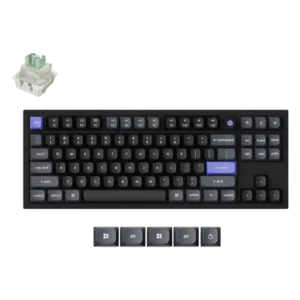
The switch sensing was described as high-accuracy and ultra-low-latency.
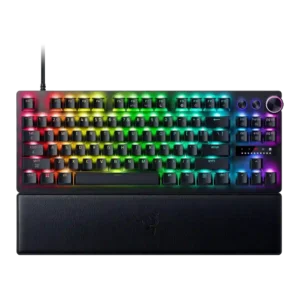
Latency impressions were mostly excellent, especially on 8K models, though one reviewer argued the measured advantage was too small for humans to feel.
Pros: customization options, typing feel
Cons: value for money, wrist rest quality
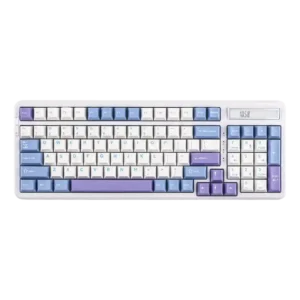
Latency evidence was positive, especially for wired and 2.4GHz use, with Bluetooth impact described as negligible by one reviewer.
Pros: RGB customization, keycap quality
Cons: frame rigidity, switch options

Latency-related feedback was positive where discussed, with reviewers saying response time felt sharp and quick during fast or complex input.
Pros: sound dampening, switch feel
Cons: reliability, rapid trigger support

Wired and 2.4GHz response is consistently described as fast enough for gaming, with no perceptible input lag in practical tests.
Pros: overall satisfaction, build quality
Cons: portability, reliability

Latency evidence is limited but positive, with reviewers reporting no noticeable delay or performance limitation.
Pros: noise level, RGB lighting quality
Cons: rapid trigger support, extra gaming features

Latency was considered good enough for most users, with no input-lag problems reported, though not at the fastest esports tier.
Pros: value for money, build quality
Cons: switch options, hot-swappable switches
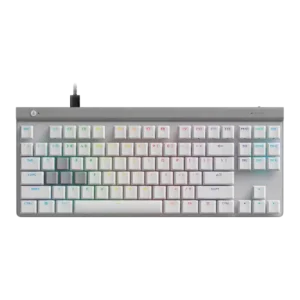
Latency was considered strong for wired competitive use, though one review noted the absence of newer 8K polling limits the ceiling.
Pros: build quality, gaming performance
Cons: typing feel, typing comfort

Latency impressions were mixed: some reviewers saw very good or unnoticeable lag, while others measured or perceived it as slower than top-tier boards.
Pros: customization options, design aesthetics
Cons: switch options, key spacing

Latency evidence was generally positive for wired and dongle use, but one advanced software feature introduced input latency in testing.
Pros: battery life, portability
Cons: volume control, switch options

Latency was a key concern outside wired mode, with multiple reviewers calling out Bluetooth input delay or the lack of low-latency wireless support.
Pros: portability, build quality
Cons: value for money, ergonomics