
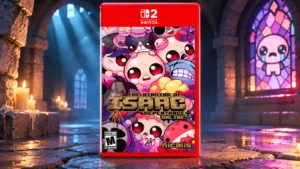
The Binding of Isaac: Repentance+ Feature Scores
Overall Scorata score: 3.9/5
Based on 20 analyzed reviews · View source samples
Explore all 101 feature scores for The Binding of Isaac: Repentance+, organized into pros and cons.
Scores by Feature
Summary
101 reviewed features-
Very positive 4.5-5.049 (49%)
-
Positive 3.5-4.423 (23%)
-
Neutral 2.5-3.419 (19%)
-
Negative 1.5-2.410 (10%)
Pros
Sort
-
The complete package receives exceptional overall praise for preserving a revered roguelike while adding modern conveniences. Disagreement is mostly about whether the upgrade itself is worth buying.
-
Reviewers repeatedly describe Isaac as difficult to put down: explosive builds, unlikely discoveries, and frantic co-op create memorable payoffs.
-
Built-in explanations for previously seen items save trips to a wiki and prevent disastrous pickups, while preserving some first-discovery mystery.
-
Native current-generation versions are praised for crisp, fluid offline play, with online performance more variable.
-
Procedural rooms, dozens of characters and hundreds of pickups make repeat runs feel fresh for exceptionally long stretches of play.
-
The broad roster meaningfully changes runs through different starting powers, constraints, and unlock goals, though some characters demand awkward multitasking.
-
Ghost play and coin-funded revival keep eliminated teammates involved instead of sidelined until the next run.
-
This edition consolidates the base game and major expansions into a full-size package, with online features and quality-of-life refinements on top.
-
The room-clearing loop remains absorbing thanks to risky decisions, unpredictable pickups, and satisfying restarts. Its familiar structure keeps producing surprising results.
-
Four-player co-op transforms familiar runs into strategic, often hilarious team adventures, but connection quality and on-screen congestion affect enjoyment.
-
Buffs and reworks rescue overlooked pickups and improve fairness, but some reviewers find the adjustments too subtle compared with a major expansion.
-
Shared pickups introduce worthwhile team-building decisions, as players must match upgrades to the characters who benefit most.
-
Data Miner’s new glitched-item rerolls are praised for adding unpredictable, entertaining chaos without abandoning its identity.
-
More distinct friendly tear effects help players avoid mistaking their own projectiles for enemy attacks.
-
Crisp cues and eerie effects heighten the atmosphere; the latest edition particularly improves clarity for at least one returning player.
-
The accumulated expansions make this an unusually content-rich edition, although the sheer number of things to learn can be daunting.
-
Absurd jokes puncture the horror, but bathroom humor and grotesque gags are an acquired taste.
-
Abyss locusts gain meaningful item-quality scaling and more inherited effects, rewarding more deliberate sacrifices and experimentation.
-
Emotes and in-game communication offer faster ways to coordinate item choices and discuss team decisions.
-
Co-op changes enemy durability and makes sharing pickups meaningful, although losing a teammate can slow some early encounters.
-
Player and projectile opacity controls make four-player bullet-filled rooms more readable.
-
The straightforward movement and four-direction attacks work comfortably with ordinary controller inputs.
-
Keeping summoned bosses between rooms and shortening the charge transforms Delirious from a neglected pickup into a compelling choice.
-
The childhood trauma and family conflicts can be affecting beneath the grotesque comedy.
-
Room-entry hazards, collision problems, and unfair layouts receive sensible adjustments intended to reduce unexpected damage and frustration.
-
The monster designs are grotesque but distinctive, helping the game build its own disturbing aesthetic.
-
The uneasy blend of childhood fears, absurd imagery, and unpredictable play gives Isaac a memorable identity.
-
Fully restored heart containers improve Jupiter’s immediate usefulness, though reviewers vary in their affection for the item itself.
-
Lemon Mishap’s larger, persistent puddle adds useful area control and improves its value during boss fights and Greed mode.
-
The upgraded edition is generally regarded as the strongest console version, but it is more an accumulation of refinements than a wholesale remake.
-
Better item pickup buffers and selection order reduce accidental activations and unwanted acquisitions.
-
Music is generally praised for its haunting, heavy sound, though Repentance+ does not dramatically revise the score.
-
Carrying over long-running saves is a major convenience, although several reviewers could not yet test announced cross-system features.
-
Layered item effects are the game’s signature strength: weak pickups can become extraordinary together, but an unlucky or mismatched combination can derail a run.
-
Compact rooms and straightforward inputs make Isaac an excellent handheld game; the graphical improvement over Switch 1 is often subtle on the small screen.
-
Its strange, irreverent look and unusually wild item interactions still stand apart from conventional action games.
-
Cute sprites and grotesque imagery form a coherent, instantly recognizable look; not everyone finds its deliberately repulsive designs appealing.
-
The pixel-based presentation looks cleaner on Switch 2, although the increase in resolution is subtle to many eyes.
-
Its unsettling basement atmosphere mixes religious dread, cartoon gore, and absurdist humor.
-
Character-specific traits and tainted variants push players toward distinct builds rather than cosmetic variations.
-
Simple four-directional attacks grow into wild, powerful combat through item synergies; occasional chaotic encounters can feel unforgiving.
-
Its smoother firing-speed ramp is more predictable, although not everyone believes it changes the item’s practical appeal.
-
Extra hazard immunities make Evil Charm a more useful protection choice for spiderwebs, fire, mushrooms, and brief creep exposure.
-
The familiar fundamentals still hold up, with item-driven changes adding complexity to otherwise simple actions.
-
Halving the cooldown allows Jar of Wisps to stack its familiars sooner and makes it more appealing than before.
-
The new storage room and reusable portal create unusually creative ways to carry and combine pickups across floors.
-
Mega Bean is newly praised for clearing crowded rooms and destroying obstacles, offering both combat and exploration benefits.
-
Milk now blocks projectiles before breaking and grants a longer-lasting fire-rate increase, turning a previously forgettable familiar into a defensive asset.
-
Eve’s bird and several character-specific item changes are welcomed for making previously awkward abilities more useful.
-
The shorter Void cooldown makes an already powerful active item more flexible and repeatedly useful.
-
Guaranteed late-boss portals remove a frustrating random gate, which enthusiastic fans see as a major help for completion routes.
-
The challenge generally feels fair and rewarding, but randomized drops, some bosses, and Greed mode can produce uneven difficulty spikes.
-
Input-delay controls can reduce timing problems, although they cannot eliminate every bad network connection.
-
The added post-dash invulnerability and knockback reduce accidental damage, yet some players still dislike Mars’s unpredictable movement.
-
Offline gameplay generally runs at a smooth high frame rate, even during busy action; network-related stutters are a separate concern.
-
Most offline port tests report reliable sessions, though one account flags crashes after leaving the game idle.
-
Cross-platform play is appealing but was missing or planned for a later patch in several launch-period accounts; availability needs checking before buying for mixed-platform friends.
-
Secret rooms and alternate routes reward curiosity, though repeatedly unlocking their more obscure requirements can become tedious.
-
Public sessions, quick matches and friend lobbies offer convenient ways to group up, though early player availability can frustrate matchmaking.
-
An expansive web of achievements, secret routes, and character completion goals encourages continued play, even if the checklist eventually feels like work.
-
Fragmented endings explore family trauma and faith in a distinctive way, though the cruelty and indirect storytelling can alienate players.
-
An early visual warning before bosses appear makes dangerous rooms easier to anticipate and avoids accidental collision damage.
-
A sprawling item collection continually creates new combinations and secrets to chase.
-
Community-shaped item refinements and multiplayer rankings enrich the long-running game.
-
A huge range of creatures and attack patterns keeps procedural rooms from feeling identical.
-
It can sustain hundreds of hours of runs for committed players, well beyond a brief campaign.
-
Greed mode’s cleaner item pools and new options reduce some bad rewards, though players disagree on the mode’s overall difficulty balance.
-
Hushy’s radial shots make it much more effective when positioned carefully, giving an underwhelming familiar a reason to be used.
-
The long-running game continues to receive meaningful balance and usability changes, though some announced online features are not ready at launch.
-
Accessible descriptions, pause-menu details and multiplayer lobby settings make navigating a complex game easier.
-
The limited voice work is effective, but the amount of spoken dialogue remains small.
-
Compact rooms keep the action moving, though repetitive requirements and unlucky builds occasionally drag it out.
Cons
Sort
-
Repentance+ adds convenience and multiplayer rather than a large new batch of bosses, areas, or items, making the upgrade less exciting for satisfied veterans.
-
One teammate can force the entire party into another room, making planning and communication especially important with strangers.
-
Basic movement and shooting are easy to grasp, but the vast item library, opaque unlocks, and character-specific mechanics make mastery demanding.
-
Resource decisions make bombs, keys, coins, health, and pickups consequential; bad drops can still leave a run underpowered.
-
Secret routes and unlock rules reward patient discovery but are frequently obscure enough to require outside research.
-
Online platform restrictions limit friend-group flexibility until cross-platform play becomes available.
-
Updates fix longstanding problems, but the PC beta reputation and isolated bugs mean stability varies with version and mode.
-
The beta update requires existing mods to be updated, and online play does not permit them, a meaningful limitation for players with customized PC installations.
-
Online connections vary markedly: some sessions run cleanly while others experience input lag, desync, stutters, or failed connections, especially across long distances.
-
Greed offers additional wave-based goals but is sometimes criticized for wildly swinging between trivial and punishing runs.
-
Helpful item explanations reduce external lookups, but discovery and secret requirements can remain deliberately obscure.
-
Stronger shrink shots and safer enemy squashing finally make God’s Flesh attractive to some players, while others remain unconvinced.
-
Useful new controls keep information close at hand, but some players find the existing stat-heavy screen dense.
-
Adding online achievements to completion requirements complicates previously single-player-focused completion routes.
-
Voice and emotes make coordinating item distribution and routes easier, while forced room transitions can cause arguments if teammates do not communicate.
-
Offline controls feel quick and responsive on new hardware, while online synchronization can introduce noticeable input delay.
-
Randomized room layouts support variety and tactical positioning, with occasional tight or irritating arrangements.
-
The large pool of randomized pickups drives replayability and strategy, though the occasional poor sequence is frustrating.
-
Descriptions and co-op assistance help newcomers, but the accumulated systems still ask for patience and experimentation.
-
The new co-op and item information are worthwhile refinements, but owners happy with Repentance may find the incremental balance tweaks and added cost hard to justify.
-
Toggleable item information is useful without permanent HUD clutter, although keeping all overlays visible can overwhelm the screen.
-
Network reliability looks promising in several tests but remains uneven across regions and lobbies.
-
A physical edition is appreciated by collectors, but it costs more than the digital package.
-
Shorter cooldowns make several beans more practical, though some veterans still dislike the weaker members of the group.
-
Boss battles usually feel hard-earned and distinctive; a handful of cheap hits or awkward encounters remain points of frustration.
-
The multiplayer structure adds group strategy and competitive finales, but forced room transitions and pickup sharing need coordination.
-
Single-player hazards generally remain readable, but four-player attacks and crowded rooms can obscure characters and incoming shots; opacity settings help.
-
Small boss armor increases attract mixed reactions: some approve of slowing overpowered builds while others dislike tougher late fights.
-
The immense content can justify the package, but console pricing feels steep for a long-established title; the smaller existing-owner upgrade is easier to recommend.
Use Cases
Best for
Sort
-
Roguelike enthusiasts get extraordinary run variety, difficult decisions, and many routes, making this one of the genre’s most enthusiastic recommendations.
-
Switch 2 generally delivers a smooth, sharp portable version, but some prelaunch online sessions suffered substantial lag.
-
Newcomers get the most complete Isaac package and helpful explanations, yet may struggle with its enormous systems and deliberately opaque secrets.
-
Online co-op can be a wonderful way to revisit the basement with friends, provided they share a platform or compatible patch and have a solid connection.
-
Returning players particularly benefit from save transfers and clear item descriptions; those satisfied with earlier versions may not need another purchase.
-
Challenge seekers will enjoy the demanding bosses and meaningful runs, though randomized difficulty and opaque unlocks add frustration.
-
Isaac’s small rooms and quick controls suit portable play, with a clearer modern screen for spotting dim hazards.
-
Optimizers can spend enormous time finding potent item interactions, adapting to luck and learning how different upgrades stack.
-
Item reminders and natural room breaks make returning after a gap easier, even if completing a whole run still takes commitment.
-
The physical Switch 2 package appeals to collectors, though its premium over digital pricing is another consideration.
-
TV play gives crowded co-op projectiles and late-game effects more room to breathe.
-
Nintendo’s handheld format suits this game particularly well, though some upgrade features bypass the original Switch.
-
Short bursts of progress work well in handheld play, and the new item reminders ease interrupted sessions.
-
The room-by-room structure creates convenient stopping points, even within a lengthy run.
-
A two-person run provides tactical teamwork and comic moments, although forced movement and small rooms need cooperation.
Conditional or not ideal for
Sort
-
Casual gamersNew players can get hooked on the loop, but must accept an intimidating number of items, secrets, and punishing mistakes.
-
CompletionistsCompletionists have a huge selection of marks, endings, and unlocks to pursue, but finishing them can turn into an exhausting checklist.
-
Casual gamingIndividual rooms are easy to play in bursts, but the difficulty and huge learning demands are less relaxed than typical casual games.
-
Content-sensitive playersPlayers avoiding disturbing religious themes, blood, excrement, and grotesque imagery should steer clear.
-
Public co-opPublic lobbies are available, but coordination matters because one participant can move everyone to a new room or disrupt item plans.
-
Young childrenDespite cartoon graphics, disturbing images and a child-sacrifice premise make this unsuitable for young children.