
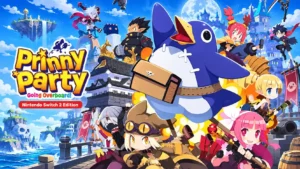
Prinny Party: Going Overboard! Feature Scores
Overall Scorata score: 3.3/5
Based on 16 analyzed reviews · View source samples
Explore all 49 feature scores for Prinny Party: Going Overboard!, organized into pros and cons.
Scores by Feature
Summary
49 reviewed features-
Very positive 4.5-5.011 (22%)
-
Positive 3.5-4.411 (22%)
-
Neutral 2.5-3.47 (14%)
-
Negative 1.5-2.418 (37%)
-
Very negative below 1.52 (4%)
Pros
Sort
-
Throwing characters, enemies, and buildings is a standout mechanic, enabling clever repositioning, explosive Prinnies, and mischievous sabotage.
-
Throwing, class abilities, stat grinding, the Dark Assembly, and familiar music make the spin-off feel authentically Disgaea despite the new format.
-
Building and stacking shops, hospitals, and cannons gives board construction both economic and tactical impact. More powerful facilities offer satisfying payoffs.
-
Spending shared funds on bills, bonuses, and outrageous rule changes is a clever, suitably mischievous way to reshape an unfolding match.
-
Melee specialists, long-range fighters, healers, and trap users feel meaningfully different. Their weaknesses encourage positioning and varied team tactics.
-
Manual saves and autosaves make lengthy matches manageable and soften punishing defeats. The ability to stop and resume is especially valuable with a group.
-
Character classes, facility placement, political buffs, and throw tactics generate more interesting decisions than the simple board layout suggests.
-
People sharing a room can coordinate against bosses, negotiate alliances, and steal victory at the last moment. The demanding rules and long sessions require an equally committed group.
-
Absurd combat, surprise turnarounds, and opportunistic betrayal make it genuinely entertaining with the right group. The excitement fades faster for players stuck in repetitive or one-sided matches.
-
Bright boards, expressive characters, and theatrical illustrations capture Disgaea’s personality, even where the underlying models and locations are familiar.
-
Exploding Prinnies, ridiculous bureaucracy, and chaotic encounters preserve the series’ offbeat humor, although not every player finds the jokes enough to sustain repeat games.
-
Instead of copying a standard board-and-minigames template, this game builds a distinctive hybrid of RPG progression, combat, and shared-board rivalry.
-
Switch 2 GameShare makes sharing a session easier, but that benefit is tied to specific platforms and does not replace unrestricted online matchmaking.
-
Familiar Disgaea tracks supply energy and atmosphere for lengthy sessions, though some wish the spin-off had more distinctive original music.
-
Improving stats, claiming mission rewards, and buying equipment makes early turns satisfying. Repeatedly cycling through the same upgrades eventually wears thin.
-
Improving weapons, armor, and cannons can transform a weak character into a dangerous contender, providing some of the most satisfying moments.
-
Turn-based attacks, ranged abilities, and positioning provide a fun tactical core. Luck-based damage and recurring battles reduce the sense of control.
-
The absence of separate minigames is divisive: some appreciate uninterrupted strategy, while others miss the variety and energy breaks of traditional party games.
-
A range of familiar classes offers distinctive tactical choices, but the lack of additional playable franchise favorites disappoints some players.
-
Powering up a character before hunting down dangerous bosses creates an engaging tactical cycle. The formula is narrower and more repetitive than a typical minigame-based party collection.
-
Selecting character colors adds a welcome light personal touch to class choice.
-
Cooperation against bosses followed by rivalry over rewards is an inventive twist, though restrictions on remote participation undercut the social premise.
Cons
Sort
-
The lone main board and limited modes are the most persistent frustrations. Different classes and random events add wrinkles, but they rarely make repeated sessions feel entirely fresh.
-
Different classes and rule settings provide some incentive to return. The same board, recurring goal, and limited modes make long-term replayability a common concern.
-
Solo sessions are considerably less reliable than group play: harsh boss fights and AI behavior can force retries. A minority still enjoys experimenting alone with facilities and upgrades.
-
Several critics find the asking price hard to justify for one board without full online play or substantial extra content.
-
Extended turns, AI deliberations, two-turn knockouts, and multi-hour matches repeatedly interrupt momentum. Playing with friends helps but does not eliminate downtime.
-
CPU rivals can be aggressive, erratic, and slow to watch; repeatedly targeting leaders can derail boss progress. Humans provide livelier and fairer-feeling rivalry.
-
Reels make stats, movement, and damage unpredictable, creating surprising reversals but also frustrating misses and uneven character growth.
-
Powerful bosses can eliminate a weak party before its plans come together, making early games feel harsher than the depth warrants.
-
The post-boss standings show several categories without plainly identifying the overall leader, muddying the competition between major objectives.
-
Multiple interconnected systems create real depth but an intimidating first game. Some players learn the ropes quickly; others find the opening so confusing that they disengage.
-
The early game explains its unusual systems too poorly for some newcomers, leaving them unsure what to do before a meaningful strategy develops.
-
Menu navigation occasionally feels awkward, and finding some options can be harder than expected during an active game.
-
Existing theatrical voices can be amusing, but the lack of fresh English voice recordings leaves several critics feeling the production was made on a tight budget.
-
Computer players sometimes obsessively attack a leader or boss carrier even when bigger threats remain, making their priorities feel counterproductive.
-
The system menu is only accessible on your own turn, creating awkward interruptions when players need to pause or adjust the game.
-
Sparse presentation and repetitive board play leave the experience feeling rough and underdeveloped in places.
-
Busy facility layouts and crowded information screens can make it harder to assess the board and plan efficient routes.
-
Different attack ranges and class strengths create useful tactical contrasts, though certain selections leave inexperienced players at a disadvantage.
-
Smaller event-accessed areas exist, yet repeatedly circling the familiar central route can make exploration feel unrewarding.
-
The single playable board has functional strategic spaces but lacks the broader world variety expected from a replayable party game.
-
The minimal story is adequate setup for a board-game contest but provides little character development or lasting narrative motivation.
-
Memorable boss encounters add stakes and distinctive mechanics, but some opponents appear too early or overwhelm underpowered characters.
-
Charming, colorful models fit the series, but some are recycled from earlier Disgaea games and make the production look less fresh.
-
The strategic foundation wins respect, but serious limits in content, solo balance, and network play leave the complete package feeling uneven.
-
Configurable matches can run from under an hour to multiple hours. The strategic buildup rewards patience but can become an exhausting commitment, especially after a knockout.
-
Changing match length and difficulty through pregame rules is potentially useful, but one player had trouble restoring an earlier estimated duration after adjusting settings.
-
The final boss-carrying objective gives trailing players chances to snatch victory. Conversely, CPU hostility can make those swings feel needlessly unfair.
Use Cases
Best for
Sort
-
The game is at its best with nearby friends who enjoy tactical competition and playful betrayal. Several solo criticisms disappear when the board becomes a shared social experience.
-
Players attached to the franchise’s characters and elaborate systems are best placed to enjoy the humor and tactical callbacks, particularly when they can bring like-minded friends.
-
GameShare provides an especially convenient way to play together without requiring everyone to own the game, giving this edition a meaningful social edge.
-
Local allies can coordinate to survive tough bosses before the rules encourage a final betrayal, making shared play the main attraction.
-
It can create a memorable board-game night with invested friends, but lengthy rounds risk losing the interest of less patient participants.
-
The mix of temporary alliances, boss rewards, and last-minute sabotage is ideal for friends who enjoy spirited rivalry.
-
The layered tactics, class differences, and ability to manipulate the board give strategy fans satisfying choices beyond luck alone.
-
Two people can have a surprisingly satisfying strategic match, though the session may take several hours.
Conditional or not ideal for
Sort
-
Online co-op with friendsTraditional online multiplayer is absent, making sessions with distant friends difficult. Steam Remote Play Together and Switch 2 GameShare offer edition-specific workarounds rather than full matchmaking.
-
Long play sessionsThe deep buildup can reward extended sessions, but long waits between turns and a single repetitive board can eventually make them drag.
-
Casual gamersPeople expecting quick, easygoing minigame parties may struggle with its unusual rules, long turns, and limited activity variety.
-
beginner co-opNew groups can struggle to understand the layered rules quickly enough to have fun. It is a difficult choice for casual partners expecting a straightforward party experience.
-
Gaming with limited free timeThe considerable match lengths and complicated early turns make it difficult to fit into a tightly scheduled evening.
-
Short gaming sessionsEven the supposedly shorter settings can stretch toward an hour or longer, making quick pick-up-and-play sessions a questionable fit.
-
Franchise newcomersNew players can grasp the objective, but many jokes, cameos, and design references land better with prior Disgaea familiarity.