
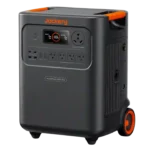
Jackery HomePower 3600 Plus Feature Scores
Explore all 107 feature scores for Jackery HomePower 3600 Plus, organized into pros and cons.
Scores by Feature
Summary
107 reviewed features-
Very positive 4.5-5.079 (74%)
-
Positive 3.5-4.412 (11%)
-
Neutral 2.5-3.46 (6%)
-
Negative 1.5-2.46 (6%)
-
Very negative below 1.54 (4%)
Pros
Sort
-
Overall satisfaction is very high. Most reviewers considered the HomePower 3600 Plus one of Jackery’s strongest or most practical large power stations despite a few clear tradeoffs.
-
Quiet operation is one of the strongest points of agreement. Even under meaningful loads, reviewers often found the unit far quieter than fuel generators.
-
Home backup is the product’s clearest strength. Reviewers repeatedly found it capable of keeping refrigerators, networking gear, lights, and other essentials running through outages.
-
UPS functionality tested very well, with repeated reports of seamless continuity for computers, networking gear, and other sensitive loads.
-
Switchover speed is excellent, generally around 10ms or less, and multiple reviewers observed no meaningful interruption during simulated outages.
-
Battery expansion is one of the product’s strongest advantages, allowing the system to grow far beyond the base 3.6kWh capacity.
-
Long-term battery life is a standout strength, with reviewers emphasizing the multi-year service life enabled by the LFP pack.
-
Load handling was excellent across demanding tests, including heaters, tools, kitchen appliances, and other combined loads without nuisance shutdowns.
-
Compactness is a standout achievement for a power station with this much battery and inverter capacity.
-
The wheels are a major practical advantage, repeatedly praised for smooth movement across garages, homes, gravel, and other surfaces.
-
Portability is excellent for this capacity class thanks to the wheels and luggage-style design, though it remains a large battery rather than a carry-anywhere station.
-
Reviewers consistently found the 3,600W class output genuinely strong for a portable unit, with enough headroom for substantial household loads.
-
Ease of use is a major strength; reviewers repeatedly described the system as simple, intuitive, and approachable even for less technical owners.
-
The Jackery app was generally considered simple, functional, and easy to navigate, with useful controls for charge rate and operating modes.
-
Reviewers repeatedly praised the LiFePO4 battery for safety, thermal stability, long cycle life, and suitability for long-term backup use.
-
The footprint was repeatedly praised as unusually manageable for a roughly 3.6kWh home-backup station.
-
The unit handled many high-draw appliances well, although the heaviest whole-home loads still push buyers toward a dual-unit setup.
-
The 6,000-cycle rating was repeatedly highlighted as a major longevity advantage over shorter-lived battery chemistries.
-
Surge performance is a major strength, with tests showing the unit can absorb demanding startup spikes without tripping.
-
AC efficiency tested near the top of the class in several reviews, commonly around 89% to 95% usable conversion performance.
-
Value is generally favorable at sale pricing, but full retail pricing and the cost of extra batteries, hubs, or solar hardware can change the equation.
-
AC charging is usually quick for a battery this large, commonly landing around two to two-and-a-half hours in favorable modes.
-
The true 30A output was repeatedly praised as a standout advantage over competing stations whose RV-style ports cannot sustain the full load.
-
Display readability is excellent, with reviewers repeatedly calling the screen clear, detailed, and easy to read in varied lighting.
-
The RV connection is a major strength, making the station especially attractive for trailers and 30A RV setups.
-
Self-discharge is a strength, with reviewers praising the low-drain design for long periods of standby storage.
-
Measured usable capacity was excellent, with several tests recovering roughly 90% to 95% of the rated battery energy.
-
Build quality drew strong praise for a solid, rugged chassis and a well-assembled feel.
-
The inverter drew strong praise for efficiency, clean output, and dependable performance under load.
-
Motor and compressor startups were handled confidently, helped by the unit’s strong surge capability.
-
Combining AC and solar input is a strong feature, substantially shortening recovery time when both sources are available.
-
Runtime was repeatedly strong for outage essentials, especially refrigeration and carefully managed household loads.
-
Standby draw tested well overall, with several reviewers impressed by how slowly the large inverter depleted the battery while idle.
-
Warranty coverage was viewed positively, especially the five-year terms mentioned by several reviewers.
-
Cooling and thermal management generally performed well, including sustained-load tests where the unit stayed controlled without overheating issues.
-
Recharge times are generally fast, especially with hybrid or high-rate charging, though a few tests measured slower wall-charge times than the headline claims.
-
Output stayed steady under demanding loads, with reviewers reporting stable voltage and no instability or overload interruptions.
-
The inverter delivers clean pure sine wave power, and multiple tests found the waveform suitable for sensitive electronics.
-
Voltage regulation tested very well, staying close to 120V even under load.
-
Generator charging was viewed as a practical way to refill the battery quickly during extended outages, typically in roughly two-and-a-half hours.
-
The telescoping handle usually improves mobility substantially, but one reviewer found that it failed to lock reliably when fully extended.
-
Parallel operation adds valuable 240V capability, though it requires a second unit and extra connection hardware that materially raises system cost.
-
Full-load fan noise remained modest in measured tests, generally around the mid-50 dB range and quieter than many reviewers expected.
-
Cold-weather performance was excellent in the strongest field tests, including real winter outages where the unit continued powering critical loads.
-
General system expandability is excellent, giving buyers a path from one portable unit toward a much larger backup setup.
-
Heat management was praised for well-controlled internal temperatures and ventilation that kept sustained loads from becoming a thermal problem.
-
One field review specifically emphasized dependable operation in harsh cold, reinforcing confidence in longer-term backup use.
-
Reviewers describe the AC output as clean enough for sensitive electronics and equipment that benefits from stable power.
-
Runtime estimation was praised for being realistic, particularly Jackery’s usage calculator that accounts for efficiency and idle draw.
-
Whole-home integration is possible, but it is not native from one unit; 240V and broader circuit coverage generally require a second unit, hub, or transfer equipment.
-
Transfer-switch use is practical and can simplify home backup, but it adds planning, hardware, and in some cases professional installation.
-
Reviewers viewed the roughly 3.6kWh battery as a substantial base capacity for meaningful home-backup use.
-
The design was praised as rugged, sleek, and visually polished enough to fit comfortably in either a garage or living space.
-
Handles were generally praised for making a heavy unit easier to control and reposition.
-
Remote control through the app gives owners convenient access to charging modes and system settings.
-
The accessory ecosystem is broad enough to support expansion batteries, transfer hardware, and solar additions as the backup system grows.
-
Remote monitoring is useful for checking battery level, power flow, and system status without standing beside the unit.
-
As a solar generator, the unit works well for backup and off-grid support, particularly when solar is treated as one part of a broader charging plan.
-
Setup is usually straightforward, but solar-panel assembly and larger home-integration plans can add friction and preparation work.
-
Pass-through behavior is useful, but one test found maximum AC charging could interrupt output until the input rate was reduced.
-
Automatic UPS switchover behaved as expected in testing, adding confidence that backup behavior will occur reliably when grid power drops.
-
Battery reliability held up in a demanding winter outage test, continuing to support refrigeration, heat, and critical electronics without issue.
-
Cold-weather startup is helped by automatic battery self-heating, which activated in winter testing and brought the pack to operating temperature without manual intervention.
-
Customer support received strong praise in the one detailed comparison that discussed service experience.
-
The display itself drew praise for its bright, high-quality presentation.
-
The solid enclosure, reinforced construction, and rugged feel give the system strong durability credentials.
-
Battery operation eliminates generator exhaust during discharge, a benefit reviewers highlighted for indoor and neighborhood-friendly backup use.
-
Hot-weather capability benefits from LiFePO4 chemistry, which reviewers described as more thermally stable than conventional lithium-ion alternatives.
-
The enclosure was described as solid and well assembled, with reinforced construction that inspires confidence.
-
Battery operation avoids the routine fuel-generator maintenance burden, which reviewers saw as a meaningful ownership advantage.
-
The lack of annual engine-style maintenance is a clear convenience compared with traditional fuel backup generators.
-
Materials and construction feel substantial, with reinforced corners and a solid enclosure contributing to a premium impression.
-
One review argued that the long cycle life improves cost per cycle compared with shorter-lived competing batteries.
-
The tested operating range inspired confidence, including successful winter operation around 5°F without performance problems.
-
Packaging received direct praise in one field review for arriving well protected.
-
Starting the AC output is simple and immediate, with a straightforward button press rather than any engine-style starting procedure.
-
Quiet mode was specifically liked as a way to reduce charging noise when maximum recharge speed is not necessary.
-
One test specifically praised the ability to charge and discharge at the same time, making simultaneous use more practical.
-
The TT-30 connection is a strong RV-oriented feature, pairing the outlet format with the unit’s ability to deliver a true high-current load.
-
The USB-C ports passed direct testing without issue and provide useful high-power charging for modern devices.
-
The 100W USB-C power delivery outputs performed cleanly in testing and are well suited to laptops and other high-draw USB-C gear.
-
The solar carrying case’s dedicated cable pocket is a useful storage touch that keeps the charging lead organized.
-
The control layout is clean and straightforward, making the main controls easy to understand.
-
App-based tracking gives owners a useful view of power use and system status during operation.
-
The display and app make input and output power easy to follow in real time.
-
Ports are clearly labeled and spaced well enough to avoid unnecessary crowding in normal use.
-
The system still needs proper airflow, and reviewers recommend a dry, ventilated placement rather than enclosing the unit tightly.
-
EV charging can be useful as an emergency or supplemental use case, but reviewers do not present it as a replacement for a dedicated EV charging source.
-
Rolling is easy, but lifting is more situational: one reviewer managed vehicle loading easily while another recommended two people for stairs or loading.
-
Storage convenience is more mixed for the solar bundle, with some owners finding panel deployment and pack-up awkward.
-
App pairing worked, but one reviewer noted that initial connection took a couple of minutes rather than feeling instantaneous.
Cons
Sort
-
Reviewers repeatedly criticized the absence of a native 12V automotive-style outlet, especially for camping and overlanding use.
-
Solar cabling is a repeated pain point because the proprietary 8020-style connection often pushes third-party users toward adapters.
-
The missing built-in light drew direct criticism because a front light would make outage setup and monitoring easier in the dark.
-
Specification accuracy is a notable concern because one reviewer repeatedly found incorrect or inconsistent information on Jackery’s website.
-
Third-party solar compatibility is a weak point because reviewers repeatedly noted proprietary connectors, adapter requirements, or restrictive input parameters.
-
The 1,000W solar-input ceiling is a recurring weakness, especially for buyers with larger panel arrays or serious off-grid ambitions.
-
The lack of native 12V DC output is a serious limitation for users with DC fridges and other 12V accessories.
-
Weight is the most consistent portability tradeoff. Around 77 pounds is manageable on wheels but awkward for stairs, vehicles, or frequent lifting.
-
Charging efficiency is mixed: AC performance is strong, but one detailed solar test found meaningful conversion loss through the charging path.
-
One detailed test found the MPPT charging path less efficient than expected, making this a notable solar-side weakness.
-
The power station itself is not waterproof, so buyers still need to protect it from direct exposure despite its outdoor-backup positioning.
-
The common solar bundle is underpowered relative to the battery, making it a useful starter setup rather than an ideal primary recovery system.
-
Electromagnetic interference results were mixed: audio output remained clean, but one test measured relatively high AC inverter EMI.
-
The included solar cable is generously long, but the proprietary connector keeps the overall cable experience from being fully flexible.
-
Included accessories are adequate rather than generous; bundle panels can be useful, but some reviewers wanted more or better-matched extras.
-
Solar charging is the most mixed part of the system: it works well for modest recovery, but the 1,000W ceiling and smaller bundles can make full recovery slow.