
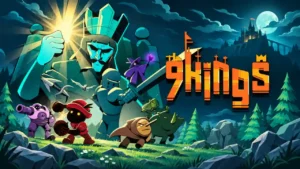
9 Kings Feature Scores
Overall Scorata score: 3.9/5
Based on 11 analyzed reviews · View source samples
Explore all 67 feature scores for 9 Kings, organized into pros and cons.
Scores by Feature
Summary
67 reviewed features-
Very positive 4.5-5.026 (39%)
-
Positive 3.5-4.420 (30%)
-
Neutral 2.5-3.47 (10%)
-
Negative 1.5-2.414 (21%)
Pros
Sort
-
Different kings, random card pools and evolving strategies make repeated runs feel fresh; unlocking perks and new rulers gives additional reasons to return.
-
Cross-king card interactions, adjacency bonuses and stacked buffs generate wildly different, often ridiculously powerful builds. Discovering unexpected synergies is a central pleasure.
-
Discovering broken combinations, testing different kings and watching tiny armies grow into overwhelming forces makes the game difficult to put down.
-
The kings have distinct decks, powers and strategic identities, encouraging radically different approaches rather than cosmetic variations.
-
The blend of grid building, card drafting and automatic combat is deceptively simple, with mechanics that support a wide range of inventive approaches.
-
Building a kingdom card by card and watching the results in automated battles creates a highly repeatable loop. One dissenting assessment found it too lightweight to be more than a diversion.
-
The game is strongly recommended for its replayability and depth at the prices cited, including the affordable mobile unlock and the PC launch price.
-
Placement, card selection and adaptation give the game meaningful tactical depth for most players, though one critic found the limited grid and random draws too restrictive for serious strategy.
-
Enormous armies are a major spectacle, although unit caps on mobile help keep the experience consistent across devices.
-
Asynchronous competition pits powerful player-created kingdoms against each other without waiting for a live opponent, extending the game beyond solo runs.
-
The economical pixel art gives kingdoms recognizable personalities and suits the playful battles. One Early Access assessment wanted more visual changes as units level up.
-
Grid placement and adjacency bonuses make kingdom construction rewarding, but limited plots and the cost of replacing upgraded buildings can restrict late changes.
-
Winning battles unlocks rival cards and opens new deck-building paths; keeping peace can focus the deck, while random draws sometimes frustrate carefully planned builds.
-
Choosing war or peace changes which rival cards are available and lets players manage opponents that counter their current strategy.
-
The Early Access release impressed some reviewers with how complete and polished it already felt.
-
Runs are generally quick and easy to restart, though later years can feel slow once important placement decisions have been made.
-
King-specific experience and perks motivate continued play, and escalating unit power can be thrilling. Some later kings require a substantial number of runs to unlock.
-
Automated battles can be rewarding spectacles that test earlier planning, but the lack of direct control and passive late turns frustrate some players.
-
Most assessments are enthusiastic recommendations, including a perfect score from one 1.0 reviewer. One critic was unable to recommend the game at all.
-
The interface is generally clean, with useful color and progress indicators. Mobile plot selection and some shop indicators are less intuitive.
-
A sizable card selection and several extra modes give players plenty of ways to vary runs.
-
The portable version retains the core strategic experience and plays well, though fiddly touch selection and inconsistent cross-platform saves are drawbacks.
-
Simple initial rules make the game easy to pick up, even though the interactions and pre-run loadouts develop greater complexity.
-
Card placement and pre-run perk arrangement create satisfying small spatial puzzles within the strategy loop.
-
Stacked upgrades can transform basic troops into formidable units, but a three-level cap and the loss of investment when clearing plots can limit flexibility.
-
Frame rates held up well on some tested PC and mobile configurations, while exceptionally large combinations caused unpleasant drops for another player.
-
A 1.0 PC test and mid-range Android test reported smooth performance, but another assessment experienced hardware strain in exceptionally chaotic battles.
-
Card placement, diplomacy and deck decisions meaningfully shape how a kingdom develops and fights.
-
A PC reviewer completing runs with all nine kings in 1.0 encountered no crashes.
-
The shared multiplayer ladder gives mobile players a reason to compete alongside players on other platforms.
-
Quest, Joker, Endless and asynchronous multiplayer modes give players substantial extra goals after winning with the main kings.
-
Simple mechanics are combined in unusual ways, allowing emergent strategies without a complicated management interface.
-
Returning after a long break, one player found the 1.0 additions substantial enough to become hooked again.
-
The Czech localization added in the full release helps Czech-speaking players understand what the cards do.
-
The mobile edition's one-time unlock is appealing compared with games that repeatedly ask for purchases.
-
The move to 1.0 brought enough new material to make revisiting the game appealing.
-
Faction units have different functions and strengths, rather than being simple palette swaps.
-
Mobile retains the core content, and the Early Access build already felt substantial to some players despite the then-incomplete roster.
-
The exaggerated pixelated fighting is treated as a stylized fantasy spectacle rather than realistic warfare.
-
One 1.0 reviewer and one Early Access reviewer encountered no bugs, while another Early Access test reported run-breaking tower and ability failures.
-
Gold is the main resource, keeping management simple. Recycling cards creates tradeoffs and merchant prices can limit what players can afford.
-
Color coding and recognizable sprites help during normal play, but damage numbers and effects can obscure the largest battles and marked targets.
-
Occasional large boss encounters add variety and flavor to the regular battles.
-
Background music stays unobtrusive, letting players concentrate on their card and placement decisions.
-
Evocative kingdom names and card descriptions lend personality to the fantasy setting.
-
Single-player runs can be paused by exiting and resumed later, whereas asynchronous multiplayer runs require one continuous sitting.
Cons
Sort
-
Huge battles can end so quickly or become so cluttered that players cannot tell what caused a loss or locate important targets.
-
Large battles and sudden losses can leave players guessing why a build failed, making it difficult to learn from defeats.
-
Battle effects are acceptable initially but repeated death sounds and rapidly triggering buildings can become grating, especially in late runs.
-
Random draws and decrees keep runs unpredictable, but unfavorable early cards can kill a strategy before it takes shape. Rerolls and diplomacy offer some control, not a guarantee.
-
Assessing the relative strengths and weaknesses of enemy kings before a battle can be difficult, as the card compendium offers limited help.
-
Some card wording leaves the exact trigger or stat effect unclear, complicating attempts to optimize a build.
-
An experienced returning player found the initial ranked match alarmingly easy, limiting the competitive challenge at that rank.
-
Mobile placement controls are less precise than desirable for a game in which positioning matters.
-
The lack of universal save synchronization means moving between mobile and PC can require starting over.
-
Enemy forces use predictable faction templates, limiting the range of surprising enemy compositions.
-
Unlocking early kings is relatively quick, but reaching later rulers such as the King of Time can require many runs.
-
Damage statistics are useful, but missing healing totals make it difficult to evaluate the effectiveness of some abilities.
-
Emergent stories come from building and fighting, but there is little conventional narrative hook for story-focused players.
-
Touch controls can obscure the exact plot a finger is trying to select, making precise placement awkward.
-
A small grid and the need to sacrifice upgraded units or structures can make changing an established strategy difficult. Destruction and retrieval cards sometimes offer a way around this.
-
Solo progress can be saved and resumed, but multiplayer lacks that flexibility. An earlier Early Access build also had broken save loading in one test.
-
Small pixel units are often charming and recognizable, though some players find them lacking in detail or flair; one assessment disliked the audiovisual presentation broadly.
-
Higher difficulty levels retain challenge, but early luck can feel unfair and low-ranked multiplayer opposition can be unexpectedly easy.
-
Predictable AI armies make it possible to plan counters, but they lack the creative combinations that player armies can use.
-
Joker Mode allows custom starting decks, but a carefully optimized deck can remove some tension and the need to adapt mid-run.
-
The basic idea is approachable, but a returning player wanted more explanation of unfamiliar multiplayer mechanics.
Use Cases
Best for
Sort
-
Players who enjoy optimizing builds can stack buffs, mix enemy cards and experiment with unusual combinations to create exceptionally powerful armies.
-
Watching ordinary units grow to enormous damage values and wipe out opposing armies delivers a deliberately exaggerated power fantasy.
-
Quick runs fit into short breaks and can be resumed in solo play, although one critic saw little value beyond filling spare moments.
-
Some Early Access reviewers already found the game satisfying and nearly complete, while another encountered serious bugs but still enjoyed the underlying formula.
-
The blend of strategy and experimentation is widely appealing, especially for players who favor quick tactical decisions over elaborate simulations. One critic found its tactics too limited.
-
The lightweight planning and stylized battles can be an enjoyable way to unwind between more demanding games.
-
Unusual card combinations and placement experiments can completely change a unit's role, rewarding players who try approaches beyond the obvious.
-
Short stretches of mobile play fit naturally into downtime away from a computer, although cross-platform progress may not carry over.
-
Higher difficulty settings and complex quest challenges provide demanding decisions even when ordinary runs feel easy.
-
Ranked play offers more unpredictable opponents and meaningful goals, but challenge depends on rank and an entire match must be completed in one sitting.
-
Testing on a mid-range Android device produced smooth gameplay at medium settings and 60 fps.
-
The mobile free trial and relatively inexpensive one-time unlock make it an attractive option for budget-conscious strategy players.
-
The full release adds Czech text, helping Czech-speaking players understand card effects.
-
A standard run commonly takes less than half an hour, making it manageable for players with limited free time.
-
The game can sustain several hours of repeated runs thanks to its compelling loop and varied combinations.
-
Players returning after Early Access can find substantial additions and renewed reasons to experiment.
-
The card-driven run structure and satisfying combinations are a good fit for roguelike fans who want a strategy twist with armies.
-
The absence of a turn clock allows players who dislike time pressure to think through card placement at their own pace.
Conditional or not ideal for
Sort
-
Direct unit-control playersPlayers who want to command individual troops may find the automatic battles frustrating or too passive, particularly in later years.
-
Grand strategy fansThe streamlined empire management and brief battles offer a lighter alternative, but do not reproduce detailed diplomacy, complex economies or sweeping strategic simulation.
-
Military strategy enthusiastsThe game offers simplified military planning rather than the elaborate diplomacy and resource management associated with grand strategy games.